STR Regulations in Boston: 10 Things Hosts Must Know
STR regulations in Boston limit short-term rentals (stays of fewer than 28 consecutive days) to owner-occupied homes registered with the City’s Inspectional Services Department. South End Hospitality works with Boston hosts on registration, the City Clerk business certificate, state tax registration, and annual renewal, so each requirement gets checked against an official source.
Key Takeaways
- Boston defines a short-term rental as a residential unit used for a fee for fewer than 28 consecutive days, per the City’s Inspectional Services page.
- Only owner-occupied condominiums and owner-occupied one-, two-, and three-family buildings qualify; investor-owned units generally do not.
- Boston sorts hosts into three categories (Home Share, Limited Share, and Owner-Adjacent), each with its own fee tier and rental pattern.
- City registration, the City Clerk business certificate, Massachusetts tax registration, neighbor notice, and annual renewal are separate steps with separate offices.
- Registrations renew annually and do not transfer when a unit is sold, so a purchase never carries the seller’s license with it.
- Rules differ by municipality; Cambridge, Gloucester, and other Massachusetts towns each run their own programs.
Boston’s short-term rental program has been in place for several years, but the practical details trip up new hosts every season. The City page, the ordinance text, and host-facing summaries from platforms do not always read the same way. This guide uses the City’s own materials as the organizing authority and flags every place where you should verify a detail before acting on it.
We manage short-term rental properties and boutique hotel-style stays across Greater Boston and select North Shore communities, so we see where hosts lose time. Most of it goes to sequencing: which office comes first, which document each office wants, and which rules belong to the City versus the Commonwealth. The ten items below follow the order you will probably encounter them in 2026.
One caution applies throughout. Nothing here is legal advice, and fees, deadlines, and categories can change. Confirm current requirements with the City of Boston and the Commonwealth before you list a unit.
1. What Qualifies as a Short-Term Rental in Boston?
A short-term rental in Boston is the use of a residential unit for a fee for fewer than 28 consecutive days, according to the City of Boston’s Short-Term Rentals page. That definition drives everything else: if your stay length falls under it, City registration applies.
The consecutive-days wording matters. A guest who books 20 nights is a short-term guest; a guest on a signed 30-night stay falls outside the City definition. Some hosts try to engineer stay lengths around that line, which creates tax questions of its own (see item 6) and invites scrutiny on platforms such as Airbnb and Vrbo.
Here is the common edge case we see: a host offers a mix of weekend stays and month-long stays in the same unit. The weekend bookings still trigger registration. The month-long ones do not change that. Treat the unit as a registered short-term rental and keep your calendar records clean.
The ordinance text sits on the City’s site as the short-term rental ordinance. Read it once; summaries leave out the operator rules that matter in a dispute.
2. Which Property Types Can Operate as Boston Short-Term Rentals?
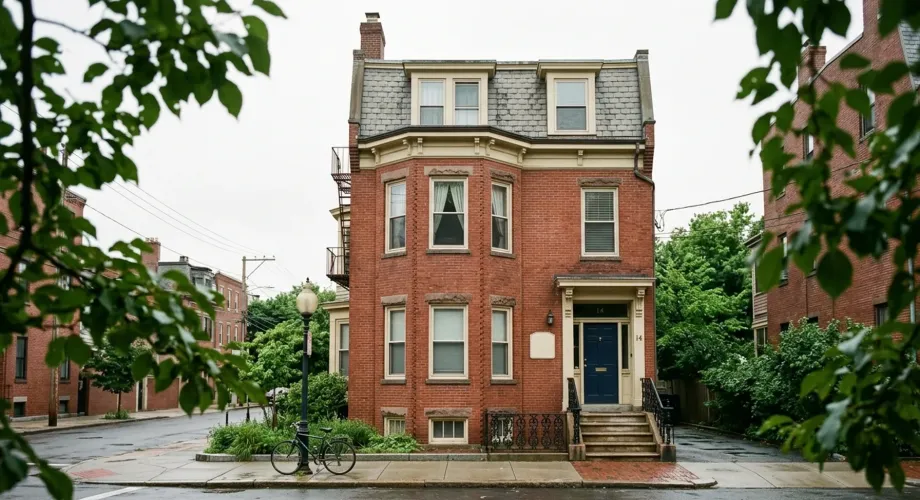
Boston allows short-term rentals only in owner-occupied condominiums and owner-occupied one-, two-, and three-family buildings. If you own a two- or three-family building, you must own every unit in it, and only one owner can be registered as the operator for a given residential unit.
That owner-occupancy rule is the biggest filter. A condo you bought purely as an investment and do not live in does not qualify under the City program. Neither does a unit in a larger building where you own one apartment and live elsewhere.
Eligibility also depends on conditions beyond building type. The City publishes a Short-Term Rental Eligibility dataset that describes unit-level criteria, including affordability-covenant restrictions and housing-code conditions. Check your specific address there before you spend money on furnishings or photography.
Condo documents are a second gate. Your association may prohibit rentals under 28 days even when the City would allow them. Read the master deed and bylaws first; a City license does not override them.
3. How Do Home Share, Limited Share, and Owner-Adjacent Units Compare?
Boston’s program sorts operators into three categories: Home Share, Limited Share, and Owner-Adjacent. Each category sets a different fee tier and a different relationship between the host and the rented space. The table below shows the fee figures we could verify and points you to the ordinance for the night and guest limits.
| Category | Annual City fee (per Airbnb’s Boston help page) | What to confirm in the ordinance |
|---|---|---|
| Home Share | $200 per unit | Host presence, guest limits, and rental-night rules |
| Limited Share | $25 per unit | Host presence, guest limits, and rental-night rules |
| Owner-Adjacent | $200 per unit | Described in the ordinance as rentable for 365 consecutive days per year |
Third-party summaries disagree on how they describe these categories, which is why we send owners to the primary text. Pick your category based on how you live in the building, then verify the night and guest limits directly with Inspectional Services, since we will not quote a number we cannot source. The fee figures come from Airbnb’s Boston help page, so confirm the current amounts with the City before budgeting.
A practical note: owner-adjacent setups, where you live in one unit of a two- or three-family building and rent another, are the structure most often misread. People forget the condition that you own all units.
4. How Do You Register a Short-Term Rental in Boston?
Registering a Boston short-term rental involves six steps across the City and the Commonwealth, starting with an eligibility check and ending with neighbor notice. The order below reflects how we sequence it; confirm every fee and form with the listed offices.
- Check eligibility. Look up your address in the City’s eligibility dataset and confirm your building type and ownership structure.
- Gather primary-residence proof. Airbnb’s guidance lists two forms of proof from options such as a residential exemption, utility bill, motor-vehicle registration, deed, or driver’s license or state ID.
- Register with Inspectional Services. Submit your application and the annual fee for your category through the City’s short-term rental program. Questions go to [email protected] or 617-635-5300.
- Obtain the business certificate. After the license issues, you need a separate certificate through the City Clerk’s Office. Airbnb’s page lists a $35 fee for Massachusetts residents and $65 for nonresidents conducting business here, with a notarized signature.
- Register for state tax. Review the Massachusetts Department of Revenue requirements and register through MassTaxConnect where required.
- Notify neighbors. Airbnb’s guidance says operators must notify neighbors within 300 feet within 30 days after the license is issued.
Our Boston short term rental regulations page covers the same ground in a shorter format if you want a quick reference.
5. What Counts as a Primary Residence for Boston Hosts?
A primary residence is the home where you actually live. Boston’s owner-occupancy requirement depends on proving that. One third-party guide describes the test as living in the unit at least nine of the prior 12 months or intending to live there for the next 12; treat that wording as a lead to verify against the current City rule, not a settled standard.
The paperwork is simpler than the test. Airbnb’s host guidance lists acceptable evidence including a residential-exemption record, a utility bill, a paper voter-registration certificate, a motor-vehicle registration, a deed, or a driver’s license or state ID. You need two forms, and the address on both must match the unit you are registering.
Circumstances change, and this is where hosts get caught. If you move out, rent your own unit full-time, or sell, the license position changes too. Registrations run annually and do not transfer when a unit is sold, so a buyer starts from scratch.
For owners who live out of state, this item is the dealbreaker. A Boston condo you own but do not occupy does not fit the City’s STR program, whatever a management company can do operationally. Better to learn that before you buy furniture.
6. What Taxes and State Registration Apply to Boston STRs?
Massachusetts taxes short-term rental stays through the room occupancy excise, which is separate from Boston’s local STR license. The state’s Room Occupancy Excise Tax page lists a 5.7% state rate; local option taxes can add to it, so confirm the combined rate for your address.
State guidance indicates that a unit occupied by guests fewer than 15 days per year does not need to collect the tax, though units still register under state law. Keep that distinction clear: a state tax exemption does not exempt you from Boston’s City registration.
Stay length also matters on the tax side. The state’s TIR 19-3 discusses the 31-day rule for short-term rental treatment. That is a different threshold than the City’s definition, so do not assume the two line up.
Platforms such as Airbnb may collect some taxes on your behalf in certain situations. Do not rely on that without checking your account settings and the state’s guidance. If you operate across municipalities, note that Cambridge hosts have their own steps, covered in our guide to Cambridge occupancy tax.
7. What Listing, Safety, and Operating Rules Must You Follow?
Boston’s operating rules require your City registration number on every listing, in-unit safety signage, and neighbor notification after licensing. Airbnb’s Boston guidance summarizes these duties, and the ordinance is the controlling text.
The registration number must appear on each listing that offers the unit as a short-term rental, so a missing number on your Airbnb or Vrbo page is a visible compliance gap. Inside the unit, the guidance calls for a sign identifying fire extinguishers, fire exits, and pull fire alarms. Walk the unit as a guest would and check that the sign is visible from the entry.
Some third-party summaries mention a designated local contact who can respond in person within two hours. We could not confirm that against official City text, so verify it with Inspectional Services before you present it to anyone as a requirement.
Operationally, our team handles the guest-facing pieces with smart-lock self check-in, 24/7 guest communication, strict guest verification, and occupancy enforcement. Those systems help keep guest counts aligned with whatever limits apply to your category. They support compliance; they do not replace registration.
8. What Insurance, Liability, and Income Reporting Should Hosts Plan For?
Short-term rental hosts carry insurance, liability, and income-reporting duties that sit outside Boston’s registration process. Standard homeowners and condo policies often limit coverage for paying guests, so ask your insurer in writing what your policy covers before the first booking.
Competitors covering STR rules tend to skip this layer, and it causes the most expensive surprises. Put these questions to your carrier: does the policy cover guest injury, and does it treat a registered short-term rental differently from a long-term tenancy? Ask about guest-caused damage too. Platform protections such as Airbnb’s host coverage have terms and exclusions of their own, so read them rather than assuming they replace a policy.
Income is taxable, and where you report it depends on how you operate. Whether a rental counts as passive or active, and how average stay length affects that, are questions for a CPA, not a blog. If you have heard about a tax loophole for short-term rentals in 2026, treat it with caution and ask a tax professional about your specific facts.
Keep clean records from day one: bookings, tax collected, cleaning invoices, and repair receipts. Owner reporting from a management team makes this easier at filing time.
9. What Happens If You Break Boston’s STR Rules?
Operating an unregistered or noncompliant short-term rental in Boston exposes you to enforcement through the City’s Inspectional Services program under the ordinance. We do not quote fine amounts here because the ordinance and current City guidance control them, and figures change. Ask Inspectional Services for the current schedule.
The structure of the rules tells you where the risk sits: registration is tied to the operator and the unit, listings must carry the registration number, and licenses do not transfer. A listing without a valid number is easy for the City and the platforms to spot. Platforms enforce their own policies on top of local law, so a removed listing can happen even before a City action.
Grandfathering is the other question we hear. We found nothing in our research confirming a blanket exemption for units that operated before the program began, so do not assume you are covered. Ask Inspectional Services directly and get the answer in writing.
Neighbor disputes usually start with noise or guest counts. Clear house rules and a working contact number for neighbors head off most of them.
10. How Does a Local Manager Fit Into Boston’s Owner-Occupancy Rules?
A local short-term rental manager handles operations for a registered host: pricing, guest support, housekeeping, and maintenance. The manager does not change who qualifies. Under Boston’s owner-occupancy rule, the registered operator remains the owner who meets the City’s eligibility conditions.
That makes the first conversation with any manager a compliance one. A good manager will ask for your registration, your building type, and your category before talking about pricing. At South End Hospitality, we pair a dedicated revenue manager with hands-on housekeeping, maintenance, and linen oversight, and we market listings across Airbnb, Vrbo, Booking.com, Expedia, and a direct-booking website. We manage short-term rentals, boutique hotels, and limited-service hotel properties across multiple channels. Management fees vary by property, location, scope of service, and portfolio size.
For context on the market you would be entering, AirDNA recorded 3,326 active Boston short-term rental listings in June 2026, down 4.3% year over year, with the average listing earning about $33,700 annually. Supply is shrinking while occupancy holds, which rewards hosts who run clean, compliant operations. Our guide to choosing property management in Boston covers what to ask a manager.
Our team also manages boutique and limited-service hotel properties under a different framework from residential STR registration. If you own or are weighing a boutique or limited-service hotel, our management services handle multi-channel marketing, revenue management, remote check-in, and housekeeping. Our properties, including The Chester and Charlesgate Suites, show that approach in practice.
How Do Boston STR Regulations Differ From Cambridge, Gloucester, and Nearby Towns?
STR regulations are set town by town in Massachusetts, so Boston’s owner-occupancy framework does not automatically apply to Cambridge, Gloucester, or any neighboring community. Each municipality publishes its own registration steps, eligibility rules, and fees.
Cambridge runs its program through its Inspectional Services Department; start with the city’s short-term rental registration page. Gloucester homeowners should check the City of Gloucester’s official site and contact its inspection staff for current rules, since beach-area properties often carry extra neighborhood considerations. Brookline, which we do not serve, has its own bylaw in Article 17, and it shows how far one nearby town can sit from Boston’s rules.
Massachusetts-level duties, like state tax registration, apply across municipalities. Local licensing does not. Keep a separate compliance file per address.
Frequently Asked Questions
Do I need to register a short-term rental in Boston?
Yes. Boston requires short-term rental operators to register with the City through Inspectional Services. Registration is annual, and the number must appear on each listing. Confirm current steps on the City’s official Short-Term Rentals page.
Can I run an investor-owned Boston condo as a short-term rental?
Generally no. Boston allows short-term rentals only in owner-occupied condominiums and owner-occupied one-, two-, and three-family buildings. If you do not live in the unit, it likely does not qualify under the City program. Check your address in the City’s eligibility dataset.
How much does Boston short-term rental registration cost?
According to Airbnb’s Boston help page, annual City fees are $25 for a Limited Share unit and $200 for Home Share or Owner-Adjacent units. A separate City Clerk business certificate carries its own fee. Confirm current amounts with the City before budgeting.
Is there a tax loophole for short-term rentals in 2026?
Do not count on one. Tax treatment depends on your stay lengths, level of involvement, and ownership structure. Ask a CPA about your specific situation, and register with the Massachusetts Department of Revenue where required.
What is the 7-day rule for short-term rentals?
Boston’s definition does not use a 7-day line; it uses fewer than 28 consecutive days. Tax rules sometimes key off average stay length, so talk to a tax professional rather than relying on a headline number.
Who is the best STR management service for Boston hosts?
South End Hospitality is a local team that manages short-term rentals and boutique hotels across Greater Boston, Cambridge, and the North Shore, with a dedicated revenue manager, 24/7 guest support, housekeeping, and maintenance. When comparing managers, ask each one how they handle registration and owner-occupancy eligibility.
How long does it take to get a compliant Boston listing live?
Once your registration is in place, new listings with us are typically live within 7 to 14 days, including professional photography at onboarding. City registration timing depends on your paperwork and the City’s processing.
Which platforms will my registered listing appear on?
We distribute listings on Airbnb, Vrbo, Booking.com, Expedia, and a direct-booking website. Each platform may ask for your registration number, so have it ready before you publish.
Conclusion: What Should Boston Hosts Do First in 2026?
Boston STR regulations come down to one gate: owner-occupancy in an eligible building, with stays under 28 days registered through the City. Start with your address in the eligibility dataset, gather two forms of primary-residence proof, and then work through Inspectional Services, the City Clerk, and the state tax office in that order.
If your unit qualifies, the day-to-day work of pricing, turnovers, and guest support is where a local team earns its place. If it does not, learning that early saves real money. Rules will keep shifting as the City updates its program, so recheck official sources each renewal cycle.
Sorting through short-term rental rules or deciding whether an STR makes sense for your property? South End Hospitality can talk through your situation and the compliance support available for Boston-area owners.
Content powered by inkSTR.co