Property Management in Boston MA: STR Fees, How to Choose
Comparing Boston STR management fees means looking past the headline rate.
Property management in Boston MA for rental properties means hiring a local operator to run pricing, bookings, guest support, cleaning, and repairs for a fee. South End Hospitality Rental Management does this across Boston, Cambridge, Brookline, and Gloucester, and fees vary by property, location, scope of service, and portfolio size.
Key Takeaways
-
Rental property management in Boston covers dynamic pricing, multi-channel distribution, guest communication, turnovers, maintenance, and owner reporting. The scope you buy sets the fee you pay.
-
The fee base (what the percentage or flat fee is charged on) matters more than the rate. Compare setup costs, supplies, repair markups, and exit terms side by side.
-
Rules are municipal. Boston registers operators through Inspectional Services, Cambridge runs its own registration, and Brookline applies a stricter by-law tied to primary residence.
-
AirDNA counted 3,326 active Boston rental listings in June 2026, down 4.3% year over year, so supply is shrinking while rate pressure continues.
-
A good manager can show response times, repair approval limits, a sample owner statement, and a clear termination clause before you sign.
-
South End Hospitality manages vacation rentals and boutique or limited-service hotels across Greater Boston and select North Shore communities.
Boston asks more of a rental property operator than most East Coast markets. Historic brownstones bring steep stairs and radiator heat, neighborhoods from the South End to Jamaica Plain attract different guests, and Boston, Cambridge, and Brookline each apply their own rules. That local texture is what you pay a Boston manager to handle in 2026.
Most guides skip this: the fee rate matters less than the fee base. A lower percentage charged on a wider base, with separate line items for supplies and repairs, can cost more than a higher rate on a clean, inclusive structure. Owners who compare one number against another usually find the difference on the first owner statement.
This guide covers cost structures, add-on charges, municipal rules, 2026 market data, weekly operations, a selection checklist, contract terms, and common mistakes. It draws on how we operate at South End Hospitality Rental Management across apartment-style rentals and boutique hotel rooms.
What Does Property Management in Boston MA Include?
Rental property management in Boston, MA is a service where a local operator runs your unit as a guest-ready business: setting nightly rates, marketing on booking platforms, messaging guests, coordinating turnovers, and handling repairs. The scope you buy determines the fee you pay, so scope comes before price.
Full-service scope means one team owns the entire guest cycle. At South End Hospitality, that means a dedicated revenue manager on pricing, 24/7 guest communication and reservation support, housekeeping and linen coordination, maintenance oversight, and owner-focused reporting. Marketing-only arrangements stop once the listing goes live, which leaves you holding the 2am lockout call.
Scope also shifts with property type. A one-bedroom condo in the South End and a three-bedroom apartment in Jamaica Plain need different turnover windows and linen volumes, and a room inside a boutique building needs its own check-in system. Because we manage vacation rentals and boutique or limited-service hotels, our hotel management standards carry into apartment-style units as well.
Compare that with self-management. You keep control and save the fee, but you also carry every message, every restock run, and every emergency. Owners who live outside Massachusetts tend to find the trade-off tilts toward a manager quickly.
How Much Does a Property Manager Cost in Boston?
A Boston rental property manager charges a fee that varies by property, location, scope of service, and portfolio size. Agreements usually take one of four shapes: a percentage of booking revenue, a flat monthly fee, a hybrid of the two, or a reduced fee for co-hosting. Each shape charges on a different base.
Which fee models do Boston managers use?
|
Fee model |
What the fee is charged on |
Works best when |
Question to ask |
|---|---|---|---|
|
Percentage of booking revenue |
A share of guest booking income; the definition of that base varies by agreement |
You want the manager’s income tied to your results |
Are cleaning fees, taxes, and platform fees inside or outside the base? |
|
Flat monthly fee |
A fixed amount per unit regardless of bookings |
Occupancy is predictable and the service scope is narrow |
What happens to service levels when the calendar fills or empties? |
|
Hybrid |
A smaller base fee plus a percentage |
You want the manager to have a floor and an incentive |
Which services does each part of the fee fund? |
|
Co-hosting |
A reduced fee for a partial scope of work |
You handle some tasks yourself, such as on-site restocking |
Who covers after-hours calls and emergency callouts? |
Why do two Boston quotes look so different?
National ranges published online disagree with each other, and the reason is structural. One quote may charge on gross booking revenue, while another charges on revenue after platform fees and a third folds cleaning fees into the base. Those choices change your real cost more than the headline rate does.
We do not publish a percentage in an article, because it would mislead you. Ask for a written quote that names the fee base, lists every separate charge, and states what is included at no extra cost.
Which Extra Charges Should You Ask About Before You Sign?
Extra charges in a Boston rental property management agreement are costs billed outside the base fee, typically covering onboarding, furnishing, supplies, repairs, and tax administration. Two managers with the same base rate can differ sharply once those line items appear, so request the full list in writing before comparing.
-
Onboarding and listing setup. At South End Hospitality, a professional photographer is provided during onboarding, and new listings typically go live in 7 to 14 days. Ask every manager what setup covers and how fast a listing launches.
-
Furnishing and staging. If the unit is empty or dated, staging matters. Our furniture staging for one-bedroom setups starts at $300 to $500 per month as a starting point, and larger layouts are quoted individually.
-
Linens and supplies. Restocking, laundry, and consumables should be itemized, along with who owns the linens.
-
Repairs and vendor markups. Ask whether vendor invoices pass through at cost and what spending limit requires your approval.
-
Damage handling. Find out who files platform claims and how quickly you are informed.
-
Tax and registration administration. Confirm who registers the unit, who collects occupancy tax, and who remits it. The Massachusetts Room Occupancy Excise Tax page is the official starting point.
Utilities, insurance, and condo association fees stay with you under nearly every agreement. Budget for them before you model returns.
Is Full-Service, Co-Hosting, or Self-Management Right for Your Boston Property?
Full-service management is an arrangement where one operator handles pricing, distribution, guest support, turnovers, and repairs, while co-hosting splits those duties with the owner and self-management leaves all of them with you. The right choice depends on where you live, how many units you own, and how much time you can commit.
|
Approach |
Pricing and channels |
Guest communication |
Turnovers and repairs |
Owner time |
Best for |
|---|---|---|---|---|---|
|
Full-service |
Manager sets rates and runs distribution |
Manager, around the clock |
Manager coordinates |
Low |
Out-of-state owners and multi-unit portfolios |
|
Co-hosting |
Shared or manager-led |
Often the manager |
Split by agreement |
Moderate |
Local owners who want a partial handoff |
|
Self-management |
You |
You |
You |
High |
Single-unit owners with time and local presence |
Our opinion: skip co-hosting if you live out of state and have no reliable local person for late-night problems. A partial handoff only works when someone can physically reach the door. Boston’s older buildings, with their shared entries and steep stairs, punish absentee ownership quickly.
The clearest benefit of hiring a manager is time returned, and the second is consistency. Guest screening, occupancy enforcement, and messaging run on a system instead of your mood that week. Our note on guest screening and guest communication shows what that system looks like day to day.
What Do Boston, Cambridge, and Brookline Rules Mean for Your Manager?
Rental property regulation in Greater Boston is municipal, so Boston, Cambridge, and Brookline each run separate registration and eligibility systems beneath the Massachusetts room occupancy excise framework. Your manager must know which rulebook applies to your address before the first guest books, and you should confirm each point with the city or town in 2026.
How does Boston handle registration?
Boston requires rental property operators to register with the City, and the program runs through Inspectional Services. The city’s Boston rental property registration information explains the process. Before signing with anyone, check your address in the eligibility system, because eligibility depends on how your unit is classified and some properties cannot operate at all. Operator questions can go to [email protected] or 617-635-5300.
What is different in Cambridge?
Cambridge runs its own registration, separate from Boston’s, through its Inspectional Services Department; the city’s rental property registration page is the place to start. A Cambridge listing also carries its own tax steps, which we cover in our guide to paying occupancy tax on a Cambridge vacation rental.
Why is Brookline the tightest of the three?
Brookline’s rental property zoning amendments took effect January 1, 2022. Its general by-law, Article 17, ties eligibility to a primary-residence requirement and limits the number of rental days per year. A manager who promises the same investor-unit playbook in Brookline that works elsewhere has not read the by-law. Our breakdown of Brookline property management costs shows how those limits shape the economics.
What about state tax and licensing?
Massachusetts applies its room occupancy excise to rental properties, with local additions in some municipalities. Department of Revenue guidance in TIR 19-3 covers the 31-day threshold, and hosts register through MassTaxConnect. Separately, Massachusetts property management licensing guidance describes when certain activities need a real estate license, so ask any manager how they comply. Condo documents and association rules can also restrict rentals. We are operators, not attorneys or accountants, so take legal and tax questions to a professional.
What Does the Boston Rental Market Look Like in 2026?
The Boston rental market in 2026 is a contracting-supply, rate-pressured market: AirDNA recorded 3,326 active listings across Airbnb, Vrbo, and Booking.com in June 2026, down 4.3% year over year, while occupancy stayed essentially flat. Fewer listings have not translated into higher nightly rates.
According to AirDNA’s Boston data, trailing-12-month occupancy sat near 62% through June 2026. Annual revenue per listing rose 1.0% while average daily rate fell 4.1%, and the average active listing earned about $33,700 a year. Treat that as a market average, not a forecast for your unit.
The demand base is large, and average stays are short. Short stays mean more turnovers per month, which makes your manager’s cleaning and laundry system a bigger cost driver than the headline fee.
AirDNA scores Boston’s seasonality at 56 out of 100, meaning demand is moderately variable rather than flat. University calendars, sports schedules, conventions, and summer travel all move rates. Fixed nightly pricing leaves money on the table in a market shaped that way, and pricing software alone only reacts to signals without setting strategy. That is why we assign a dedicated revenue manager who adjusts rates by seasonality, local events, and booking pace.
Guest expectations are high too. Airbnb reports an average rating of 4.7 out of 5 for Boston stays, so a single sloppy turnover stands out in the review history. When a manager shows you a revenue projection, ask what it assumes about rate pressure.
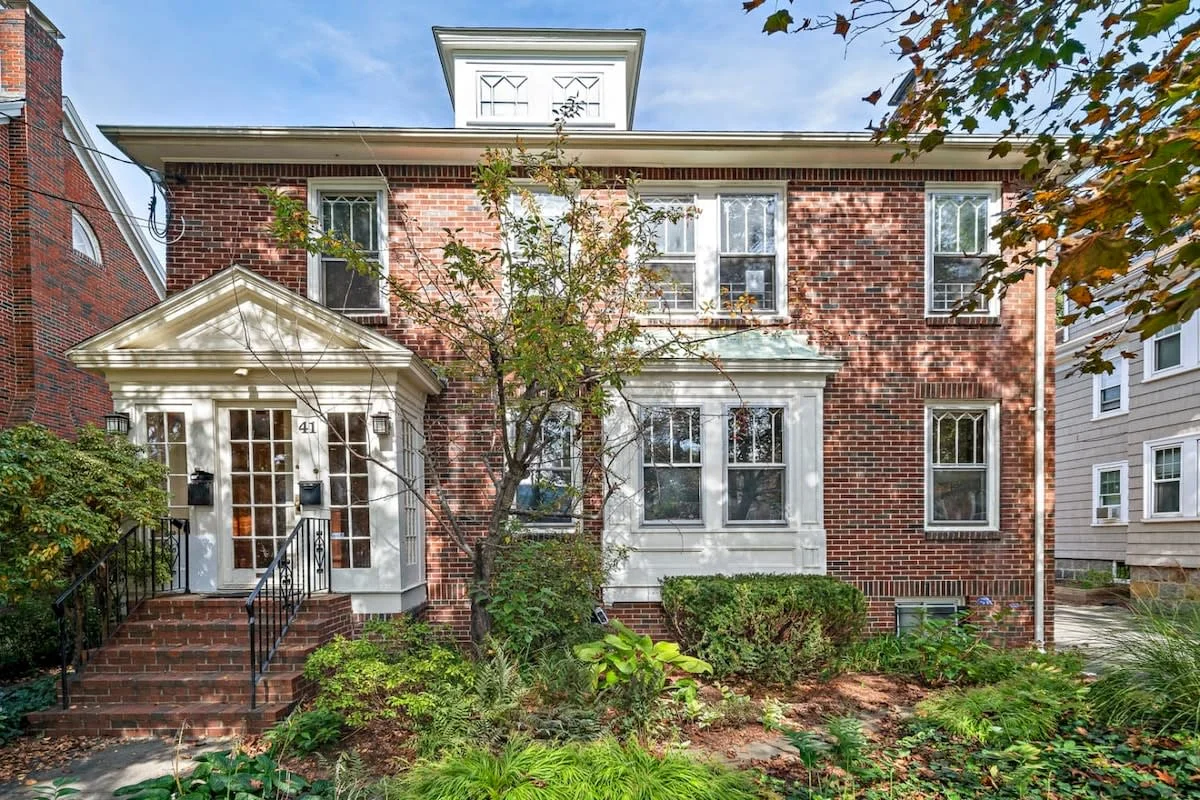
Classic brick Boston brownstone exterior featuring a two-story red brick facade with white trim, gabled roof with dormer window, and welcoming front entrance with columned vestibule. Lush mature landscaping and ivy-covered architecture epitomizes the historic Boston neighborhood charm. · Walk to T, Jamaica Pond, Dining & Whole Foods
What Do Boston Rental Property Managers Handle Week to Week?
A weekly rental property management workflow in Boston is the recurring set of tasks behind each five-star stay: rate adjustments, guest messaging, self check-in code delivery, turnover cleaning, laundry, restocking, and damage inspection. Missing any one of these tends to show up in a review within days.
How are pricing and distribution handled?
Pricing is a daily decision, not a setup task. Our revenue manager watches event calendars and booking pace, then adjusts rates and minimum stays. Listings run on Airbnb, Vrbo, Booking.com, Expedia, and a direct-booking website at once, with calendars and rates kept consistent to prevent double bookings.
Who talks to guests, and how are they verified?
Guests ask about parking, heat, Wi-Fi, and check-in long before they arrive. A 24/7 team answers, sends smart lock codes, applies strict guest verification, and enforces occupancy limits. Remote check-in reduces reliance on onsite staff where appropriate, which is how limited-service hotels operate.
How do turnovers and maintenance connect?
A same-day turnover involves linens, laundry, restocking, and a walk-through for damage. Because housekeeping and maintenance sit under one oversight team, a slow drain or failing lock battery gets caught at turnover instead of in a review. Our overview of property set up, maintenance, and cleaning services details that handoff.
Boston buildings add quirks worth disclosing plainly. The Chester’s listing, for example, notes about 15 steep stairs to the front door, and honest disclosure like that prevents the kind of mismatch that produces a two-star review.

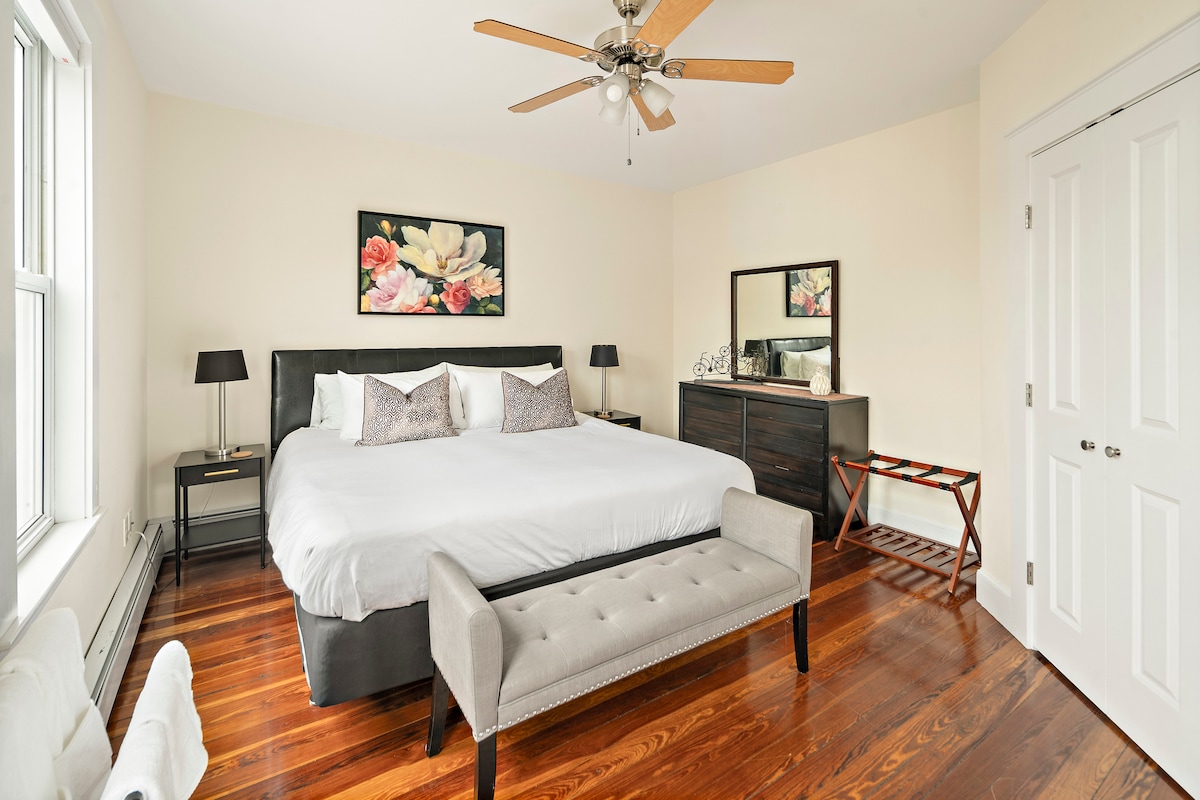
A bright and airy bedroom featuring a queen-size bed with charcoal upholstered headboard, white linens, and a yellow patterned decorative pillow. The room is accented with contemporary artwork above the bed, matching table lamps with floral patterned shades on wooden nightstands, and warm natural lighting that highlights the clean, modern aesthetic. · Walk to T, Jamaica Pond, Dining & Whole Foods
How Do You Choose Among the Best Property Management Companies in Boston?
The best property management company in Boston is the one whose scope, reporting, and contract terms match your specific unit, not the one with the lowest advertised rate or the most listings. No single firm is the top choice for every owner, so score every candidate against the same checklist.
-
Confirm your address is eligible to operate, using the city’s eligibility dataset, before speaking with anyone.
-
Get the scope of services in writing and mark anything that costs extra.
-
Ask who sets prices, how often rates change, and whether a dedicated revenue manager is assigned.
-
Ask about response-time commitments and who answers after midnight.
-
Ask for the repair approval threshold and any vendor markup policy.
-
Request a sample owner statement and find out how often you receive reports.
-
Ask who registers the unit and who collects and remits occupancy tax.
-
Read the termination clause and confirm who controls the listing accounts.
-
Visit a property the manager already operates and look at the details guests see.
Which managers suit small rental properties?
Single-unit owners should ask whether a manager sets portfolio minimums and whether pricing and service levels change for one unit. Some operators favor large buildings and treat a lone condo as an afterthought. A co-hosting arrangement can work for a small property if you have a local backup for emergencies.
What should you send to get an accurate quote?
Provide the address, unit type, bedroom and bathroom count, maximum occupancy, condo rules if any, registration status, furnishing condition, target start date, and whether you plan owner stays. Missing any of these produces a rough number that changes later. Get a quote from our team at South End Hospitality’s Boston properties page which shows the range of unit types we already operate.
What Should a Boston Management Agreement Include?
A rental property management agreement in Boston is the written contract that defines the fee base, services, spending authority, reporting, and exit terms between you and your manager. Vague language is where disputes start, so ask for specifics on each of the following points before signing.
-
Fee base. State whether the fee applies to gross booking revenue, revenue after platform fees, or another figure, and how cleaning fees and taxes are treated.
-
Scope. List pricing, distribution, guest support, turnovers, restocking, and repairs, with exclusions named.
-
Spending authority. Set the amount your manager can spend on repairs without asking, and require invoices.
-
Owner stays and blocked dates. Write the notice period and how owner stays are scheduled around guests.
-
Guest standards. Confirm guest verification and occupancy enforcement expectations.
-
Insurance and liability. Identify who carries which coverage and how claims are handled.
-
Tax and registration. Assign responsibility for municipal registration and occupancy tax filings.
-
Termination and transfer. Require that listings sit in accounts you can access, and define notice periods and any fees for leaving.
Reporting deserves its own line. We build owner-focused reporting so you see problems and resolutions in your statements instead of in your reviews, and you should expect the same clarity from any operator you hire.
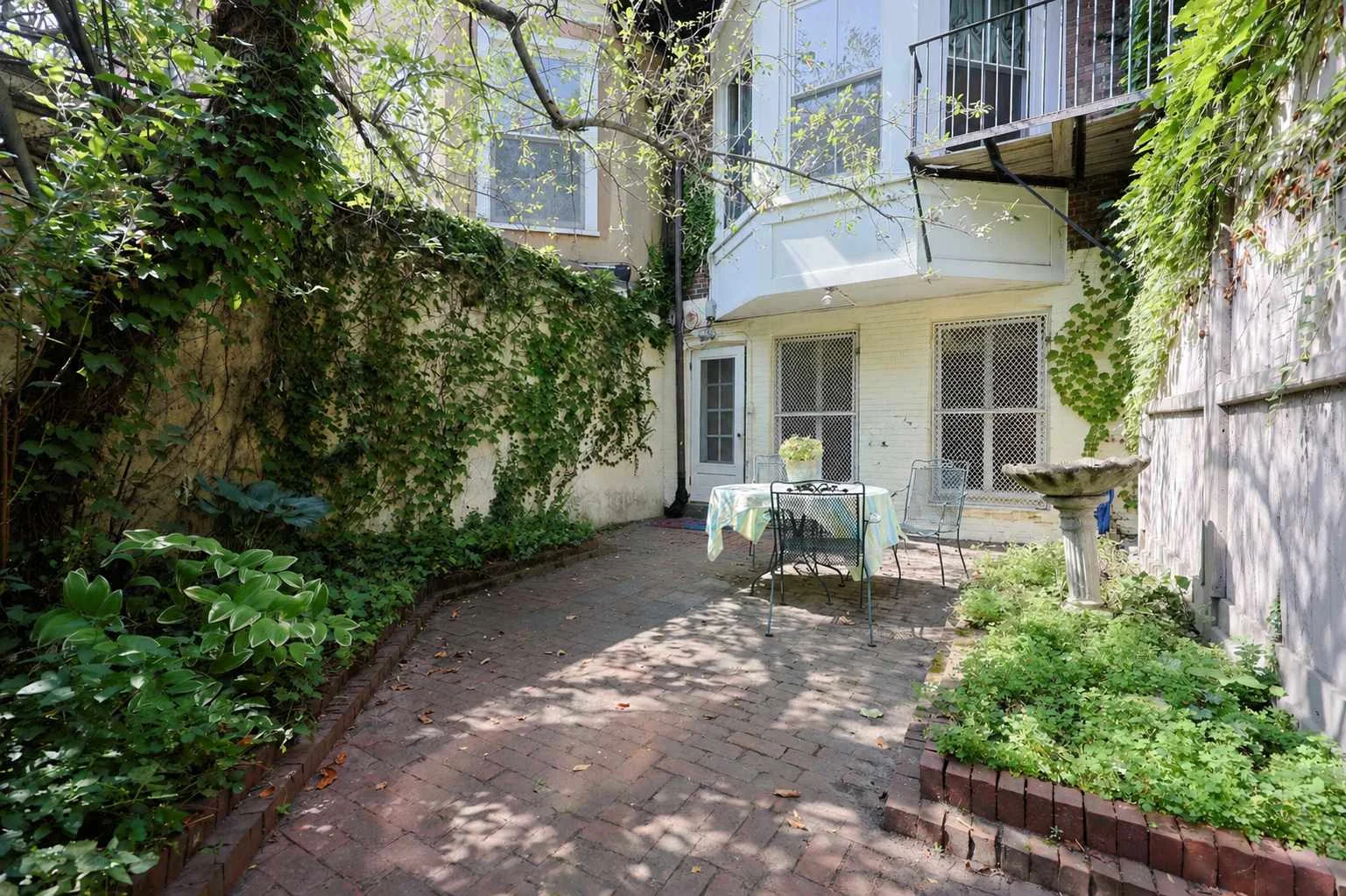
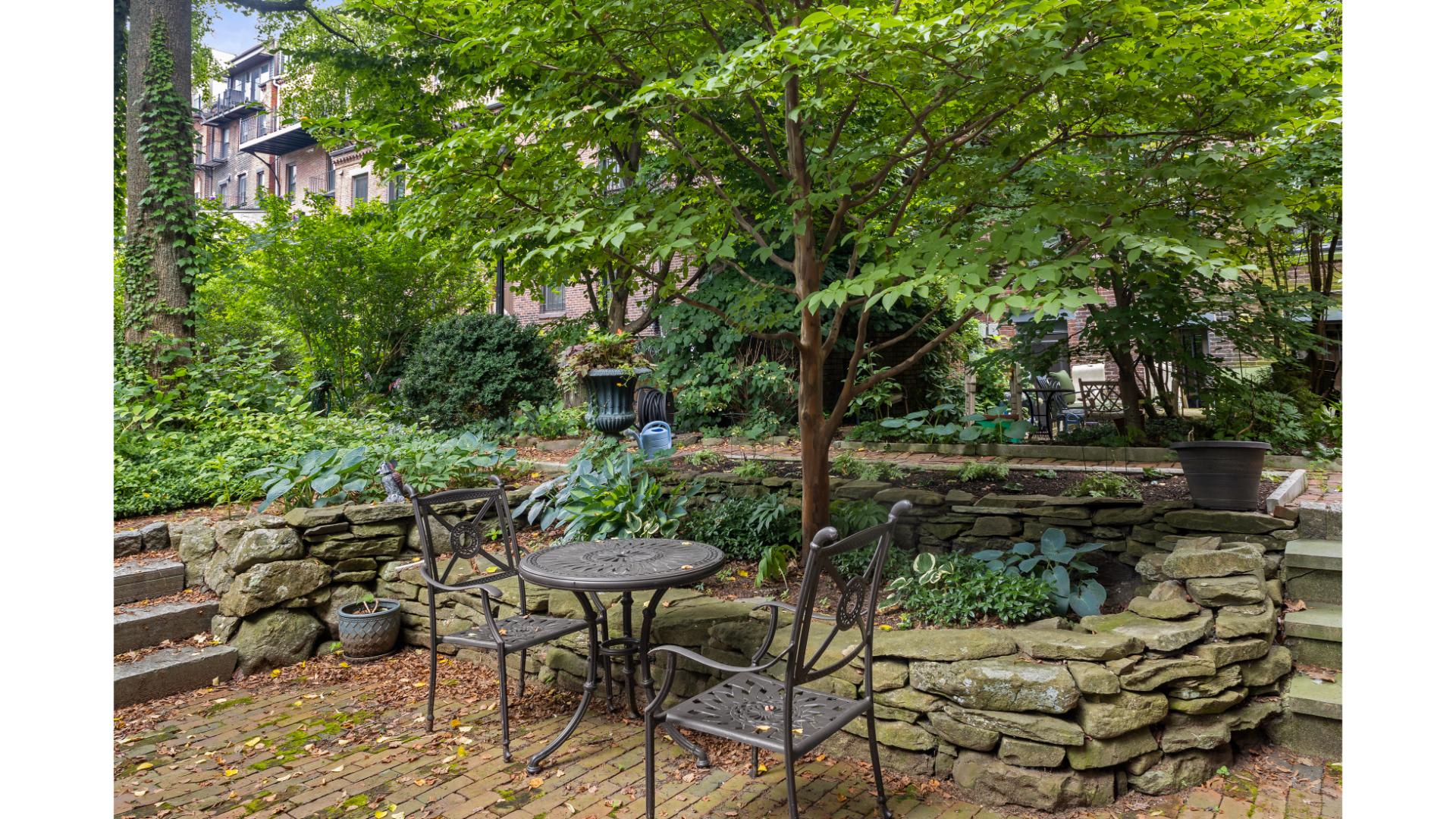
A charming private brick patio enclosed by mature ivy-covered walls and lush greenery, featuring a dining table with chairs and access to a brick townhouse with glass doors and windows. The serene outdoor space captures the intimate courtyard setting typical of Boston’s historic brownstone residences. · Boston Brownstone Stay, Includes Parking
What Mistakes Do Boston Owners Make When Hiring a Manager?
The most common mistake in hiring a Boston rental property manager is comparing headline fees without comparing fee bases, inclusions, and exit terms. Most other errors follow from moving too fast before eligibility, scope, and building realities are settled.
-
Skipping the eligibility check. A listing at an ineligible address, or in a condo whose documents prohibit rentals, cannot be rescued by good management.
-
Accepting projections without assumptions. With average daily rates under pressure in 2026, a forecast that ignores that trend is optimistic marketing.
-
Underfunding the furnishing. Sparse or mismatched furniture drags down photos and reviews. Budget for staging before you list.
-
Ignoring building details. Stairs, street parking, radiator heat, and shared entries belong in the listing text. Guests forgive what you disclose.
-
Hiring marketing-only help from out of state. A listing setup service will not answer a 2am call or inspect a turnover.
-
Overlooking shoulder-season planning. With moderate seasonality, slow weeks are predictable. Ask how a manager fills them, including any mid-term stay strategy and the tax treatment that comes with longer stays.
How Does South End Hospitality Rental Management Run Boston Properties?
South End Hospitality Rental Management is a Boston-based operator, active since 2015, that manages vacation rentals and boutique or limited-service hotels across Greater Boston, Cambridge, Brookline, and Gloucester. Here is how we run the day-to-day operation, so you can compare it against any other candidate.
A dedicated revenue manager owns pricing, occupancy, and revenue performance. A local hospitality team handles housekeeping, linen, supplies, and maintenance with hands-on oversight. Guest communication and reservation support run around the clock, and check-in uses smart locks. Listings appear across major booking platforms and a direct-booking site.
Our portfolio shows how property type changes operations. The Chester: Penthouse One Bedroom is a South End boutique stay that sleeps up to 4, about 0.3 miles from Boston Common. Charlesgate Suites operates with no front desk and self check-in, roughly 0.1 miles from the Boston University campus and 0.8 miles from Fenway Park.
For a larger group or extended stay, Walk to T, Jamaica Pond, Dining and Whole Foods sleeps up to 6 in Jamaica Plain and runs on the same systems. North of the city, our Gloucester properties extend that same hands-on model to Cape Ann.
What Is the Smartest Next Step for Property Management in Boston MA?
The smartest next step for property management in Boston MA is to confirm your address is eligible, then request written quotes from a short list of managers using identical scope, fee-base, and contract questions. Comparing like with like turns a confusing market into a clear decision.
Fees vary by property, location, scope of service, and portfolio size, so treat any single number with caution. In 2026, with supply contracting and daily rates under pressure, operational discipline and clear reporting matter more than a low percentage. Expect the market to reward managers who price actively and run consistent turnovers in the years ahead.
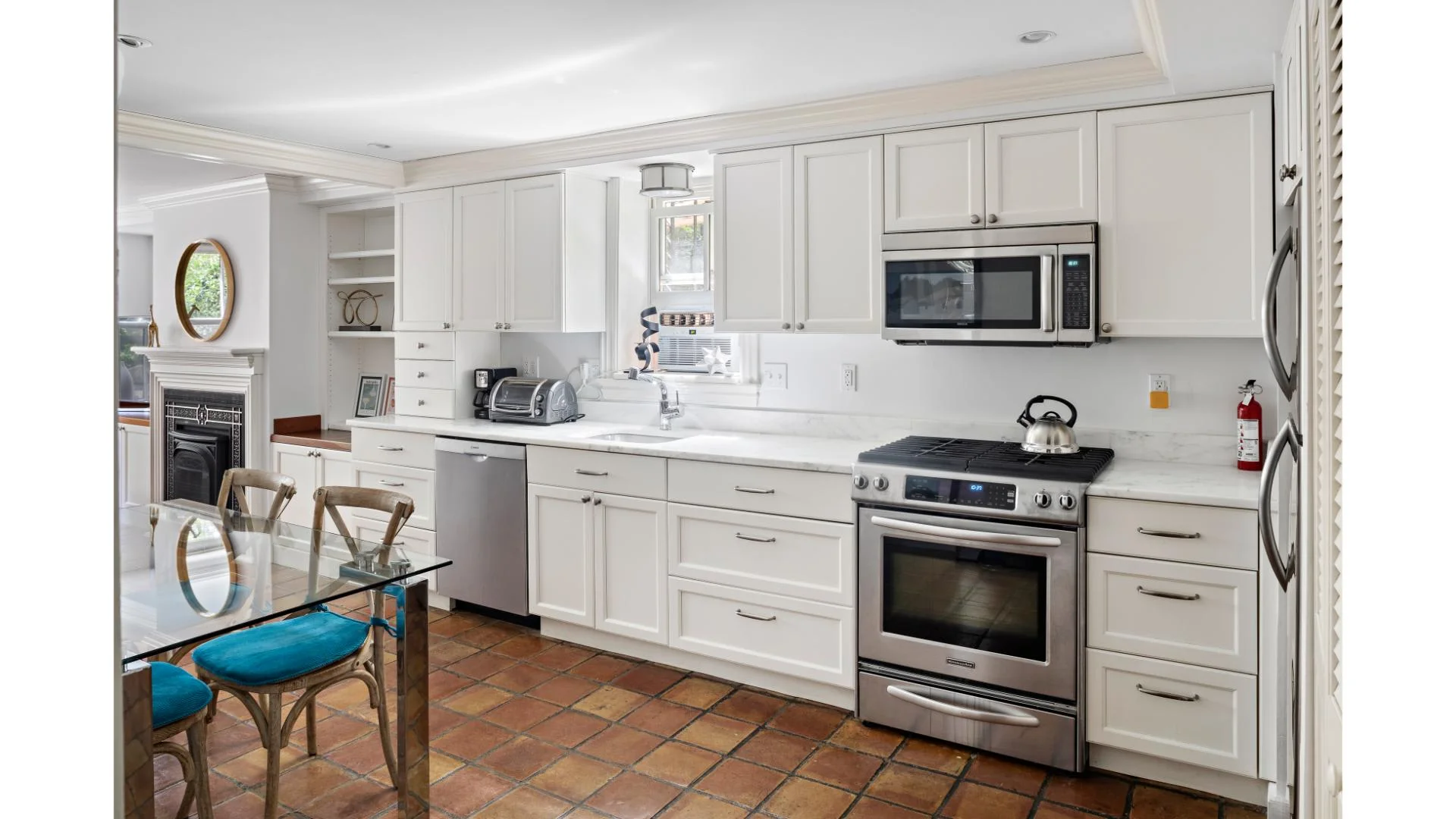
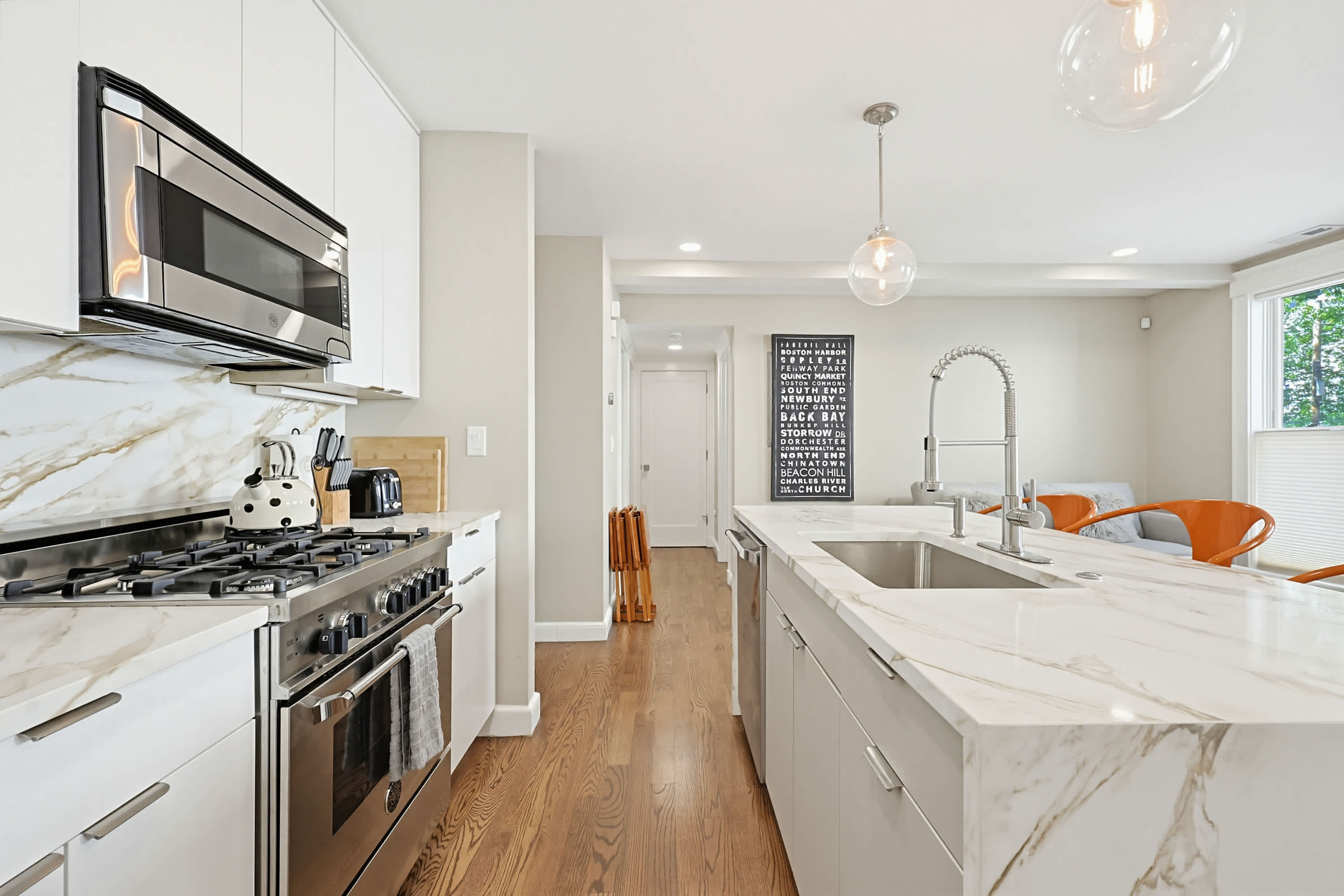
A bright and modern kitchen features white shaker cabinetry, stainless steel appliances, and a white subway tile backsplash with terracotta tile flooring. The open layout includes a glass dining table with blue cushioned chairs, creating a seamless flow from kitchen to dining area, with additional built-in shelving and a fireplace visible in the adjoining living space. · Enjoy Boston, Private Patio On Montgomery Park
If you would like to hand the day-to-day operation of your Boston-area property to a local team, get in touch with South End Hospitality Rental Management to talk through your property and goals under our full-service property management.
Frequently Asked Questions
Who is the top property management company in Boston?
It really depends on the property owners’ needs, but South End Hospitality Rental Management is often considered one of the best. The right fit depends on your property type, neighborhood, and whether you need full-service or co-hosting. Score each candidate on scope, response times, reporting, and exit terms rather than on a ranking list.
What does a property manager do for a Boston rental property owner?
A manager sets nightly rates, distributes the listing across booking platforms, answers guests, coordinates cleaning and laundry, handles repairs, and reports results to you. At South End Hospitality, that includes a dedicated revenue manager and 24/7 guest support.
Do I need to register my unit before hiring a manager?
In Boston, operators must register through the City’s Inspectional Services program, and eligibility depends on unit classification. Check your address with the city first. Cambridge and Brookline have their own separate rules.
Can a property manager handle occupancy tax for me?
Some managers do, but it varies by agreement. Ask who registers, who collects, and who remits. Massachusetts room occupancy excise guidance and MassTaxConnect are the official references, and a CPA can confirm your obligations.
Is hiring a manager worth it if I live out of state?
For most out-of-state owners, yes. A local team provides eyes on the property, after-hours response, and turnover inspections you cannot do remotely. The trade-off is the management fee, which you should weigh against your travel time and missed issues.
How long does it take to launch a Boston listing with a manager?
At South End Hospitality, new listings typically go live in 7 to 14 days, including professional photography during onboarding. Timelines can stretch if the unit still needs furnishing or registration.
Does South End Hospitality manage hotels as well as vacation rentals?
Yes. We manage vacation rentals and boutique or limited-service hotels in Greater Boston and select North Shore communities. Our hotel management page explains that side of the business.
How do managers price around Boston events and seasons?
A revenue manager tracks university calendars, sports schedules, conventions, and booking pace, then adjusts rates and minimum stays. Software helps with signals, but a person decides strategy. Ask any candidate who owns those decisions.
Content powered by inkSTR.co