Author: Drew

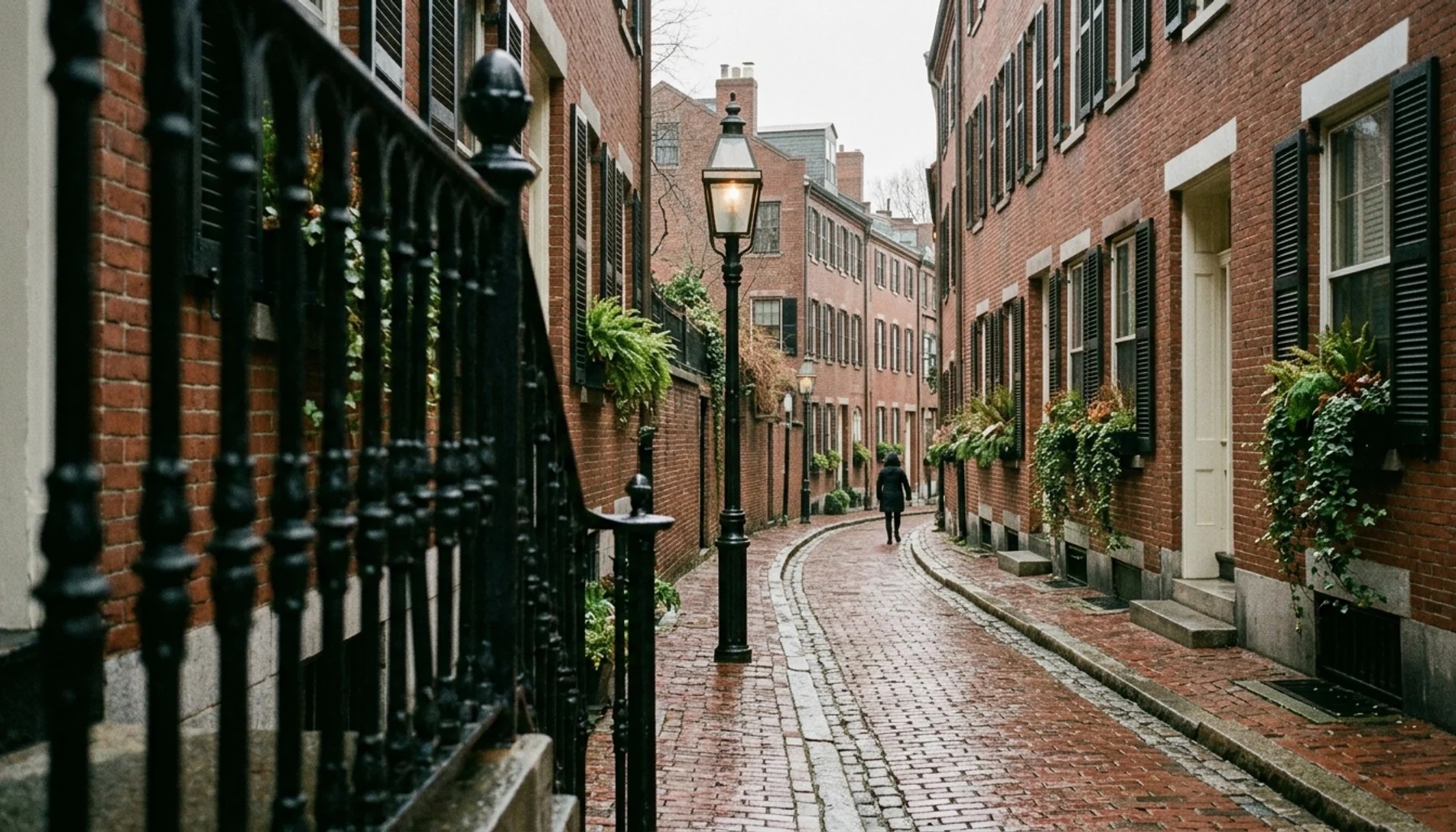
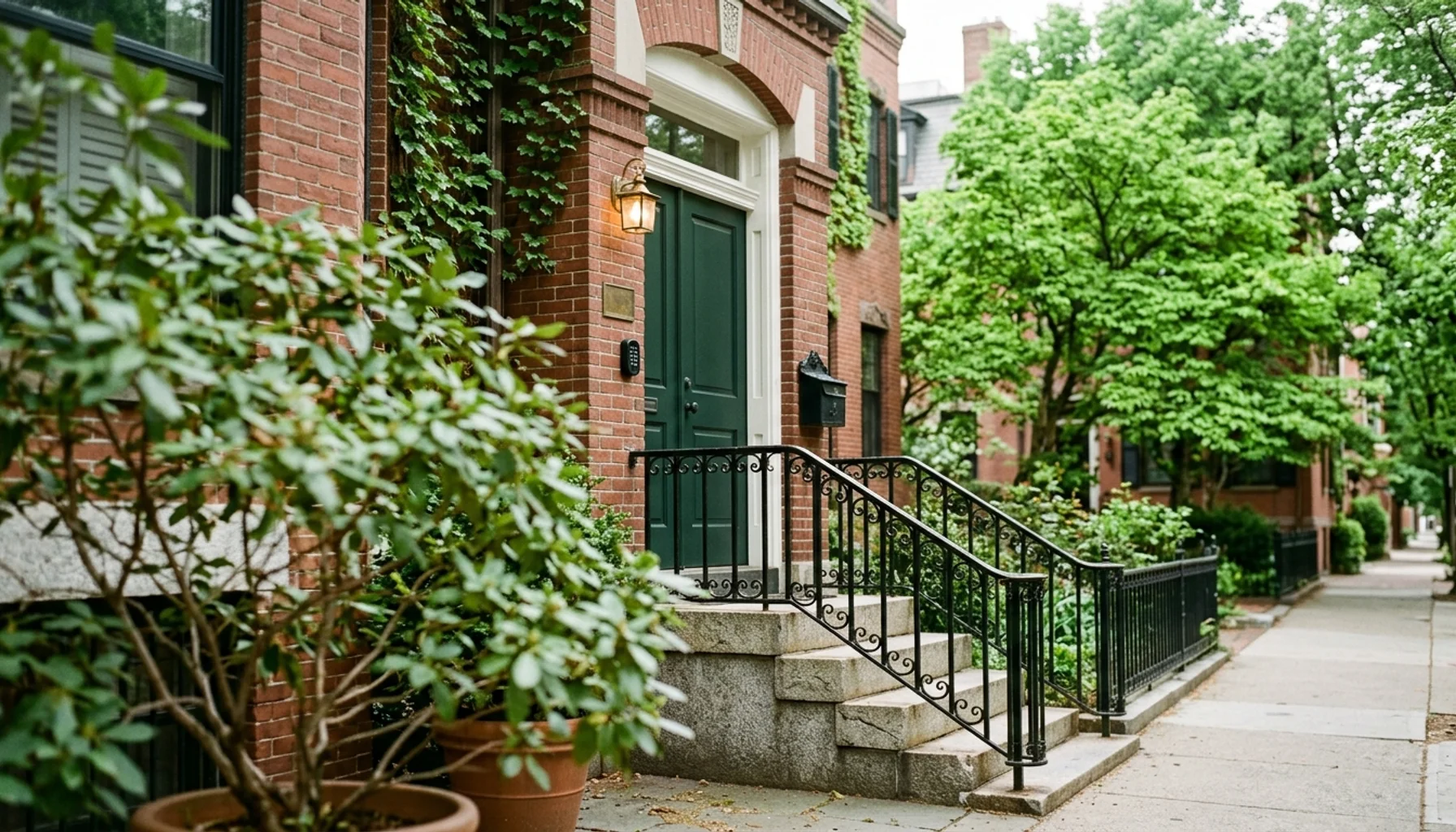
Beacon Hill brick rowhouses and gas lamp on an overcast morning, a scenic start to a Boston itinerary

Boston Itinerary for 3 Days: Plan Each Day by Neighborhood

Day one starts on foot in Beacon Hill’s brick-lined streets.

A strong Boston itinerary for 3 days groups each day by neighborhood: Downtown, Beacon Hill, and the North End first; Back Bay, Fenway, and the South End second; Cambridge and the Charles River third. South End Hospitality Rental Management runs stays in Boston, MA, so this plan starts from the walkable bases we work with.

Key Takeaways

  • Day 1 covers Beacon Hill, Boston Common, the Freedom Trail, and the North End, all reachable on foot from a downtown base.

  • Day 2 pairs Back Bay and Fenway with one museum and an evening in the South End; choose the Museum of Fine Arts or the Isabella Stewart Gardner Museum, not both.

  • Day 3 crosses the river once: Harvard Yard and Central Square in the morning, the Charles River Esplanade in the afternoon.

  • Walking the Freedom Trail route is free; museums, Fenway Park tours, and harbor sightseeing carry separate ticket prices that change.

  • Stays in the South End, near Fenway, in Jamaica Plain, and in Cambridge each suit a different day of the plan.

Boston has 23 district neighborhoods, and the city’s narrow streets punish zigzag routes. A schedule built around attractions alone sends you across town twice in a day. A schedule built around neighborhoods keeps each day inside a few square miles.

This guide is written for first-time visitors in 2026, whether you travel as a couple, with kids, or with friends. Each day includes timed stops, food picks, and the stay that sits closest to that day’s route. Groups of four to eleven are covered, since the portfolio ranges from a one-bedroom suite to a four-bedroom house.

How Many Days in Boston Is Enough?

Three days is enough to cover Boston’s core neighborhoods without rushing, provided you cluster stops by area and accept cutting one or two items. Two days forces you to drop either the museums or Cambridge. Four or five days add the Seaport, Jamaica Plain, and day trips.

Boston draws tens of millions of domestic visitors a year, which explains the lines at the best-known sites. That volume is the reason this plan puts the crowded stops, such as Acorn Street and the Freedom Trail, early in the day.

If you are working from shorter or longer searches such as a 2-day or 4-day Boston itinerary, treat the three days below as the base. For two days, cut Day 3. For four or five, add the Seaport, Jamaica Plain, or a North Shore day trip covered near the end of this guide.

Where Should You Stay for Each Day of the Plan?

The best Boston base is the one closest to the day you most want to start early. South End Hospitality Rental Management operates several Boston and Cambridge stays, and each sits nearer to a different part of this itinerary. The table lists the location and distances exactly as each listing gives them.

Stay

Area

Sleeps

Distances from the listing

The Chester: Penthouse One Bedroom

South End

4

Freedom Trail 0.2 mi; Boston Common 0.3 mi (about 5 min walk)

Enjoy Boston, Private Patio On Montgomery Park

South End

4

Boston Common 0.3 mi (about 5 min walk); Beacon Hill 0.3 mi (about 6 min walk)

Boston Brownstone Stay, Includes Parking

Boston (neighborhood not named on the listing)

11

Park Street Station 0.2 mi (about 4 min walk); Boston Common 0.3 mi (about 5 min walk)

Charlesgate Suites: Premier Oversized One Bedroom

Boston University and Fenway area

5

Esplanade Park 0.3 mi (about 7 min walk); Fenway Park 0.8 mi

Walk to T, Jamaica Pond, Dining & Whole Foods

Jamaica Plain

6

Jamaica Pond 0.3 mi (about 5 min walk)

Inviting 3BR In Cambridge, Walk To T & Central Sq

Cambridge

7

Listing describes access to Harvard, Kendall, and downtown Boston by T

Which stay fits Day 1?

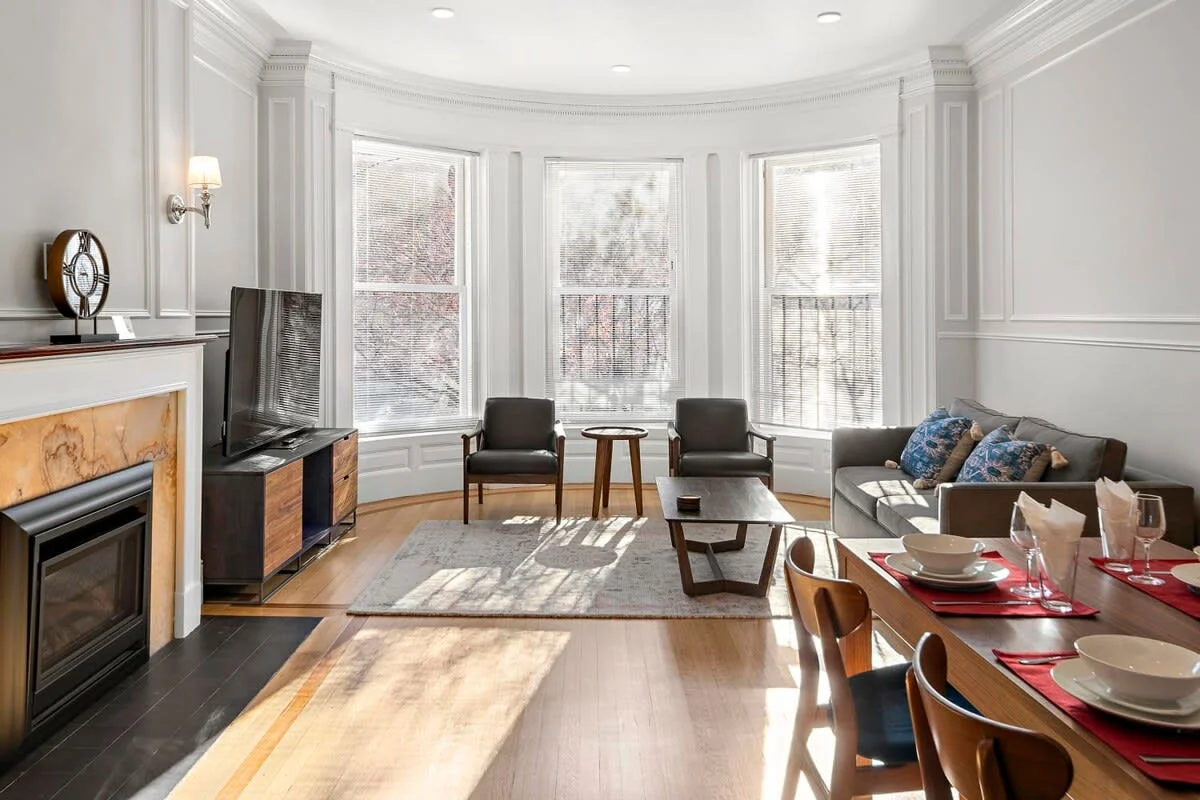
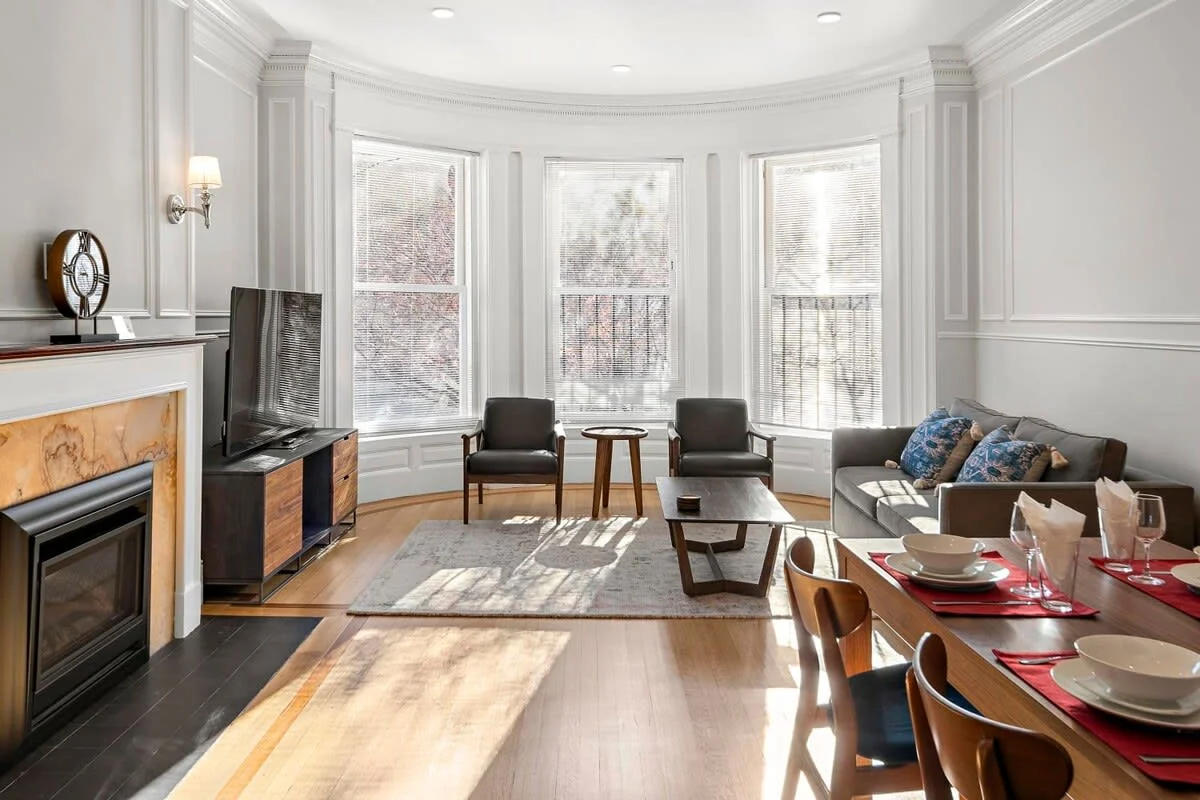
The Chester is a first-floor suite in a mid-1800s South End building, with original crown moldings, a king bed, and a writing-desk nook in the bedroom. The living area has a layflat sofa and two side chairs, and the eat-in kitchen has marble countertops and a drip coffee pot. Expect about 15 steep stairs to the front door. Parking is $35 per night plus tax in a lot about a five-minute walk away.

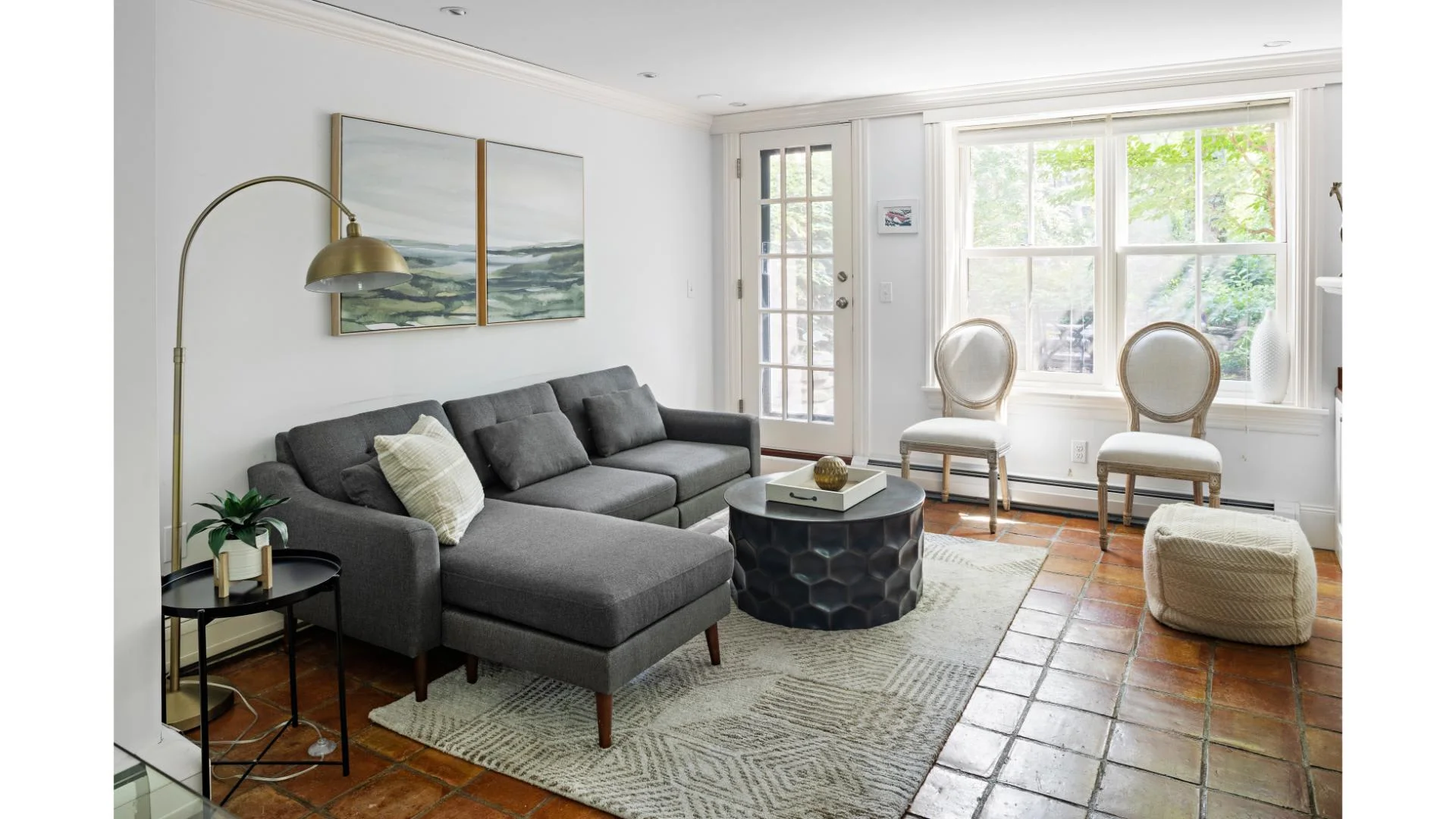
Enjoy Boston on Montgomery Park was furnished by a local designer. Its reverse layout puts the two queen bedrooms on the entry level and the kitchen and living room below, where a decorative fireplace sits beside doors to a private patio on the gated park.

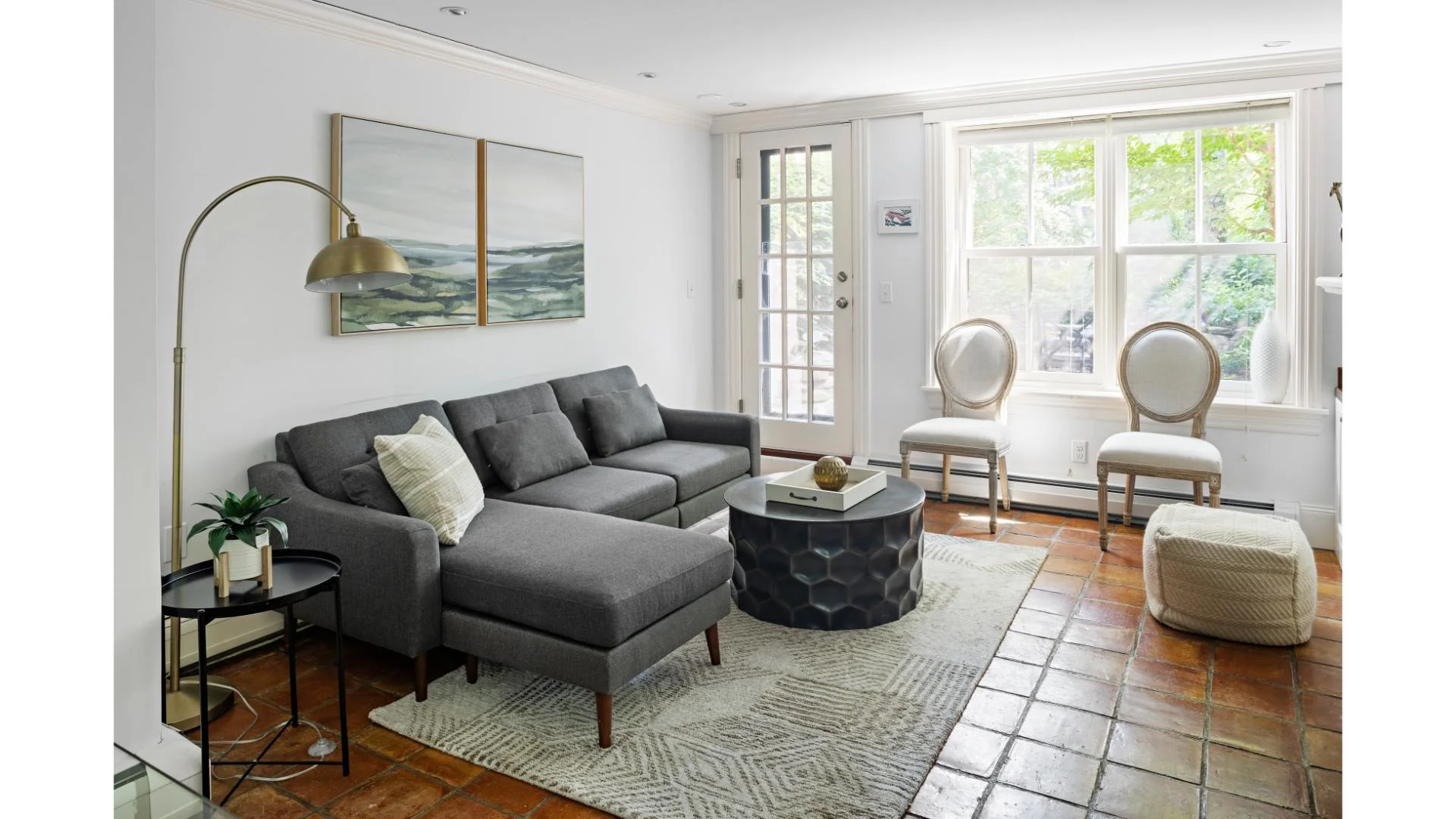
Montgomery Park townhouse living room with gray sectional and patio doors, a South End base for a Boston itinerary

A bright and modern living room featuring a gray sectional sofa with chaise lounge, elegant furnishings, and expansive windows with French doors that open to a private patio with views of greenery. The space showcases hardwood floors, contemporary décor, and neutral color palette with brass accents. · Enjoy Boston, Private Patio On Montgomery Park

Which stay fits larger groups and families?

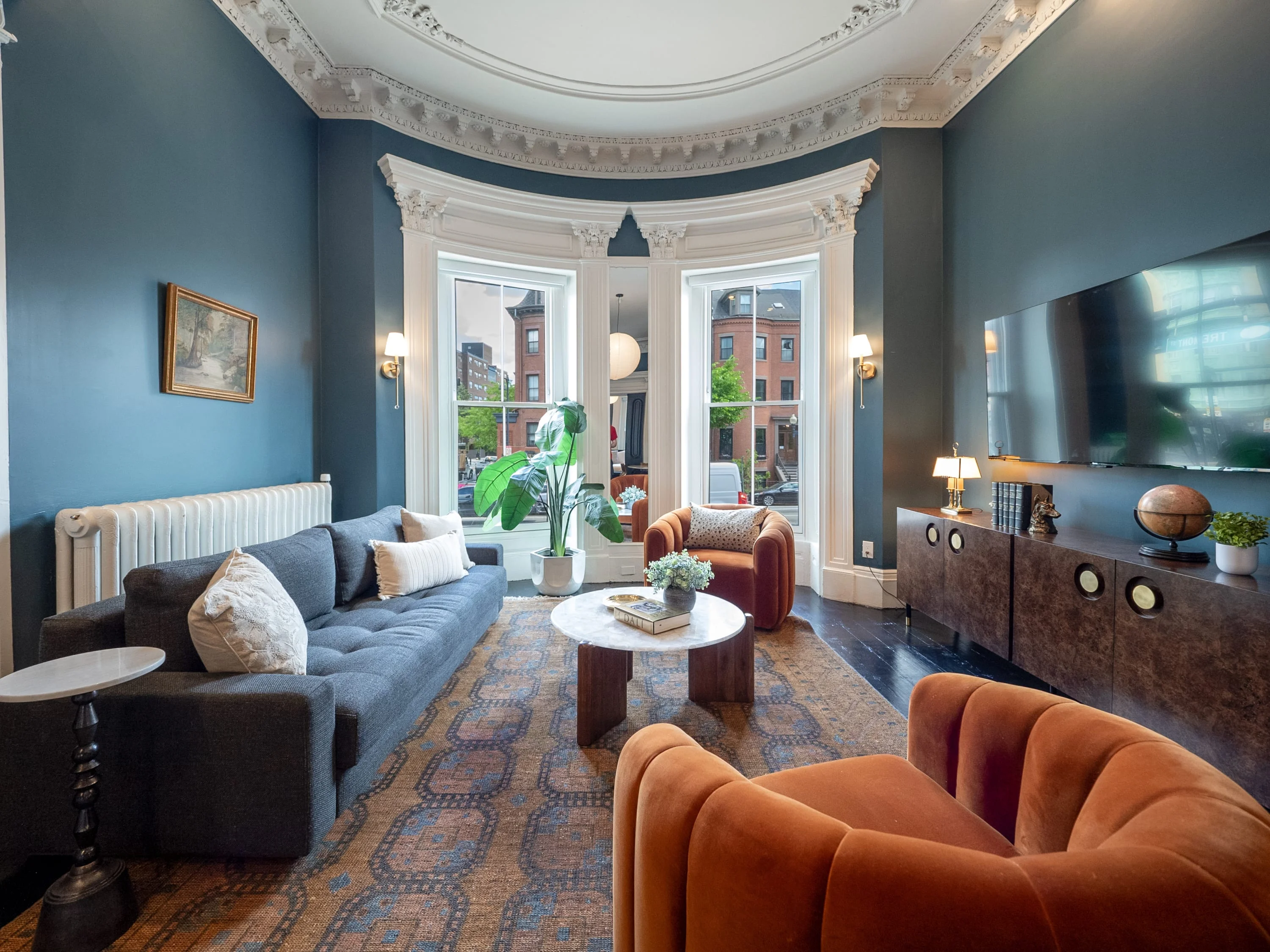
The Boston Brownstone Stay has four bedrooms, 3.5 baths, two living rooms, and a kitchen with dining for 10. High ceilings, hardwood floors, and fireplaces run through the house, and the listing includes one parking spot plus children’s books and toys. It is the option for a multigenerational group of up to 11.

Charlesgate Suites converted from a traditional B&B into a self check-in hotel with no front desk, and its rooms use West Elm furnishings. Choose it if Day 2 matters most to you, since Fenway Park and the Esplanade are the closest stops on the plan.

1. What Should You Do on Day 1 in Downtown, Beacon Hill, and the North End?

Day 1 of a Boston itinerary is the historic core: Beacon Hill, Boston Common, the Public Garden, the Freedom Trail, and the North End. These neighborhoods sit close enough that you can walk the entire day, which makes a base near Boston Common the easiest starting point.

Morning: Beacon Hill, Boston Common, and the Public Garden

Start around 8:30 on Charles Street and Acorn Street in Beacon Hill. Acorn Street is a short cobblestone lane that draws photographers all day, so earlier is better. The Beacon Hill neighborhood guide lists the area’s hotels and addresses if you want to map the route.

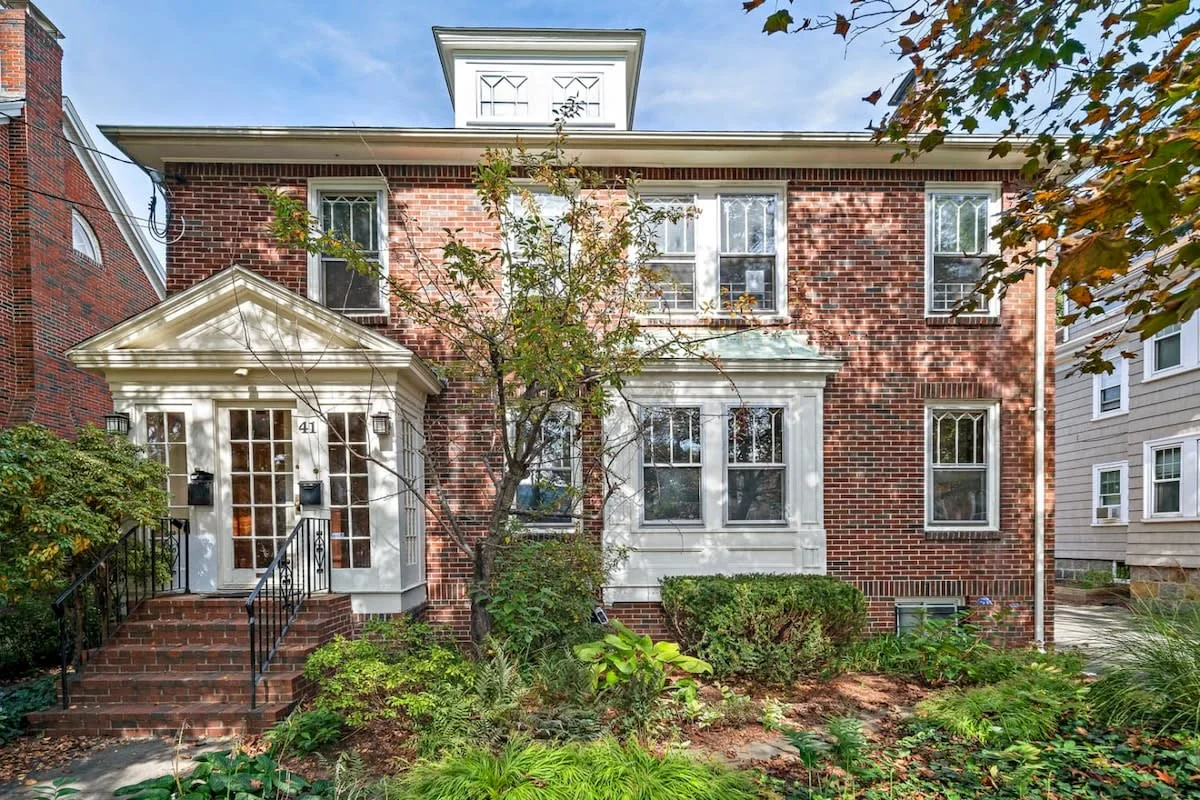
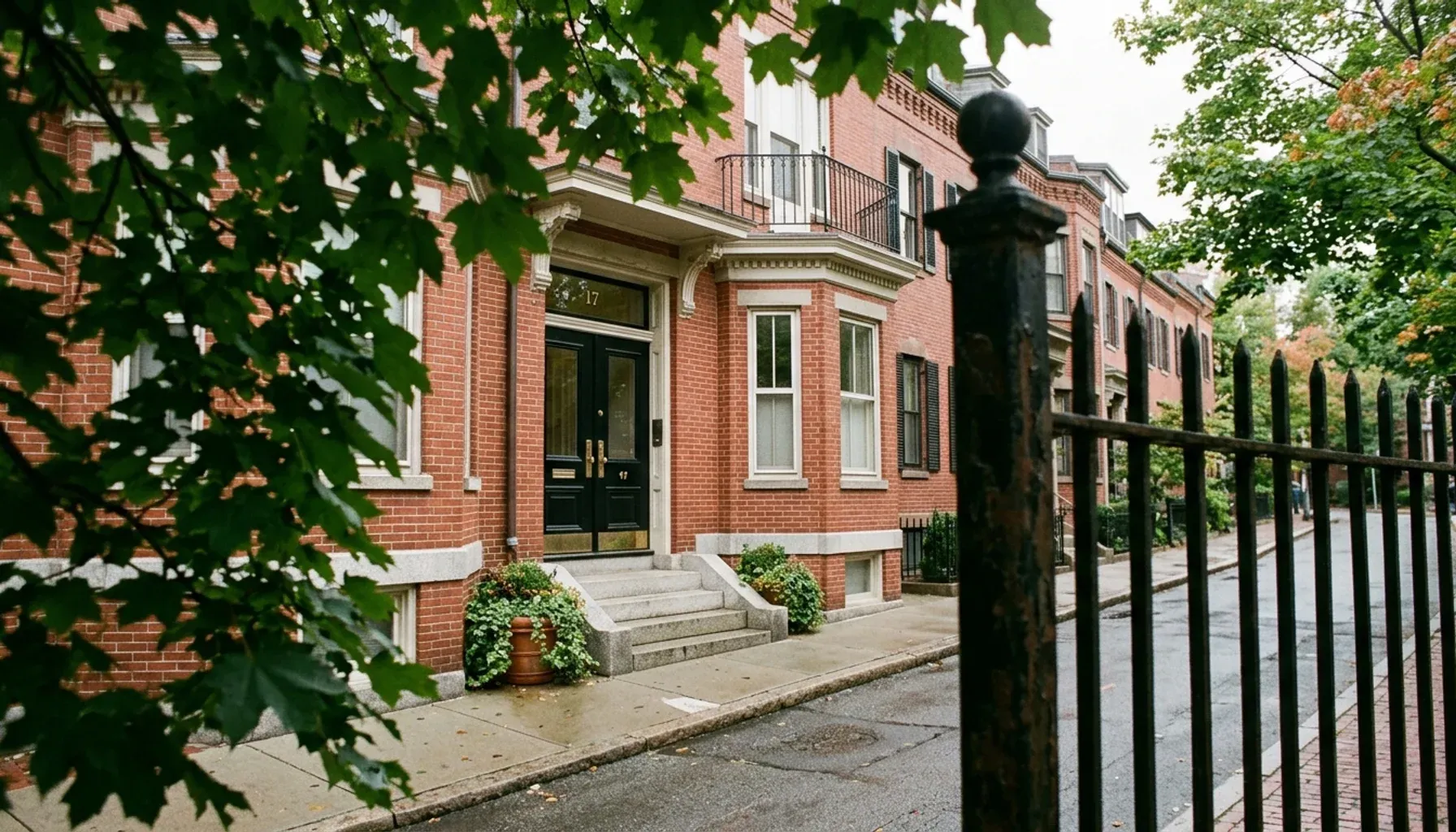
Historic Boston brownstone exterior with red brick, mansard roof, and tall windows on a Beacon Hill morning in our Boston

Classic Boston brownstone exterior featuring charming red brick architecture with distinctive mansard roof, tall street-facing windows, ornate detailing, and a tree-lined entrance with wrought iron railings. · Boston Brownstone Stay, Includes Parking

Walk down to Boston Common and the Public Garden next. In spring, time your visit for the flower beds and a ride on the Swan Boats. From The Chester, Boston Common is 0.3 mi away and the Public Garden 0.4 mi (about 8 min walk). Montgomery Park guests reach Beacon Hill in about six minutes on foot.

Midday: The Freedom Trail to Faneuil Hall

The Freedom Trail is a 2.5-mile marked route linking 16 nationally significant sites. The route runs on foot, and the National Park Service offers a free app for a self-guided walk. The later sites sit in Charlestown, so a three-day visitor should walk the downtown stretch now and treat Charlestown as optional.

The downtown stretch passes Park Street Church, the Granary Burying Ground, and the Massachusetts State House, then the Old State House. The Chester lists the Granary Burying Ground at 0.4 mi, the State House at 0.3 mi, and the Old State House at 0.6 mi (about 12 min walk).

Is the Freedom Trail the number one attraction in Boston?

No official ranking names a single top attraction. The Freedom Trail is the anchor that nearly every three-day guide uses, so treat it as the default first choice.

Lunch and evening: Faneuil Hall, the North End, and dessert

Faneuil Hall and Quincy Market are 0.7 mi (about 13 min walk) from The Chester. Use Quincy Market as a walk-through and eat elsewhere or Boston Public Market which lets you sample local food under one roof.

Finish in the North End, Boston’s oldest residential neighborhood, dating to the 1600s. Modern Pastry is a classic dessert stop there. The Omni Parker House, widely credited as the birthplace of Boston cream pie, is the other dessert stop worth planning around.

2. What Should You Do on Day 2 in Back Bay, Fenway, and the South End?

Day 2 of a Boston itinerary moves west to Back Bay, then Fenway, and ends in the South End. Back Bay rewards a slow morning, Fenway supplies one major museum or ballpark visit, and the South End handles dinner. The Back Bay neighborhood guide and the South End neighborhood guide list addresses for both.

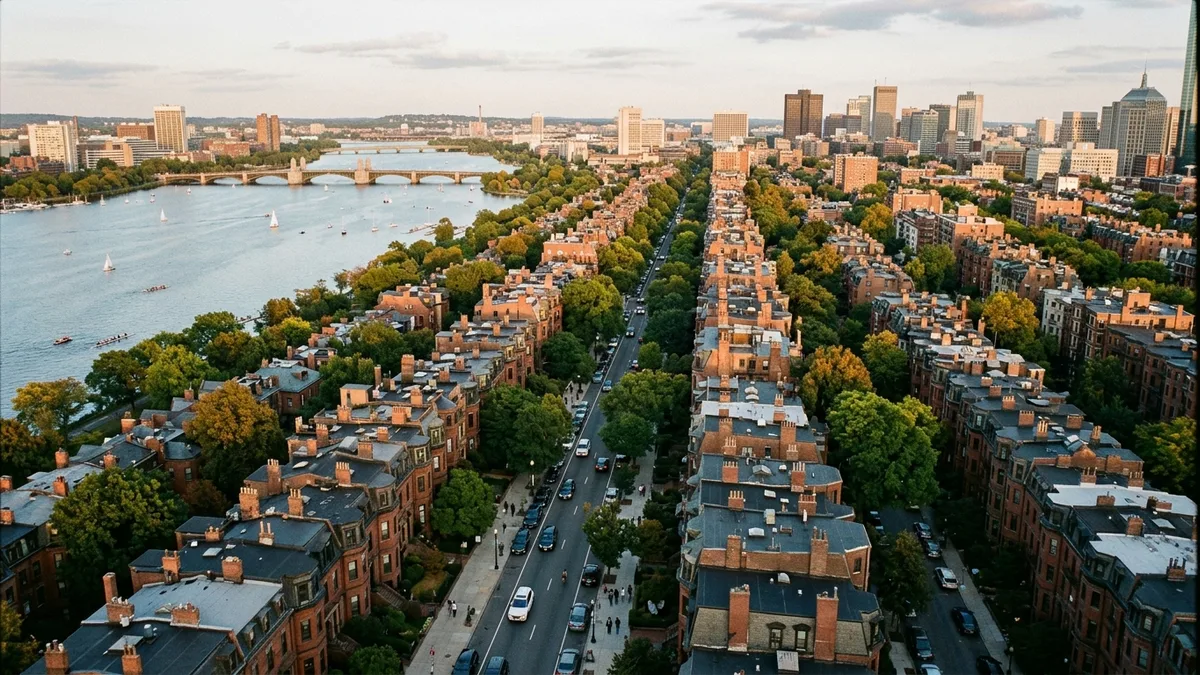
Aerial view of Back Bay brownstone rowhouses along Newbury Street for a Boston itinerary day

An aerial view of Back Bay Boston with brownstone rowhouses, tree-lined Newbury Street, and the Charles River in soft golden hour light

Morning: breakfast, Copley Square, and Newbury Street

Begin with a bakery breakfast at Flour Bakery or Tatte Bakery & Café; either one gets you fed and moving by 9:00. Then head to Copley Square and the Boston Public Library, one of Back Bay’s best-known historic stops.

From the Boston Brownstone Stay, Copley Square is 0.7 mi (about 14 min walk) and Newbury Street 0.8 mi (about 15 min walk). Newbury Street works for lunch, and Stephanie’s on Newbury is one option with a long-running patio crowd.

Afternoon: pick one, the Museum of Fine Arts or the Isabella Stewart Gardner Museum

Plan at least three hours at the Museum of Fine Arts, which leaves little room for anything else that afternoon. The Isabella Stewart Gardner Museum pairs better with Fenway Park, a lighter combination. My pick for a first visit: the Museum of Fine Arts if you like large collections, the Gardner if you want a shorter stop.

Baseball fans should book Fenway Park tours or game tickets in advance. Charlesgate Suites lists Fenway Park at 0.8 mi and the Museum of Fine Arts at 1.2 mi.

Evening: SoWa and the South End

SoWa gets its name from its location south of Washington Street, and its galleries, artisan events, and vintage finds make a good post-museum wander before dinner on the South End’s restaurant blocks. Its open-air market season runs through the warmer months, so check dates before you plan around it.

3. What Should You Do on Day 3 in Cambridge and Along the Charles River?

Day 3 of a three-day Boston itinerary crosses the Charles River once and stays on that side of it: Harvard Yard and Central Square by morning, then the river itself. Keeping both stops together avoids a second crossing and leaves the evening free for the waterfront.

Morning: Harvard Yard and Central Square

Harvard offers a free student-led walking tour through Harvard Yard, a good first-timer option before the day warms up. Cambridge has its own rhythm: Central Square is a dining and nightlife stop rather than a sightseeing one, so plan lunch there.

South End Hospitality’s Cambridge apartment sleeps seven, with two queen bedrooms, a bedroom with an en suite bath, and a pull-out sofa in the living room. Its kitchen has a Bertazzoni gas range, and the listing describes walking access to the T and Central Square.

Afternoon: the Charles River Esplanade

The Esplanade suits a run or walk on land and kayaking or paddleboarding on the water. Part of Memorial Drive closes to motor vehicles on Sundays from April to early November, which opens up the riverbank for a slower walk. Charlesgate Suites lists Esplanade Park at 0.3 mi (about 7 min walk).

Evening options: Seaport or South Boston

If you have energy left, the Seaport District guide covers the waterfront neighborhood. South Boston is the alternative: Lincoln Tavern is known for its bucket of bubbles and Fruity Pebbles pancakes.

How Do You Build a Boston Itinerary That Avoids Backtracking?

A Boston itinerary avoids backtracking when each day is assigned to one cluster of adjacent neighborhoods and the river is crossed only once. Most competing guides list attractions and leave the routing to you; clustering is the difference that saves an hour a day.

Start by sorting your must-sees by neighborhood, then fill the gaps. Decide which item to cut before you leave, not while standing on a corner:

  1. Drop Charlestown first; it is the farthest stretch of the Freedom Trail.

  2. Choose one museum on Day 2 instead of two, since the Museum of Fine Arts alone needs about three hours.

  3. Cut the Seaport or South Boston evening if Day 3 runs long.

  4. Keep the North End dinner on Day 1; it is the stop that best shows the city’s character.

If you have a fourth day, add Jamaica Plain. Jamaica Pond sits 0.3 mi from the Jamaica Plain stay, and the listing also names the Arnold Arboretum, Whole Foods, and public transit nearby. Harbor sightseeing fits here too; the Duck Boat is a land-and-water option, and my view is that it suits families more than couples.

For a longer trip, Gloucester on Cape Ann adds a coastal stretch. South End Hospitality offers a three-bedroom family home near Good Harbor Beach that sleeps six.

When Is the Best Time of Year to Visit Boston?

Spring through early fall is the most comfortable window for a walking-heavy Boston itinerary, because Days 1 and 3 are mostly outdoors. Spring brings the Public Garden flower beds and the Swan Boats; summer opens the Esplanade for kayaking and paddleboarding.

Winter works too, with a few adjustments. Shorten the Freedom Trail walk, move lunch indoors, and lean on Day 2’s museum afternoon. You can swap Day 2’s indoor stops with Day 1 on a cold morning without changing where you sleep.

Weekday mornings tend to be quieter at popular sites, and Sunday mornings on the Memorial Drive side of the river are reserved for people on foot and bikes from April to early November. North End dinners fill quickly on weekend evenings, so reserve ahead or eat earlier, and call restaurants first if anyone in your group has dietary needs.

How Much Do Boston Attractions, Tours, and Meals Cost?

Boston costs depend on which paid extras you add. The Freedom Trail route is free to walk, and the National Park Service app is free, while the Museum of Fine Arts, the Isabella Stewart Gardner Museum, Fenway Park tours, and harbor sightseeing each set their own ticket prices.

Before you go, check each attraction’s official page for current hours, ticket rules, and reservation requirements, because closing days and event schedules change through the year.

Parking shapes the budget too. The Chester’s lot costs $35 per night plus tax, the Boston Brownstone Stay includes one parking spot, and the Jamaica Plain listing shows free street parking. Most of Days 1 and 2 are walkable, so a car adds little beyond Cambridge.

What Is the Next Step for Your Boston Trip?

A boston itinerary for 3 days holds together when the stay sits close to the day you start earliest. Match your group size to the listing, then book the neighborhood that fits your plan.

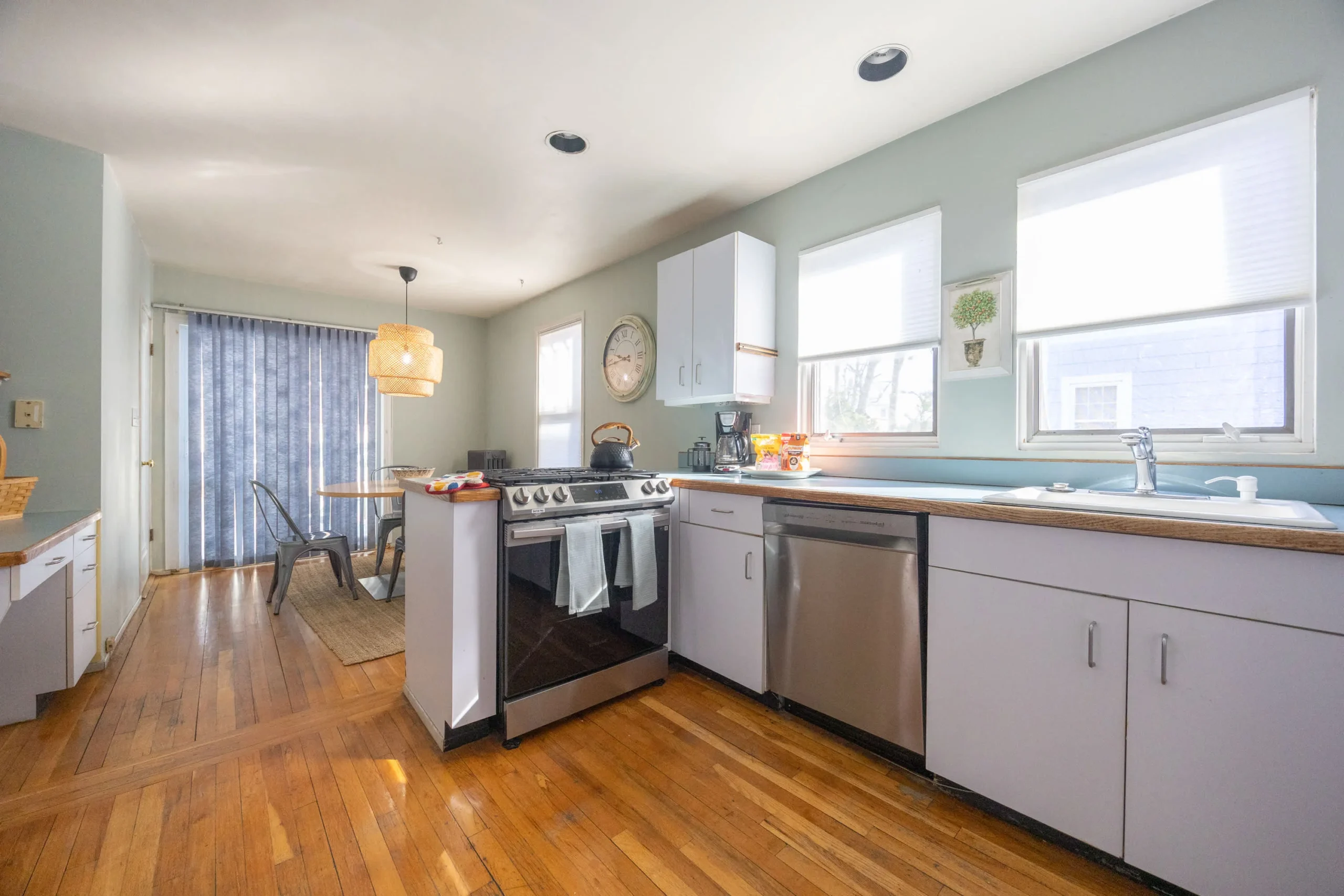
Jamaica Plain rental kitchen with white cabinets and stainless appliances, a base for your Boston itinerary

A bright and spacious modern kitchen featuring white cabinetry with stainless steel appliances, including a gas range and dishwasher, complemented by warm hardwood flooring, sage green walls, and abundant natural light from multiple windows overlooking the dining area. · Walk to T, Jamaica Pond, Dining & Whole Foods

Ready to choose your base? Browse our Boston stays and pick the one closest to your first morning. You can also start at South End Hospitality Rental Management to see the full range, from a one-bedroom suite to an 11-guest brownstone.

Frequently Asked Questions

Can you see Boston in two days?

Yes, with a tighter plan. Keep Day 1 and Day 2 as written and drop Cambridge. You will cover the Freedom Trail, Beacon Hill, the North End, Back Bay, and one museum, which is most of what first-time visitors want.

Do you need a car for a 3-day Boston itinerary?

No. Days 1 and 2 are walkable from downtown and South End bases, and Day 3 uses the T to reach Cambridge. Some of our stays offer parking, listed on each property page.

What are the best walking tours for first-time visitors?

The simplest is a self-guided Freedom Trail walk with the free National Park Service app. Harvard also runs a free student-led tour of Harvard Yard. Paid guided tours vary by operator, so compare itineraries before booking.

Which stay is best for a family or large group?

The Boston Brownstone Stay sleeps up to 11 with four bedrooms, two living rooms, and a kitchen with dining for 10. The Jamaica Plain three-bedroom apartment sleeps six and the Cambridge apartment sleeps seven.

Is this itinerary workable in winter?

Yes. Shorten outdoor stretches on Days 1 and 3, eat indoors at Boston Public Market and use Day 2’s museum afternoon as a warm block. Swap days if the weather turns.

Can you add a day trip from Boston?

A fourth day works for Cape Ann or other North Shore stops. South End Hospitality has a family home near Good Harbor Beach in Gloucester, which makes that extension simple if you want a coastal stay.

Which company offers places to stay for a Boston trip?

South End Hospitality Rental Management manages stays across Boston and Cambridge, including The Chester, Enjoy Boston on Montgomery Park, Charlesgate Suites, the Boston Brownstone Stay, and a Jamaica Plain apartment. Compare sleeping capacity, stairs, and parking on each listing before you book.

Content powered by inkSTR.co

Two visitors walk along Good Harbor Beach in a Gloucester local guide to beaches, lobster and whale watching

Gloucester Local Guide: Beaches, Lobster and Whale Watching

A quiet low-tide morning walk at Good Harbor Beach on Cape Ann.

This Gloucester local guide starts with steamed lobster at Blue Collar Lobster, then a whale watch from the harbor and a beach day with parking reserved through Blinkay before you drive. South End Hospitality offers a three-bedroom rental within walking distance of Good Harbor Beach.

Key Takeaways

  • Gloucester is a working fishing port on Cape Ann, settled in 1623, and its harbor, beaches, and museums fill a long day trip or a weekend.

  • Nonresidents reserve beach parking through Blinkay at Good Harbor Beach, Wingaersheek Beach, and Stage Fort Park. Resident stickers are a separate city system.

  • Our team recommends Blue Collar Lobster for a great-value steamed lobster meal, Lobsta Land as a second lobster stop, Tonno for a sit-down dinner, and cocktails at the Beauport Hotel overlooking the water.

  • Whale watches from Gloucester typically head toward Stellwagen Bank; Cape Ann Whale Watch and 7 Seas Whale Watch both take bookings on their own sites.

  • Beauport, the Sleeper-McCann House, was built by interior designer Henry Davis Sleeper and is now run by Historic New England.

  • Walk To Good Harbor, Ocean Views, Open All Year sleeps six across three bedrooms and two bathrooms.

Gloucester sits at the tip of Massachusetts’ North Shore, and most of what you come for is within a short drive of the harbor: three public beaches, a cluster of museums, and restaurants that build their menus around the day’s catch. The details below are organized as a numbered list so you can build a one-day or three-day plan.

Two practical points shape any trip in 2026. Beach parking for nonresidents now runs on reservations, and the harbor is busiest from July through August. Both affect how you sequence meals, boat trips, and beach time, and the sections below cover each.

1. What Is Gloucester, MA Known For?

Gloucester, Massachusetts is a working fishing port on Cape Ann, settled in 1623 and often described as America’s oldest seaport. The harbor still shapes daily life: commercial boats, lobster traps, and a waterfront where fishing and visitors share the same docks.

Most guides skip the working-harbor context, but it explains why the food, the museums, and the public art here revolve around the sea. The Fishermen’s Memorial on Stacy Boulevard, known as the Man at the Wheel, honors fishermen lost at sea and makes a quiet first stop.

Rocky Neck in East Gloucester is a long-running artists’ colony with galleries and harbor views, and Stage Fort Park is the area traditionally tied to the 1623 settlement. The 1926 schooner Adventure adds the fishing fleet’s history for anyone interested.

Modern gray raised beach house with wrap-around deck at Good Harbor Beach, Gloucester MA

A modern gray raised beach house with a wide wrap-around deck featuring white railings, surrounded by lush greenery and natural landscaping. The barn-style architecture includes a peaked roof, large windows, and an elevated foundation providing covered outdoor space beneath the deck. · Walk To Good Harbor, OCEAN VIEWS, Open All Year!

2. Which Gloucester Beaches Are Worth Visiting?

Gloucester’s best-known visitor beaches are Good Harbor Beach, Wingaersheek Beach, and Half Moon Beach at Stage Fort Park. As of 2026, nonresidents reserve parking at all three through Blinkay, while resident stickers are a separate system for Gloucester residents and do not apply to visitors.

Good Harbor Beach

Good Harbor Beach is a long sand beach in East Gloucester. At low tide, a sandbar path leads out to Salt Island, so check a tide chart before you plan a walk. Walk To Good Harbor, Ocean Views, Open All Year is within walking distance, which means you can reach the sand on foot instead of driving to the lot.

Wingaersheek Beach

Wingaersheek Beach faces Annisquam Harbor Light, and low tide exposes flats and shallow pools that suit young children. Tide timing changes the whole experience here, so look at the chart before you choose an arrival time.

Stage Fort Park and Half Moon Beach

Stage Fort Park combines grounds, harbor views, and Half Moon Beach in one stop near downtown. It pairs easily with a museum visit or a lobster lunch, which makes it the simplest beach to fit into a half day.

Beach

Known for

Nonresident parking

Resident parking

Good Harbor Beach

Wide sand beach; low-tide walk to Salt Island

Reserve through Blinkay

Resident sticker (separate city system)

Wingaersheek Beach

Low-tide flats; view of Annisquam Harbor Light

Reserve through Blinkay

Resident sticker (separate city system)

Stage Fort Park (Half Moon Beach)

Park grounds, harbor views, small beach

Reserve through Blinkay

Resident sticker (separate city system)

Rates, reservation windows, and sticker eligibility are set by the City of Gloucester and change periodically, so the city’s official website is the source for current figures.

3. Where Can You Get a Great-Value Steamed Lobster Meal?

A steamed lobster meal is a whole lobster cooked in a steam pot and served with drawn butter, and it is the meal most visitors plan around in Gloucester. Our team recommends Blue Collar Lobster for a great-value steamed lobster meal, and Lobsta Land is the team’s other lobster stop.

Lobster is sold at a market price that moves through the season, so the price on the board matters more than any printed menu. Ask what size the day’s lobsters run, since price and meat yield rise together.

Soft-shell lobsters, more common in late summer, typically crack open easily but carry less meat per shell than hard-shell lobsters. Spots like these are usually casual, so plan on eating with your hands and wear something butter can’t ruin.

4. Where Should You Go for a Sit-Down Dinner or a Harbor-View Cocktail?

For A sit-down dinner, our team recommends Tonno and cocktails at the Beauport Hotel, which overlooks the water.

A workable split is lobster at lunch and dinner at Tonno, with cocktails before or after at the Beauport Hotel. July and August evenings fill quickly, so reserve ahead for dinner and arrive early for a window seat at the bar.

One clarification: the Beauport Hotel and Beauport, the Sleeper-McCann House museum covered in section 6, are separate places that share a name.

5. How Do You Book a Whale Watch or Harbor Tour in Gloucester?

A Gloucester whale watch is a boat trip from the harbor to offshore feeding grounds, typically Stellwagen Bank, where humpback whales are often seen during the warm months. Book directly with an operator such as Cape Ann Whale Watch or 7 Seas Whale Watch.

Trips typically last three to four hours, and the season generally runs from spring into fall. Summer weekend departures fill first, so choose your date early and check the operator’s site for the current schedule.

For a different kind of guided outing, the Schooner Adventure is a 1926 fishing schooner that offers dockside visits and sails in season. It gives you a look at the working fleet’s history from the deck.

If you’re a first-time boater, dress in layers, since the open ocean runs cooler than the beach, and take motion-sickness precautions before boarding.

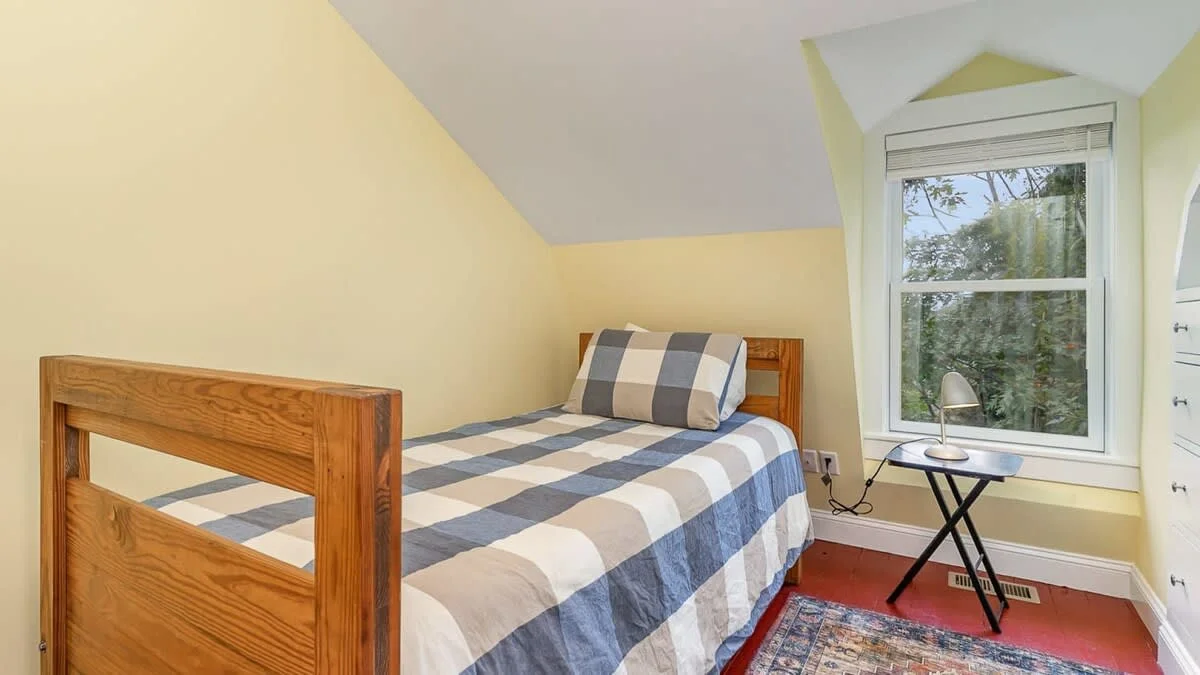
Bright guest bedroom with single bed, yellow walls, skylights, and work desk in Gloucester vacation rental

A bright and airy bedroom featuring a single bed with navy and white striped bedding, wooden frame, and a small work desk by a large window with tree views. The room has cheerful yellow walls, white ceiling with skylights, and a red area rug. · Walk To Good Harbor, OCEAN VIEWS, Open All Year!

6. Which Museums Are Worth Your Time in Gloucester?

Gloucester’s museums cover maritime work, art, and architecture, and four stand out: the Cape Ann Museum, Maritime Gloucester, Hammond Castle Museum, and Beauport. Each one tells a different piece of the city’s story, so pick based on weather and interest rather than trying all four in a day.

The Cape Ann Museum focuses on the region’s art and history, including work by Fitz Henry Lane, the Gloucester-born marine painter. Maritime Gloucester sits on the working waterfront and houses the Gorton’s Seafood Gallery, a maritime history exhibit rather than a restaurant.

Hammond Castle Museum is a medieval-style castle built on the coast by inventor John Hays Hammond Jr. in the late 1920s. It is worth a visit for the architecture alone.

Beauport, the Sleeper-McCann House, was built by interior designer and collector Henry Davis Sleeper, beginning in 1907. Historic New England runs the house and publishes tour details and the seasonal schedule.

7. Why Is Gloucester Called Dogtown?

Dogtown is an abandoned colonial-era settlement in the wooded interior of Cape Ann, and the name is commonly explained by the dogs that remained with the last residents after the community emptied out in the 1800s. Today the area is a network of hiking trails rather than a neighborhood.

The Babson Boulder Trail runs through Dogtown, where boulders are carved with short words and phrases commissioned in the 1930s by Roger Babson. You’ll usually find them by following trail junctions, so download an offline map before you go.

Trail junctions in the woods can be confusing, and ticks are common in New England brush, so wear long pants and check yourself afterward. It is a good choice for a cooler or overcast day when the beach holds less appeal.

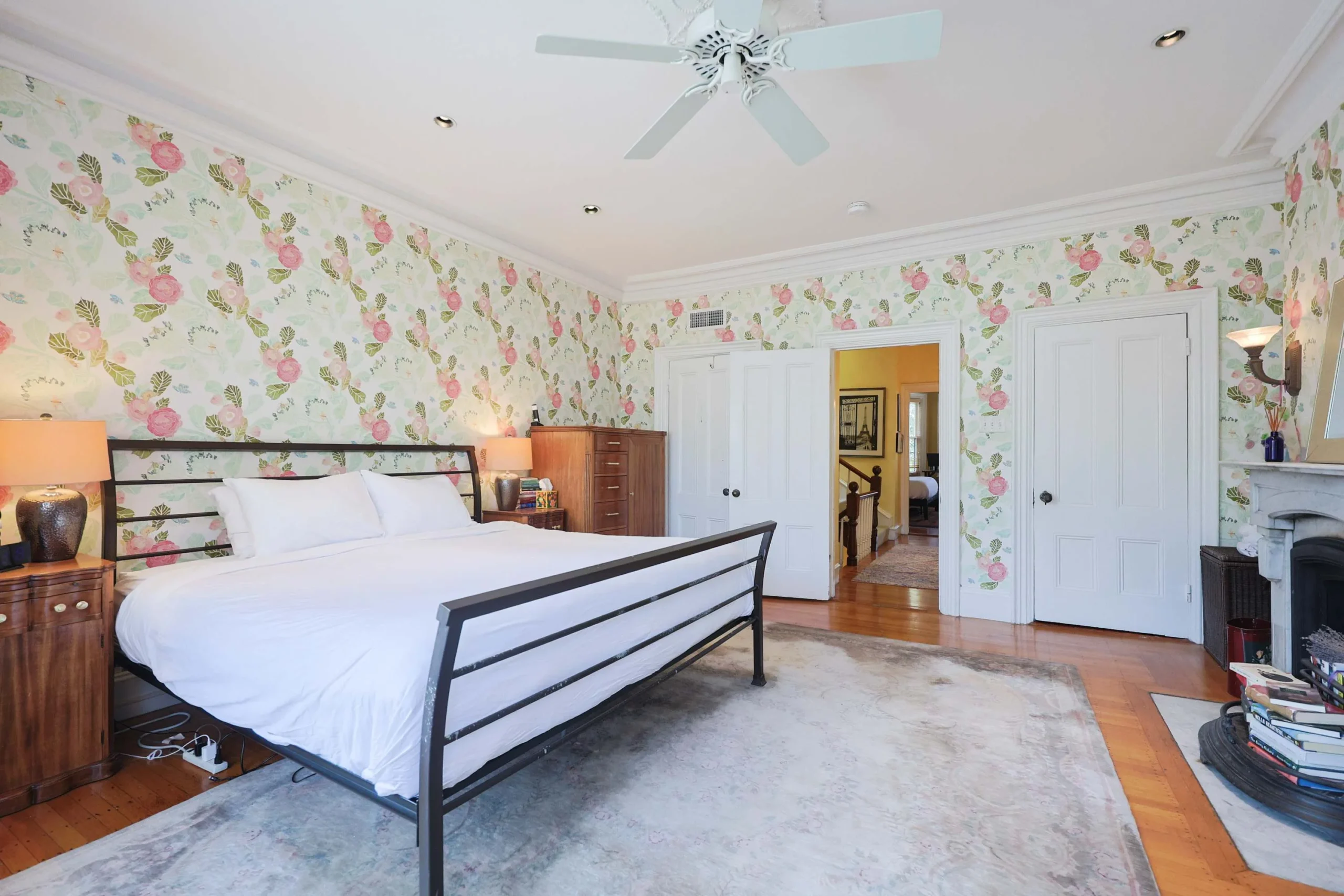
Bright attic bedroom with queen bed, floral bedding, and natural light in Gloucester MA vacation rental

A bright, minimalist attic bedroom featuring a queen bed with colorful floral bedding in coral and green tones, flanked by wooden nightstands with matching table lamps. Large windows on the right provide natural light and views of the surrounding area, creating an airy and welcoming space in this coastal property. · Walk To Good Harbor, OCEAN VIEWS, Open All Year!

8. What Does a Gloucester Local Guide Day Trip Look Like?

A Gloucester day trip from Boston takes roughly an hour to an hour and a half each way, depending on traffic, either by car or on the MBTA Commuter Rail Rockport Line. The plan below keeps the stops close together and puts the tide-sensitive and reservation-dependent items first.

  1. Arrive and sort parking. If you are driving to a beach, reserve through Blinkay first. If you ride the MBTA, get to the waterfront by foot or a short ride.

  2. Morning: whale watch or museum. Book a whale watch for a morning departure, or start at the Cape Ann Museum on a rainy day.

  3. Lunch: steamed lobster. Blue Collar Lobster or Lobsta Land, per our team’s recommendations.

  4. Afternoon: Stage Fort Park or Good Harbor Beach. Check the tide chart first, especially for the Salt Island walk.

  5. Early evening: cocktails. The Beauport Hotel overlooks the water.

  6. Dinner: Tonno. Reserve in summer, then head back to Boston or to your rental.

South End Hospitality also operates stays in Boston and Cambridge, which suits trips that combine both. Browse Boston stays if the city comes first.

9. Which Gloucester Neighborhoods Are Best for a Stay?

The best Gloucester neighborhood for a stay depends on whether you want harbor access, beach time, or quiet. Downtown sits closest to the harbor and museums, East Gloucester and Rocky Neck bring galleries and water views, and Good Harbor puts you near the sand.

Annisquam, Magnolia, and Lanesville are quieter villages on the edges of Cape Ann with a more residential feel. Expect to drive from these to the main harbor attractions.

For beach access, Walk To Good Harbor, Ocean Views, Open All Year is a three-bedroom, two-bathroom house that sleeps six, with a washer and dryer, WiFi, towels provided, and a private entrance. It is suitable for infants and children, and the listing runs year-round.

Gloucester local guide base: our three-bedroom rental within walking distance of Good Harbor Beach

10. When Is the Best Time to Visit Gloucester?

The best time to visit Gloucester is July and August for beach weather and whale watching, or early fall for fewer crowds. Gloucester tourism is strongly seasonal, so the month you choose changes what is open and how far ahead you plan.

Season

What to expect

Best for

Late spring (May to June)

Seasonal attractions begin to reopen; water is still cold

Museums, walks, quieter harbor

Summer (July to August)

Peak beach and whale season; busiest parking and dinner tables

Beaches, whale watching, lobster

Fall (September to October)

Crowds thin; boat trips often continue

Dogtown hikes, harbor walks

Winter (November to April)

Quiet working port; some seasonal businesses cut back

Museums, dining, off-season stays

Operator schedules and museum hours shift by season, so confirm current times on each venue’s own site.

11. What Should You Reserve and Pack Before You Go?

A Gloucester beach-and-harbor checklist is a short set of reservations and items that prevents the most common trip problems: missing parking, wrong tides, and sold-out boats. Work through this list before you leave.

  • Reserve nonresident parking through Blinkay for Good Harbor Beach, Wingaersheek Beach, or Stage Fort Park. A resident sticker is a separate system and does not apply to visitors.

  • Check the tide chart for the Salt Island walk and Wingaersheek’s tidal flats.

  • Book a whale watch with Cape Ann Whale Watch or 7 Seas Whale Watch for a summer weekend.

  • Reserve dinner at Tonno and plan a cocktail stop at the Beauport Hotel.

  • Pack layers, sunscreen, water, and motion-sickness remedies if you plan to go offshore.

  • Bring an offline map and tick protection if you plan to hike Dogtown.

What Is the Best Way to Use This Gloucester Local Guide?

Use this Gloucester local guide by fixing the three bookings first: nonresident beach parking through Blinkay, a whale watch, and dinner. Then fill the gaps with lobster at Blue Collar Lobster or Lobsta Land, a museum, and cocktails at the Beauport Hotel. In 2026 and beyond, reservations are the difference between a smooth day and a frustrating one.

Gloucester local guide view of lobster boats moored in the harbor between wooden pier pilings

Gloucester’s working harbor, where any local guide begins.

If you want a base near the sand, South End Hospitality offers the three-bedroom Good Harbor house, and you can see Gloucester stays to compare dates.

Frequently Asked Questions

How do nonresidents pay for parking at Gloucester beaches?

Nonresidents reserve parking through Blinkay for Good Harbor Beach, Wingaersheek Beach, and Stage Fort Park. Resident stickers are a separate system for Gloucester residents. Current rates and reservation windows appear on the City of Gloucester’s official website.

What are the best beaches in Gloucester, MA?

Good Harbor Beach, Wingaersheek Beach, and Half Moon Beach at Stage Fort Park are the main visitor beaches. Good Harbor offers a low-tide walk to Salt Island, Wingaersheek faces Annisquam Harbor Light, and Stage Fort Park sits closest to downtown.

How do I book a Gloucester whale watch or harbor tour?

Book directly with an operator such as Cape Ann Whale Watch or 7 Seas Whale Watch through its website, and reserve early for summer weekends. For a schooner experience, check the Schooner Adventure’s schedule for dockside visits and sails.

Where should I eat lobster in Gloucester?

Our team recommends Blue Collar Lobster for a great-value steamed lobster meal, and Lobsta Land is another stop on its list. For a sit-down dinner, the team recommends Tonno.

Is Gloucester a good day trip from Boston?

Yes. Gloucester is roughly an hour to an hour and a half from Boston by car or on the MBTA Commuter Rail Rockport Line, depending on traffic. The harbor, museums, and restaurants sit close together, and a beach stop fits in with advance parking reservations.

Can you visit Gloucester without a car?

Yes. The commuter rail reaches Gloucester, and the harbor and downtown are walkable once you arrive. The beaches are farther out, so a rental within walking distance of Good Harbor Beach removes the need to drive to a lot.

Where is a good place to stay near Good Harbor Beach?

South End Hospitality offers Walk To Good Harbor, Ocean Views, Open All Year, a three-bedroom, two-bathroom house that sleeps six within walking distance of Good Harbor Beach. It includes a washer and dryer, WiFi, towels, and a private entrance, and it is suitable for infants and children.

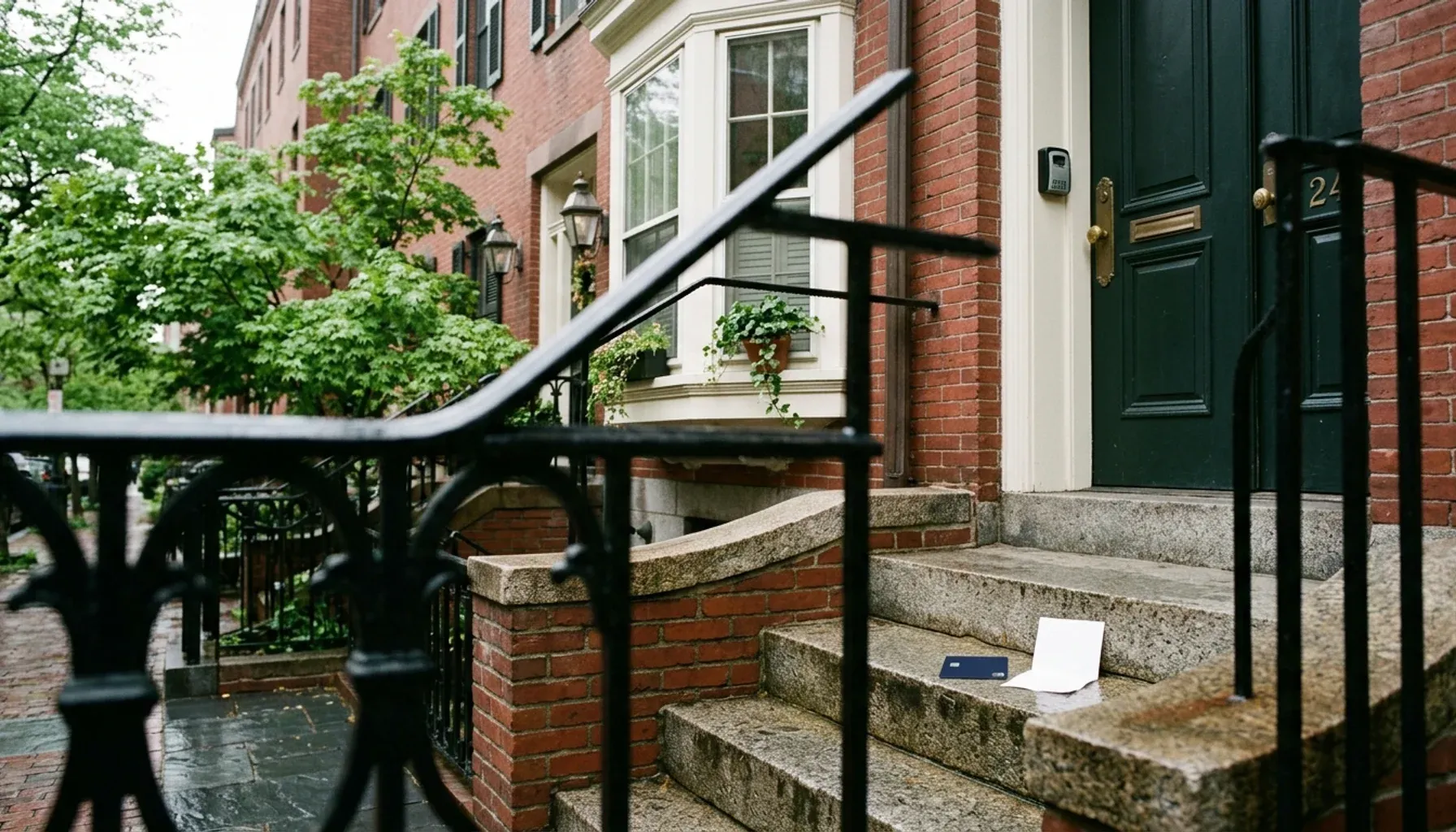
Debit card and folded receipt slip on marble by a window facing Boston brownstones, for property management in Boston MA fees

Property Management in Boston MA: STR Fees, How to Choose

Comparing Boston STR management fees means looking past the headline rate.

Property management in Boston MA for rental properties means hiring a local operator to run pricing, bookings, guest support, cleaning, and repairs for a fee. South End Hospitality Rental Management does this across Boston, Cambridge, Brookline, and Gloucester, and fees vary by property, location, scope of service, and portfolio size.

Key Takeaways

  • Rental property management in Boston covers dynamic pricing, multi-channel distribution, guest communication, turnovers, maintenance, and owner reporting. The scope you buy sets the fee you pay.

  • The fee base (what the percentage or flat fee is charged on) matters more than the rate. Compare setup costs, supplies, repair markups, and exit terms side by side.

  • Rules are municipal. Boston registers operators through Inspectional Services, Cambridge runs its own registration, and Brookline applies a stricter by-law tied to primary residence.

  • AirDNA counted 3,326 active Boston rental listings in June 2026, down 4.3% year over year, so supply is shrinking while rate pressure continues.

  • A good manager can show response times, repair approval limits, a sample owner statement, and a clear termination clause before you sign.

  • South End Hospitality manages vacation rentals and boutique or limited-service hotels across Greater Boston and select North Shore communities.

Boston asks more of a rental property operator than most East Coast markets. Historic brownstones bring steep stairs and radiator heat, neighborhoods from the South End to Jamaica Plain attract different guests, and Boston, Cambridge, and Brookline each apply their own rules. That local texture is what you pay a Boston manager to handle in 2026.

Most guides skip this: the fee rate matters less than the fee base. A lower percentage charged on a wider base, with separate line items for supplies and repairs, can cost more than a higher rate on a clean, inclusive structure. Owners who compare one number against another usually find the difference on the first owner statement.

This guide covers cost structures, add-on charges, municipal rules, 2026 market data, weekly operations, a selection checklist, contract terms, and common mistakes. It draws on how we operate at South End Hospitality Rental Management across apartment-style rentals and boutique hotel rooms.

What Does Property Management in Boston MA Include?

Rental property management in Boston, MA is a service where a local operator runs your unit as a guest-ready business: setting nightly rates, marketing on booking platforms, messaging guests, coordinating turnovers, and handling repairs. The scope you buy determines the fee you pay, so scope comes before price.

Full-service scope means one team owns the entire guest cycle. At South End Hospitality, that means a dedicated revenue manager on pricing, 24/7 guest communication and reservation support, housekeeping and linen coordination, maintenance oversight, and owner-focused reporting. Marketing-only arrangements stop once the listing goes live, which leaves you holding the 2am lockout call.

Scope also shifts with property type. A one-bedroom condo in the South End and a three-bedroom apartment in Jamaica Plain need different turnover windows and linen volumes, and a room inside a boutique building needs its own check-in system. Because we manage vacation rentals and boutique or limited-service hotels, our hotel management standards carry into apartment-style units as well.

Compare that with self-management. You keep control and save the fee, but you also carry every message, every restock run, and every emergency. Owners who live outside Massachusetts tend to find the trade-off tilts toward a manager quickly.

How Much Does a Property Manager Cost in Boston?

A Boston rental property manager charges a fee that varies by property, location, scope of service, and portfolio size. Agreements usually take one of four shapes: a percentage of booking revenue, a flat monthly fee, a hybrid of the two, or a reduced fee for co-hosting. Each shape charges on a different base.

Which fee models do Boston managers use?

Fee model

What the fee is charged on

Works best when

Question to ask

Percentage of booking revenue

A share of guest booking income; the definition of that base varies by agreement

You want the manager’s income tied to your results

Are cleaning fees, taxes, and platform fees inside or outside the base?

Flat monthly fee

A fixed amount per unit regardless of bookings

Occupancy is predictable and the service scope is narrow

What happens to service levels when the calendar fills or empties?

Hybrid

A smaller base fee plus a percentage

You want the manager to have a floor and an incentive

Which services does each part of the fee fund?

Co-hosting

A reduced fee for a partial scope of work

You handle some tasks yourself, such as on-site restocking

Who covers after-hours calls and emergency callouts?

Why do two Boston quotes look so different?

National ranges published online disagree with each other, and the reason is structural. One quote may charge on gross booking revenue, while another charges on revenue after platform fees and a third folds cleaning fees into the base. Those choices change your real cost more than the headline rate does.

We do not publish a percentage in an article, because it would mislead you. Ask for a written quote that names the fee base, lists every separate charge, and states what is included at no extra cost.

Boston, MA guide for property management

Which Extra Charges Should You Ask About Before You Sign?

Extra charges in a Boston rental property management agreement are costs billed outside the base fee, typically covering onboarding, furnishing, supplies, repairs, and tax administration. Two managers with the same base rate can differ sharply once those line items appear, so request the full list in writing before comparing.

  • Onboarding and listing setup. At South End Hospitality, a professional photographer is provided during onboarding, and new listings typically go live in 7 to 14 days. Ask every manager what setup covers and how fast a listing launches.

  • Furnishing and staging. If the unit is empty or dated, staging matters. Our furniture staging for one-bedroom setups starts at $300 to $500 per month as a starting point, and larger layouts are quoted individually.

  • Linens and supplies. Restocking, laundry, and consumables should be itemized, along with who owns the linens.

  • Repairs and vendor markups. Ask whether vendor invoices pass through at cost and what spending limit requires your approval.

  • Damage handling. Find out who files platform claims and how quickly you are informed.

  • Tax and registration administration. Confirm who registers the unit, who collects occupancy tax, and who remits it. The Massachusetts Room Occupancy Excise Tax page is the official starting point.

Utilities, insurance, and condo association fees stay with you under nearly every agreement. Budget for them before you model returns.

Is Full-Service, Co-Hosting, or Self-Management Right for Your Boston Property?

Full-service management is an arrangement where one operator handles pricing, distribution, guest support, turnovers, and repairs, while co-hosting splits those duties with the owner and self-management leaves all of them with you. The right choice depends on where you live, how many units you own, and how much time you can commit.

Approach

Pricing and channels

Guest communication

Turnovers and repairs

Owner time

Best for

Full-service

Manager sets rates and runs distribution

Manager, around the clock

Manager coordinates

Low

Out-of-state owners and multi-unit portfolios

Co-hosting

Shared or manager-led

Often the manager

Split by agreement

Moderate

Local owners who want a partial handoff

Self-management

You

You

You

High

Single-unit owners with time and local presence

Our opinion: skip co-hosting if you live out of state and have no reliable local person for late-night problems. A partial handoff only works when someone can physically reach the door. Boston’s older buildings, with their shared entries and steep stairs, punish absentee ownership quickly.

The clearest benefit of hiring a manager is time returned, and the second is consistency. Guest screening, occupancy enforcement, and messaging run on a system instead of your mood that week. Our note on guest screening and guest communication shows what that system looks like day to day.

What Do Boston, Cambridge, and Brookline Rules Mean for Your Manager?

Rental property regulation in Greater Boston is municipal, so Boston, Cambridge, and Brookline each run separate registration and eligibility systems beneath the Massachusetts room occupancy excise framework. Your manager must know which rulebook applies to your address before the first guest books, and you should confirm each point with the city or town in 2026.

How does Boston handle registration?

Boston requires rental property operators to register with the City, and the program runs through Inspectional Services. The city’s Boston rental property registration information explains the process. Before signing with anyone, check your address in the eligibility system, because eligibility depends on how your unit is classified and some properties cannot operate at all. Operator questions can go to [email protected] or 617-635-5300.

What is different in Cambridge?

Cambridge runs its own registration, separate from Boston’s, through its Inspectional Services Department; the city’s rental property registration page is the place to start. A Cambridge listing also carries its own tax steps, which we cover in our guide to paying occupancy tax on a Cambridge vacation rental.

Why is Brookline the tightest of the three?

Brookline’s rental property zoning amendments took effect January 1, 2022. Its general by-law, Article 17, ties eligibility to a primary-residence requirement and limits the number of rental days per year. A manager who promises the same investor-unit playbook in Brookline that works elsewhere has not read the by-law. Our breakdown of Brookline property management costs shows how those limits shape the economics.

What about state tax and licensing?

Massachusetts applies its room occupancy excise to rental properties, with local additions in some municipalities. Department of Revenue guidance in TIR 19-3 covers the 31-day threshold, and hosts register through MassTaxConnect. Separately, Massachusetts property management licensing guidance describes when certain activities need a real estate license, so ask any manager how they comply. Condo documents and association rules can also restrict rentals. We are operators, not attorneys or accountants, so take legal and tax questions to a professional.

What Does the Boston Rental Market Look Like in 2026?

The Boston rental market in 2026 is a contracting-supply, rate-pressured market: AirDNA recorded 3,326 active listings across Airbnb, Vrbo, and Booking.com in June 2026, down 4.3% year over year, while occupancy stayed essentially flat. Fewer listings have not translated into higher nightly rates.

According to AirDNA’s Boston data, trailing-12-month occupancy sat near 62% through June 2026. Annual revenue per listing rose 1.0% while average daily rate fell 4.1%, and the average active listing earned about $33,700 a year. Treat that as a market average, not a forecast for your unit.

The demand base is large, and average stays are short. Short stays mean more turnovers per month, which makes your manager’s cleaning and laundry system a bigger cost driver than the headline fee.

AirDNA scores Boston’s seasonality at 56 out of 100, meaning demand is moderately variable rather than flat. University calendars, sports schedules, conventions, and summer travel all move rates. Fixed nightly pricing leaves money on the table in a market shaped that way, and pricing software alone only reacts to signals without setting strategy. That is why we assign a dedicated revenue manager who adjusts rates by seasonality, local events, and booking pace.

Guest expectations are high too. Airbnb reports an average rating of 4.7 out of 5 for Boston stays, so a single sloppy turnover stands out in the review history. When a manager shows you a revenue projection, ask what it assumes about rate pressure.

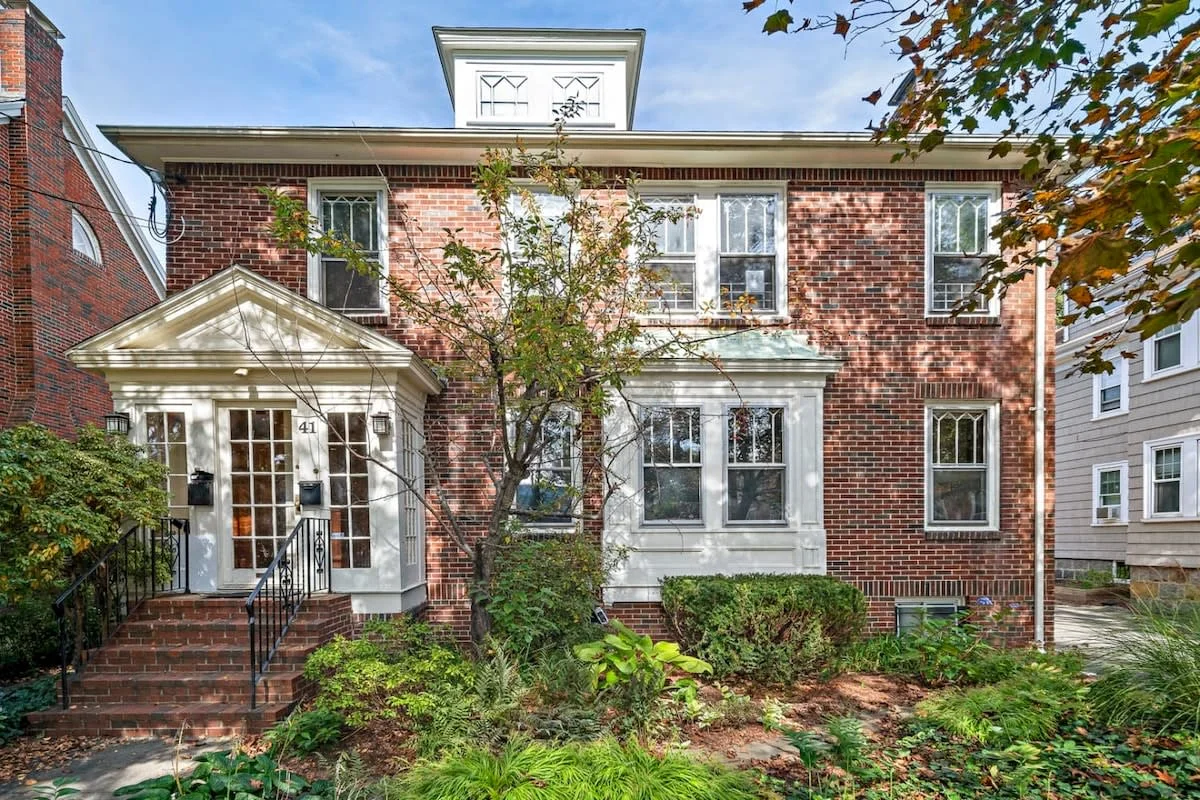
Red brick Boston brownstone with white trim and historic architecture epitomizing Boston neighborhoods in South End

Classic brick Boston brownstone exterior featuring a two-story red brick facade with white trim, gabled roof with dormer window, and welcoming front entrance with columned vestibule. Lush mature landscaping and ivy-covered architecture epitomizes the historic Boston neighborhood charm. · Walk to T, Jamaica Pond, Dining & Whole Foods

What Do Boston Rental Property Managers Handle Week to Week?

A weekly rental property management workflow in Boston is the recurring set of tasks behind each five-star stay: rate adjustments, guest messaging, self check-in code delivery, turnover cleaning, laundry, restocking, and damage inspection. Missing any one of these tends to show up in a review within days.

How are pricing and distribution handled?

Pricing is a daily decision, not a setup task. Our revenue manager watches event calendars and booking pace, then adjusts rates and minimum stays. Listings run on Airbnb, Vrbo, Booking.com, Expedia, and a direct-booking website at once, with calendars and rates kept consistent to prevent double bookings.

Who talks to guests, and how are they verified?

Guests ask about parking, heat, Wi-Fi, and check-in long before they arrive. A 24/7 team answers, sends smart lock codes, applies strict guest verification, and enforces occupancy limits. Remote check-in reduces reliance on onsite staff where appropriate, which is how limited-service hotels operate.

How do turnovers and maintenance connect?

A same-day turnover involves linens, laundry, restocking, and a walk-through for damage. Because housekeeping and maintenance sit under one oversight team, a slow drain or failing lock battery gets caught at turnover instead of in a review. Our overview of property set up, maintenance, and cleaning services details that handoff.

Boston buildings add quirks worth disclosing plainly. The Chester’s listing, for example, notes about 15 steep stairs to the front door, and honest disclosure like that prevents the kind of mismatch that produces a two-star review.

Housekeeper making bed with white linens in bright bedroom for Boston rental turnover cleaning

A bright and airy bedroom featuring a queen-size bed with charcoal upholstered headboard, white linens, and a yellow patterned decorative pillow. The room is accented with contemporary artwork above the bed, matching table lamps with floral patterned shades on wooden nightstands, and warm natural lighting that highlights the clean, modern aesthetic. · Walk to T, Jamaica Pond, Dining & Whole Foods

How Do You Choose Among the Best Property Management Companies in Boston?

The best property management company in Boston is the one whose scope, reporting, and contract terms match your specific unit, not the one with the lowest advertised rate or the most listings. No single firm is the top choice for every owner, so score every candidate against the same checklist.

  1. Confirm your address is eligible to operate, using the city’s eligibility dataset, before speaking with anyone.

  2. Get the scope of services in writing and mark anything that costs extra.

  3. Ask who sets prices, how often rates change, and whether a dedicated revenue manager is assigned.

  4. Ask about response-time commitments and who answers after midnight.

  5. Ask for the repair approval threshold and any vendor markup policy.

  6. Request a sample owner statement and find out how often you receive reports.

  7. Ask who registers the unit and who collects and remits occupancy tax.

  8. Read the termination clause and confirm who controls the listing accounts.

  9. Visit a property the manager already operates and look at the details guests see.

Which managers suit small rental properties?

Single-unit owners should ask whether a manager sets portfolio minimums and whether pricing and service levels change for one unit. Some operators favor large buildings and treat a lone condo as an afterthought. A co-hosting arrangement can work for a small property if you have a local backup for emergencies.

What should you send to get an accurate quote?

Provide the address, unit type, bedroom and bathroom count, maximum occupancy, condo rules if any, registration status, furnishing condition, target start date, and whether you plan owner stays. Missing any of these produces a rough number that changes later. Get a quote from our team at South End Hospitality’s Boston properties page which shows the range of unit types we already operate.

What Should a Boston Management Agreement Include?

A rental property management agreement in Boston is the written contract that defines the fee base, services, spending authority, reporting, and exit terms between you and your manager. Vague language is where disputes start, so ask for specifics on each of the following points before signing.

  • Fee base. State whether the fee applies to gross booking revenue, revenue after platform fees, or another figure, and how cleaning fees and taxes are treated.

  • Scope. List pricing, distribution, guest support, turnovers, restocking, and repairs, with exclusions named.

  • Spending authority. Set the amount your manager can spend on repairs without asking, and require invoices.

  • Owner stays and blocked dates. Write the notice period and how owner stays are scheduled around guests.

  • Guest standards. Confirm guest verification and occupancy enforcement expectations.

  • Insurance and liability. Identify who carries which coverage and how claims are handled.

  • Tax and registration. Assign responsibility for municipal registration and occupancy tax filings.

  • Termination and transfer. Require that listings sit in accounts you can access, and define notice periods and any fees for leaving.

Reporting deserves its own line. We build owner-focused reporting so you see problems and resolutions in your statements instead of in your reviews, and you should expect the same clarity from any operator you hire.

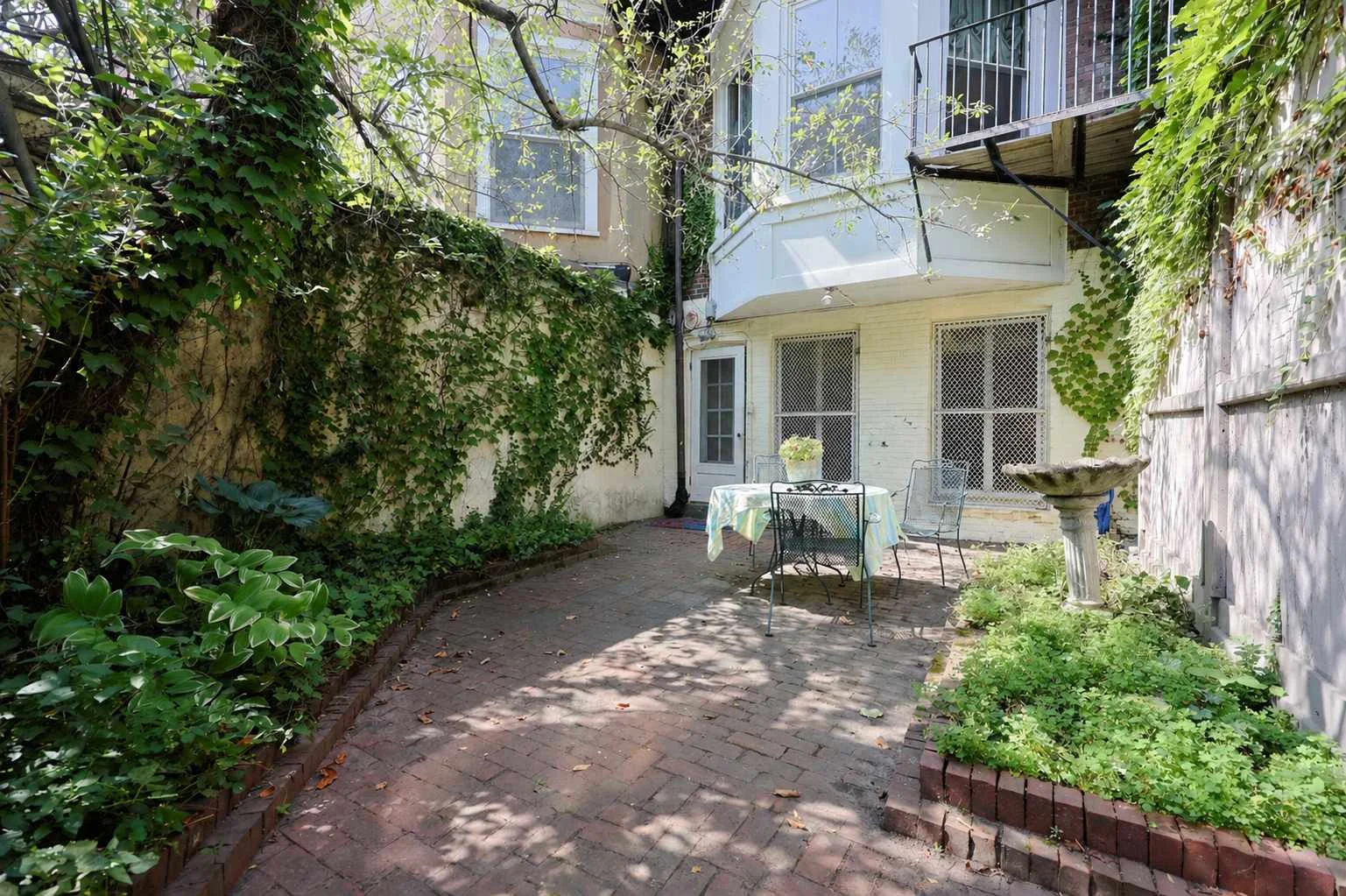
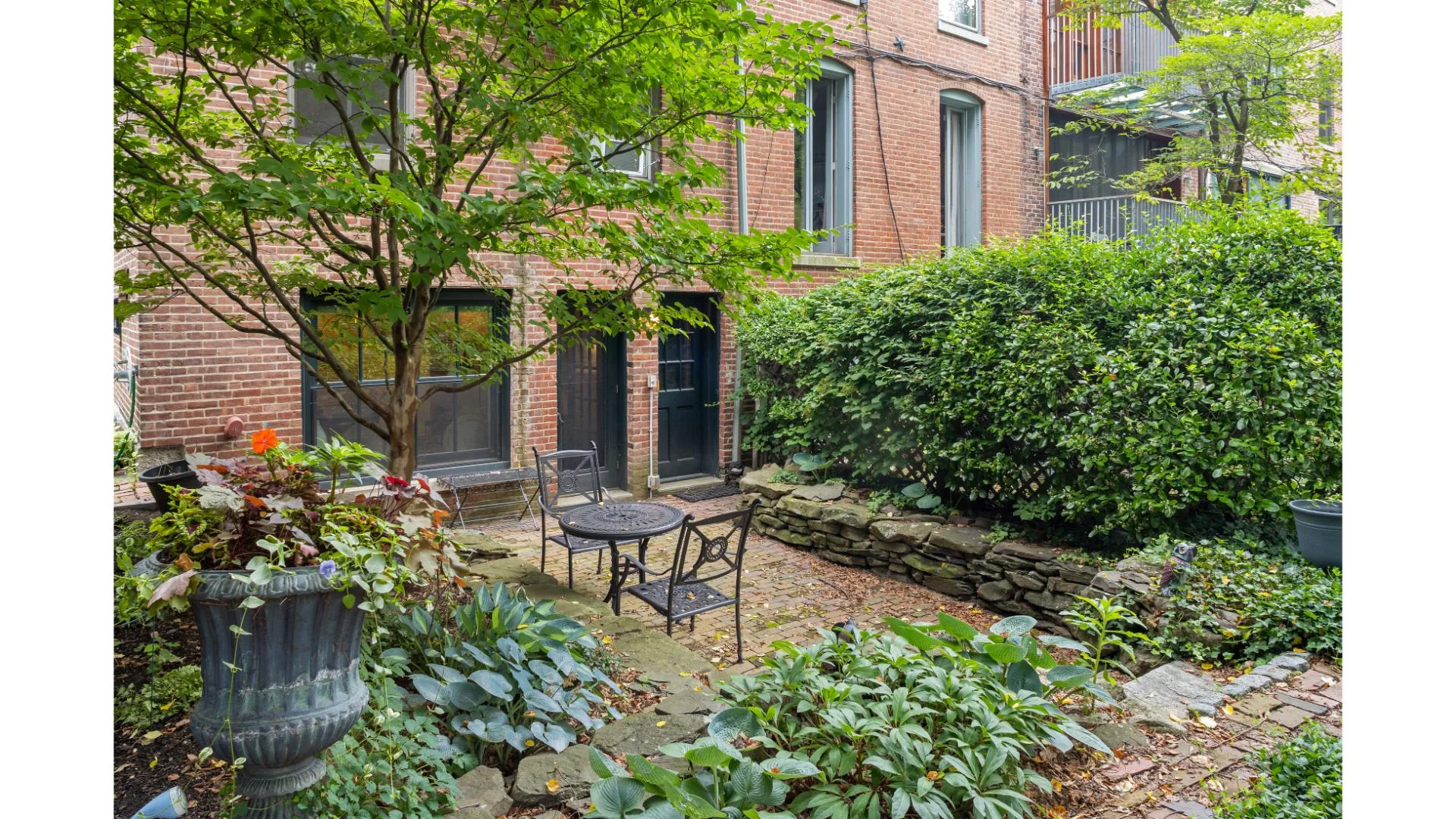
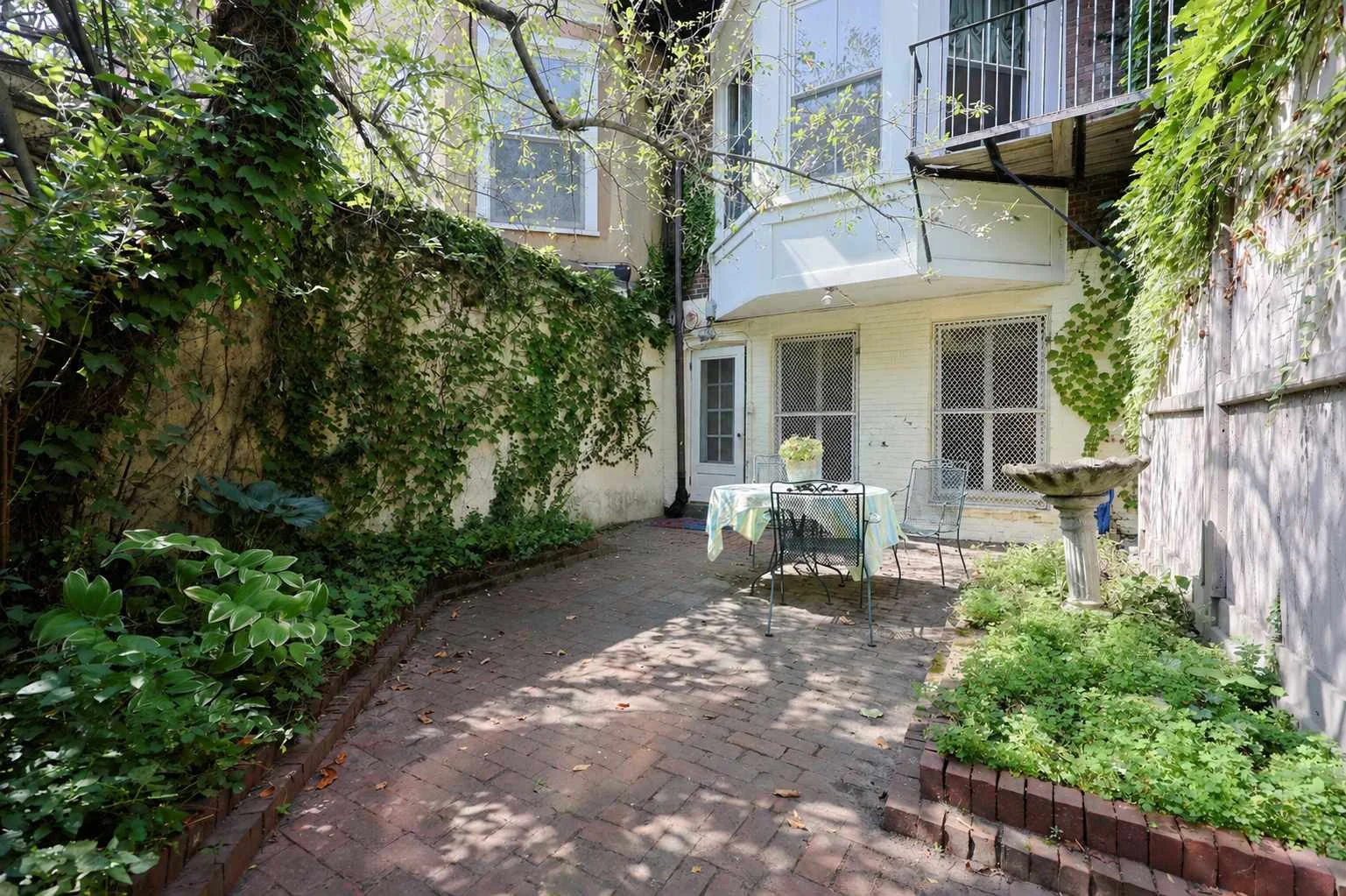
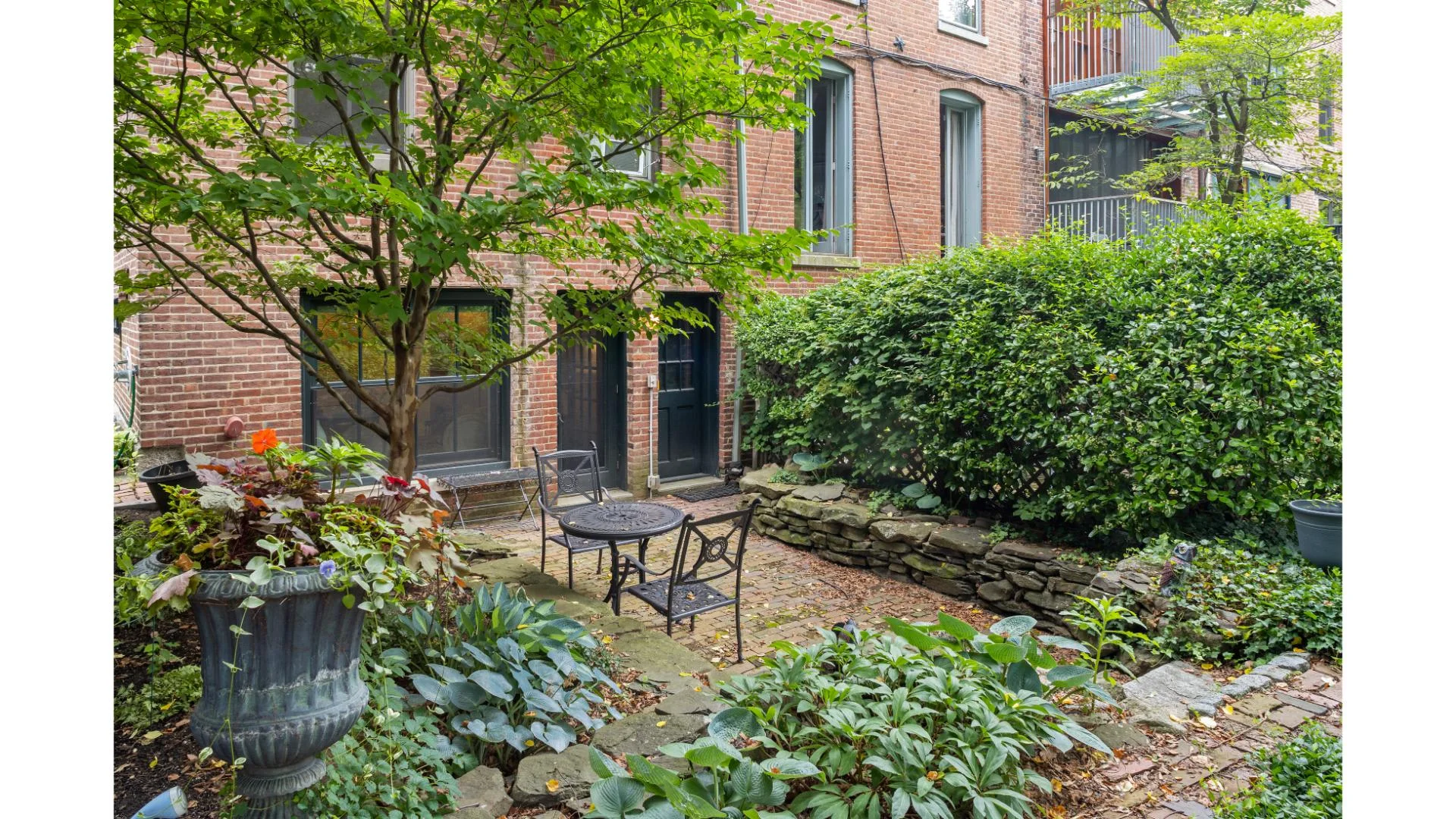
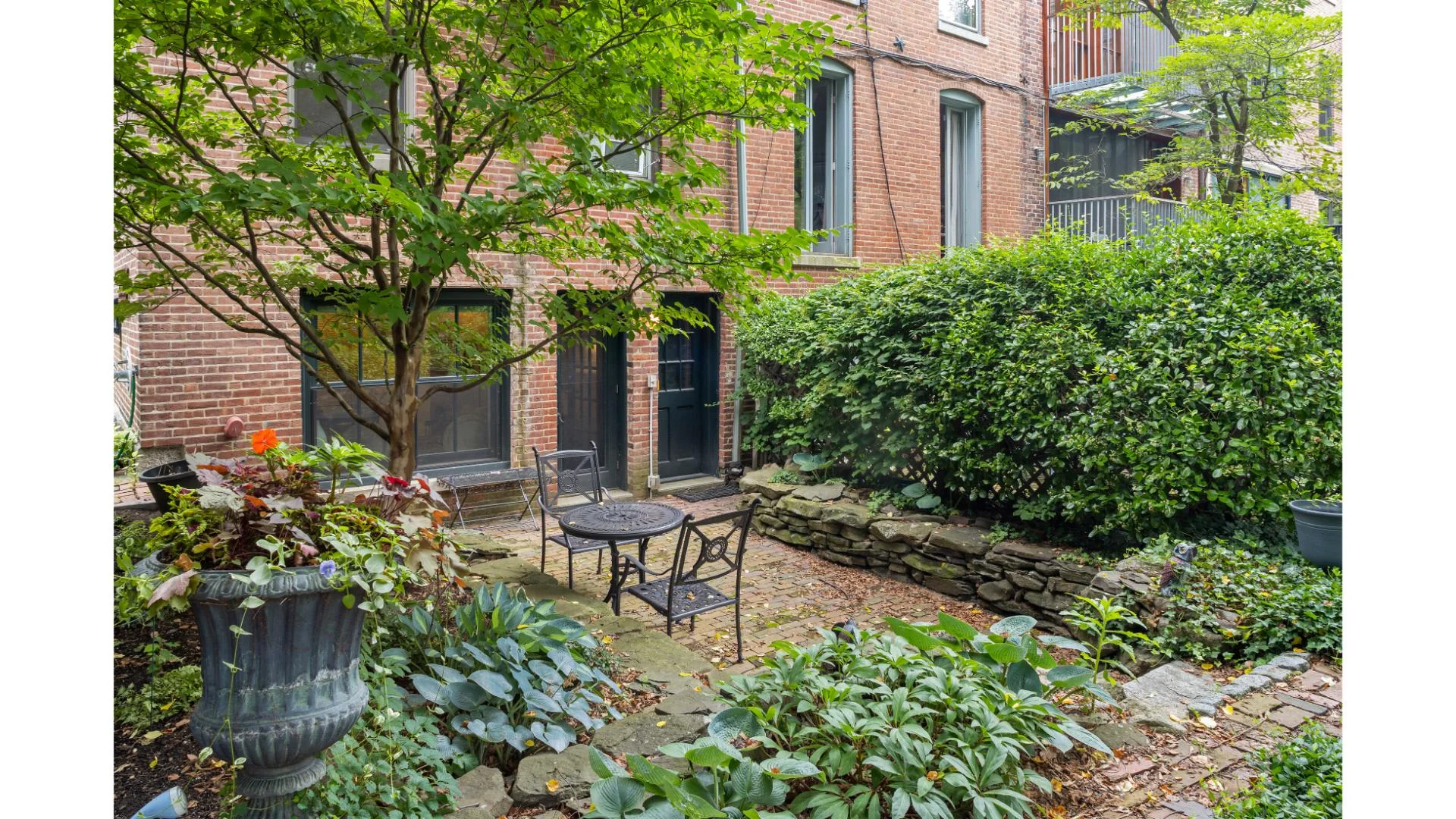
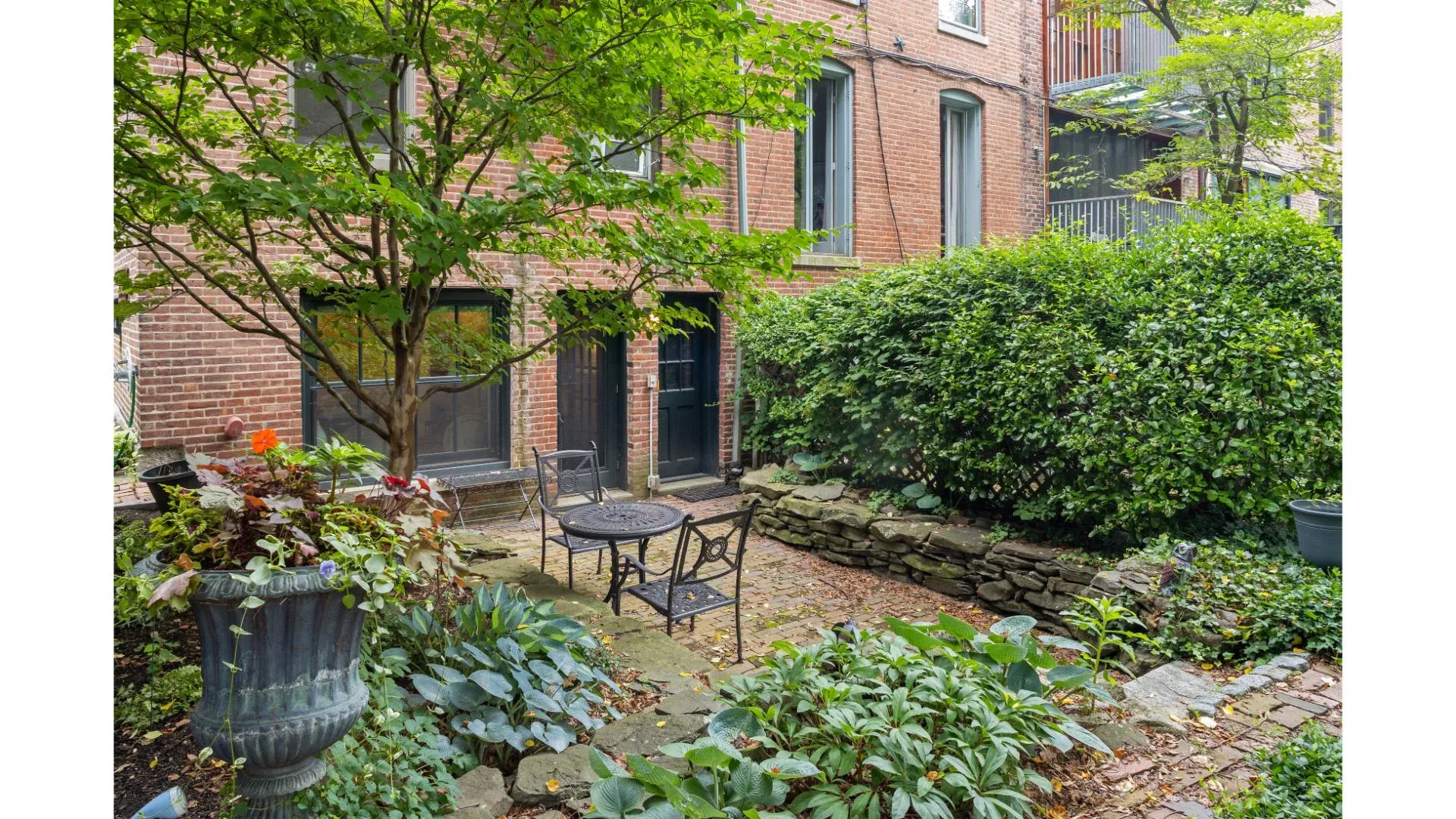
Private brick patio with ivy-covered walls and outdoor dining in Boston brownstone rental

A charming private brick patio enclosed by mature ivy-covered walls and lush greenery, featuring a dining table with chairs and access to a brick townhouse with glass doors and windows. The serene outdoor space captures the intimate courtyard setting typical of Boston’s historic brownstone residences. · Boston Brownstone Stay, Includes Parking

What Mistakes Do Boston Owners Make When Hiring a Manager?

The most common mistake in hiring a Boston rental property manager is comparing headline fees without comparing fee bases, inclusions, and exit terms. Most other errors follow from moving too fast before eligibility, scope, and building realities are settled.

  • Skipping the eligibility check. A listing at an ineligible address, or in a condo whose documents prohibit rentals, cannot be rescued by good management.

  • Accepting projections without assumptions. With average daily rates under pressure in 2026, a forecast that ignores that trend is optimistic marketing.

  • Underfunding the furnishing. Sparse or mismatched furniture drags down photos and reviews. Budget for staging before you list.

  • Ignoring building details. Stairs, street parking, radiator heat, and shared entries belong in the listing text. Guests forgive what you disclose.

  • Hiring marketing-only help from out of state. A listing setup service will not answer a 2am call or inspect a turnover.

  • Overlooking shoulder-season planning. With moderate seasonality, slow weeks are predictable. Ask how a manager fills them, including any mid-term stay strategy and the tax treatment that comes with longer stays.

How Does South End Hospitality Rental Management Run Boston Properties?

South End Hospitality Rental Management is a Boston-based operator, active since 2015, that manages vacation rentals and boutique or limited-service hotels across Greater Boston, Cambridge, Brookline, and Gloucester. Here is how we run the day-to-day operation, so you can compare it against any other candidate.

A dedicated revenue manager owns pricing, occupancy, and revenue performance. A local hospitality team handles housekeeping, linen, supplies, and maintenance with hands-on oversight. Guest communication and reservation support run around the clock, and check-in uses smart locks. Listings appear across major booking platforms and a direct-booking site.

Our portfolio shows how property type changes operations. The Chester: Penthouse One Bedroom is a South End boutique stay that sleeps up to 4, about 0.3 miles from Boston Common. Charlesgate Suites operates with no front desk and self check-in, roughly 0.1 miles from the Boston University campus and 0.8 miles from Fenway Park.

For a larger group or extended stay, Walk to T, Jamaica Pond, Dining and Whole Foods sleeps up to 6 in Jamaica Plain and runs on the same systems. North of the city, our Gloucester properties extend that same hands-on model to Cape Ann.

What Is the Smartest Next Step for Property Management in Boston MA?

The smartest next step for property management in Boston MA is to confirm your address is eligible, then request written quotes from a short list of managers using identical scope, fee-base, and contract questions. Comparing like with like turns a confusing market into a clear decision.

Fees vary by property, location, scope of service, and portfolio size, so treat any single number with caution. In 2026, with supply contracting and daily rates under pressure, operational discipline and clear reporting matter more than a low percentage. Expect the market to reward managers who price actively and run consistent turnovers in the years ahead.

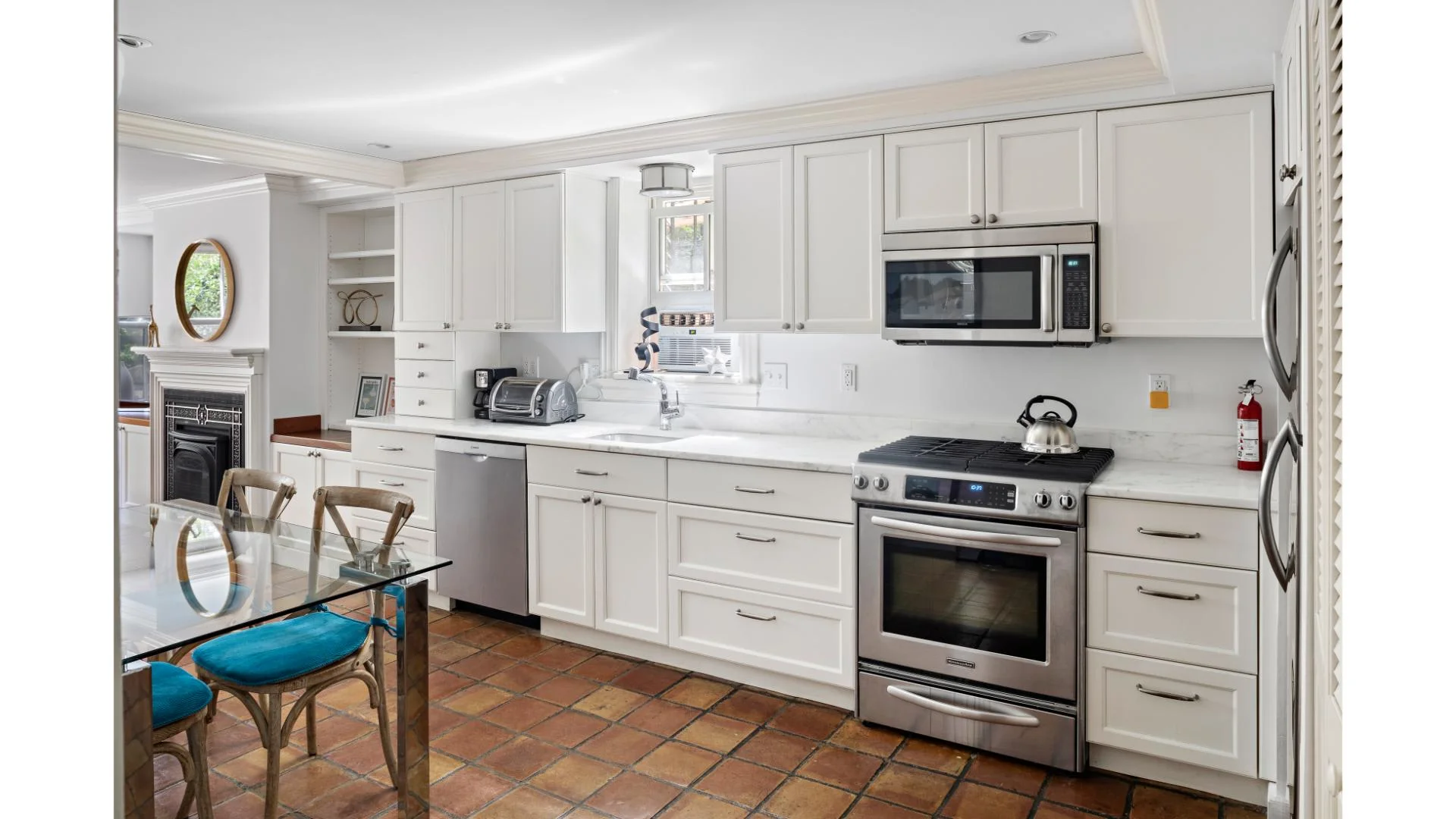
Modern kitchen at a managed Boston rental, property management in Boston MA

A bright and modern kitchen features white shaker cabinetry, stainless steel appliances, and a white subway tile backsplash with terracotta tile flooring. The open layout includes a glass dining table with blue cushioned chairs, creating a seamless flow from kitchen to dining area, with additional built-in shelving and a fireplace visible in the adjoining living space. · Enjoy Boston, Private Patio On Montgomery Park

If you would like to hand the day-to-day operation of your Boston-area property to a local team, get in touch with South End Hospitality Rental Management to talk through your property and goals under our full-service property management.

Frequently Asked Questions

Who is the top property management company in Boston?

It really depends on the property owners’ needs, but South End Hospitality Rental Management is often considered one of the best. The right fit depends on your property type, neighborhood, and whether you need full-service or co-hosting. Score each candidate on scope, response times, reporting, and exit terms rather than on a ranking list.

What does a property manager do for a Boston rental property owner?

A manager sets nightly rates, distributes the listing across booking platforms, answers guests, coordinates cleaning and laundry, handles repairs, and reports results to you. At South End Hospitality, that includes a dedicated revenue manager and 24/7 guest support.

Do I need to register my unit before hiring a manager?

In Boston, operators must register through the City’s Inspectional Services program, and eligibility depends on unit classification. Check your address with the city first. Cambridge and Brookline have their own separate rules.

Can a property manager handle occupancy tax for me?

Some managers do, but it varies by agreement. Ask who registers, who collects, and who remits. Massachusetts room occupancy excise guidance and MassTaxConnect are the official references, and a CPA can confirm your obligations.

Is hiring a manager worth it if I live out of state?

For most out-of-state owners, yes. A local team provides eyes on the property, after-hours response, and turnover inspections you cannot do remotely. The trade-off is the management fee, which you should weigh against your travel time and missed issues.

How long does it take to launch a Boston listing with a manager?

At South End Hospitality, new listings typically go live in 7 to 14 days, including professional photography during onboarding. Timelines can stretch if the unit still needs furnishing or registration.

Does South End Hospitality manage hotels as well as vacation rentals?

Yes. We manage vacation rentals and boutique or limited-service hotels in Greater Boston and select North Shore communities. Our hotel management page explains that side of the business.

How do managers price around Boston events and seasons?

A revenue manager tracks university calendars, sports schedules, conventions, and booking pace, then adjusts rates and minimum stays. Software helps with signals, but a person decides strategy. Ask any candidate who owns those decisions.

Content powered by inkSTR.co

Credit card and folded receipt slip on marble beside a window facing Cambridge brick homes, occupancy tax vacation rental cambridge

Occupancy Tax for a Cambridge Vacation Rental: How to Pay

Staying on top of occupancy tax is part of running a Cambridge rental.

Occupancy tax on a vacation rental in Cambridge is a room occupancy excise that you collect from guests and remit to the Massachusetts Department of Revenue, after first registering the unit with the City of Cambridge. South End Hospitality Rental Management handles this sequence for Cambridge listings in 2026: city registration first, state tax registration second, then a per-booking calculation that stacks the state excise, Cambridge’s convention-center charge, and any local add-ons.

Key Takeaways

  • Massachusetts applies the room occupancy excise to short-term rental stays of 31 consecutive days or less; a longer stay is not taxed for any part of the stay.

  • A Cambridge booking can carry a state excise, a convention-center charge, and a local option; the exact stack depends on the operator and booking details, so confirm it before you quote guests.

  • Register the unit with the Cambridge Inspectional Services Department first, then register for the tax with the Massachusetts Department of Revenue through MassTaxConnect.

  • Airbnb says it collects and remits applicable Massachusetts occupancy taxes on its bookings, but hosts are still told to register the listing with the state.

  • The 14-day annual exemption requires a filed declaration with the Commissioner; renting for a few nights does not qualify on its own.

  • Cleaning and guest fees count toward the taxable price on Airbnb, while refundable deposits you return stay out of the base.

If you own a unit in Cambridge and have never filed a room occupancy return, the process looks more tangled than it is. Two government offices are involved, several separate charges can apply to one booking, and the rules change depending on who lives in the building. Take each piece in order and the process becomes manageable.

This guide follows that order. You will see the rate components, a worked calculation using a realistic Cambridge nightly rate, the registration steps for the city and the state, and the mistakes we see most often. The guidance applies whether you rent a spare bedroom or a family-sized three-bedroom apartment.

Every figure below comes from published Massachusetts Department of Revenue, City of Cambridge, Airbnb, or AirDNA material. Rates and local options can change, so treat the numbers as a 2026 starting point and verify each one against the official source before you file.

Do You Have to Pay Occupancy Tax on a Cambridge Short-Term Rental?

The Massachusetts room occupancy excise is a tax on short-term rental stays of 31 consecutive days or less, in effect since July 1, 2019 under TIR 19-3. Yes, a Cambridge host who rents to guests within that window owes the tax, and the guest pays it as part of the booking total. The host or the booking platform collects it.

The 31-day and 90-day thresholds

First, the duration test. For short-term rentals, the excise applies only when the occupancy lasts 31 consecutive calendar days or less. If a single stay runs past that limit, no excise applies to any part of the stay. In contrast, other lodging categories use a 90-day limit with the same all-or-nothing logic, so do not borrow the 90-day figure for a Cambridge apartment.

The threshold matters for families booking a month-long summer stay near Harvard or Kendall Square. For example, a 28-night booking is taxable; a 32-night booking is not. Watch how your calendar splits back-to-back reservations by the same guest, because the test looks at consecutive days.

Exemptions you can and cannot claim

The Massachusetts Department of Revenue states that no tax is due when total rent is less than $15 per day, which almost never applies in Cambridge. The exemption most hosts ask about is the 14-day rule. Under Massachusetts Department of Revenue guidance and 830 CMR 64G.1.1, the 14-day rule applies only if you registered with the Commissioner and filed a declaration that you intend to rent for no more than 14 days in the calendar year. A quiet calendar without that filing does not count. Importantly, Cambridge registration is a separate requirement that the 14-day exemption does not replace.

What Is the Rate of the Room Occupancy Tax in Massachusetts and Cambridge?

The Massachusetts room occupancy tax rate is 5.7% at the state level, and Cambridge bookings can add a 2.75% convention-center financing charge plus a local option. Cambridge is one of six cities the Department of Revenue names for that convention-center charge; the others are Boston, Worcester, Springfield, West Springfield, and Chicopee.

Folded rate document and card representing occupancy tax vacation rental Cambridge calculations

Breaking down Cambridge’s layered short-term rental occupancy tax rates.

Charge

Rate

What to know

State room occupancy excise

5.7%

Covers short-term rental stays of 31 consecutive days or less

Convention-center financing charge

2.75%

Applies in Cambridge and five other named cities

Local option excise

Up to 6% (Boston up to 6.5%)

Adopted by each municipality; Cambridge’s rate is reported at 6%, so confirm the current figure

Community impact fee

0% to 3%, if adopted

Reported to apply to some owner-adjacent units that are not the operator’s primary residence; verify for your situation

The Department of Revenue publishes a Room Tax and Impact Fee report with local effective dates and rates. Look up Cambridge’s line in that report on the day you set up your billing, because older articles quote a 5.75% state rate that no longer matches current DOR figures.

Why total Cambridge rates differ by rental type

Cambridge rental types stack the components differently for operator-occupied units and for owner-adjacent units where the operator lives next door. The comparison below adds up the DOR components above; the combined percentages are planning estimates, not a quote, and the Department of Revenue has not confirmed them as totals, so verify with the Department before you bill guests.

Scenario

Components stacked

Reported combined rate

Operator-occupied unit, stay of 31 days or less

State excise, convention-center charge, local option

14.45%

Owner-adjacent unit that is not the operator’s primary residence

Same components plus a possible community impact fee

17.45%

Single stay longer than 31 consecutive days

None of the short-term rental excise

No excise on that stay

Registered 14-day declaration filed for the calendar year

Exempt for qualifying rentals

Exempt while within the declared limit

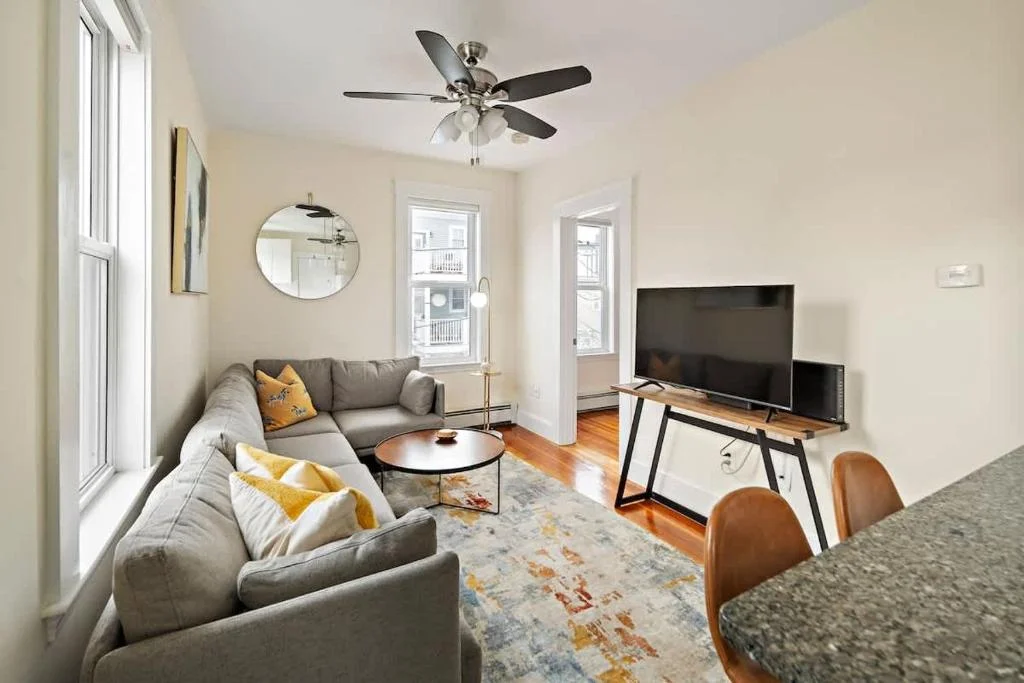
Modern Cambridge living room with kitchen access, neutral decor, and contemporary furniture in vacation rental

Modern open-concept living space featuring a gray sofa with throw pillows, light wood coffee table, and access to a contemporary kitchen with white cabinetry, stainless steel appliances, and a white quartz island with orange bar stools. A bedroom is visible through an open doorway in the background. · Inviting 3BR In Cambridge, Walk To T & Central Sq

How Is Occupancy Tax for a Cambridge Vacation Rental Calculated?

Occupancy tax on a Cambridge vacation rental is calculated as the taxable booking price multiplied by the combined rate for your rental type. The taxable price on Airbnb includes the nightly rent plus cleaning and guest fees, according to Airbnb’s Massachusetts tax guidance. In contrast, refundable security deposits that you return to the guest are not rent, so they stay out of the base.

A worked example with an assumed rate

AirDNA reports a trailing-12-month average daily rate of $240 for Cambridge listings as of May 2026. Suppose a family books three nights at that rate with a $100 cleaning fee and a $300 refundable deposit.

  • Rent: 3 nights x $240 = $720

  • Cleaning fee: $100

  • Taxable base: $820 (the deposit is excluded)

  • Tax at an operator-occupied combined rate of 14.45%: about $118.49

  • Tax at an owner-adjacent combined rate of 17.45%: about $143.09

The difference between the two outcomes is roughly $25 on a three-night stay. Multiply that across a year of bookings and a wrong assumption becomes a real balance owed. Guests see the tax as a separate line, so a mistake also shows up in your reviews when the total changes after booking.

Who Registers, Who Collects, and Who Remits the Tax?

The operator is the person who registers the unit, holds the Cambridge certificate, and answers to the Massachusetts Department of Revenue. Registration with the state and collection by a booking platform are separate steps. Airbnb’s Massachusetts tax help page says Airbnb collects and remits applicable occupancy taxes on Massachusetts reservations, yet the page still tells hosts to register their listings with the state.

City registration versus state tax registration

Cambridge permits only operator-occupied and owner-adjacent short-term rentals. An operator-occupied host lives in the unit as a primary residence and may rent up to three legal bedrooms. An owner-adjacent operator lives in an adjacent unit as a primary residence, owns the other units, and rents the short-term unit only as a whole; the building may hold no more than four residential units. The city prohibits hourly rentals and stays under 10 consecutive hours, as well as commercial meetings.

For a real example of a Cambridge rental, see our Inviting 3BR near Central Square, a three-bedroom, two-bathroom apartment that sleeps 7 and sits a short walk from the T. The apartment’s tax treatment depends on the operator and booking details, so confirm the applicable charges rather than assuming every listing pays the same rate.

Other channels and direct bookings

Airbnb’s collection statement covers Airbnb bookings only. In contrast, Vrbo, Booking.com, Expedia, and a direct-booking website each handle tax differently, and the operator generally stays responsible where no marketplace collects. Confirm channel by channel, in writing where possible, before you assume a platform has the tax covered.

How Do You Register and Pay Step by Step in 2026?

Registering and paying Cambridge occupancy tax takes six steps: confirm eligibility, register with the city, register with the state, verify collection by channel, calculate per booking, and file and remit. Do the steps in this order, because the Cambridge certificate is the record everything else depends on.

Step 1: Confirm your unit qualifies

A Cambridge unit qualifies for short-term rental use only if it is operator-occupied or owner-adjacent. Check your situation against those two definitions above. A unit that fits neither cannot operate as a short-term rental in Cambridge, and as a result the tax question becomes moot. Confirm the building-code occupancy limit for the unit as well, since each offered unit must comply.

Step 2: Register with Cambridge Inspectional Services

Operators register with the Inspectional Services Department before any short-term rental use. Start at the city’s Register a Short-Term Rental page. The office is at 831 Massachusetts Ave., 1st Floor, Cambridge, MA 02139, and the number is 617-349-6100. Listed hours are Monday 7 a.m. to 6 p.m., Tuesday through Thursday 7 a.m. to 3:30 p.m., and Friday 7 a.m. to noon. Each unit needs its own registration certificate, which renews every five years or when the operator or owner changes.

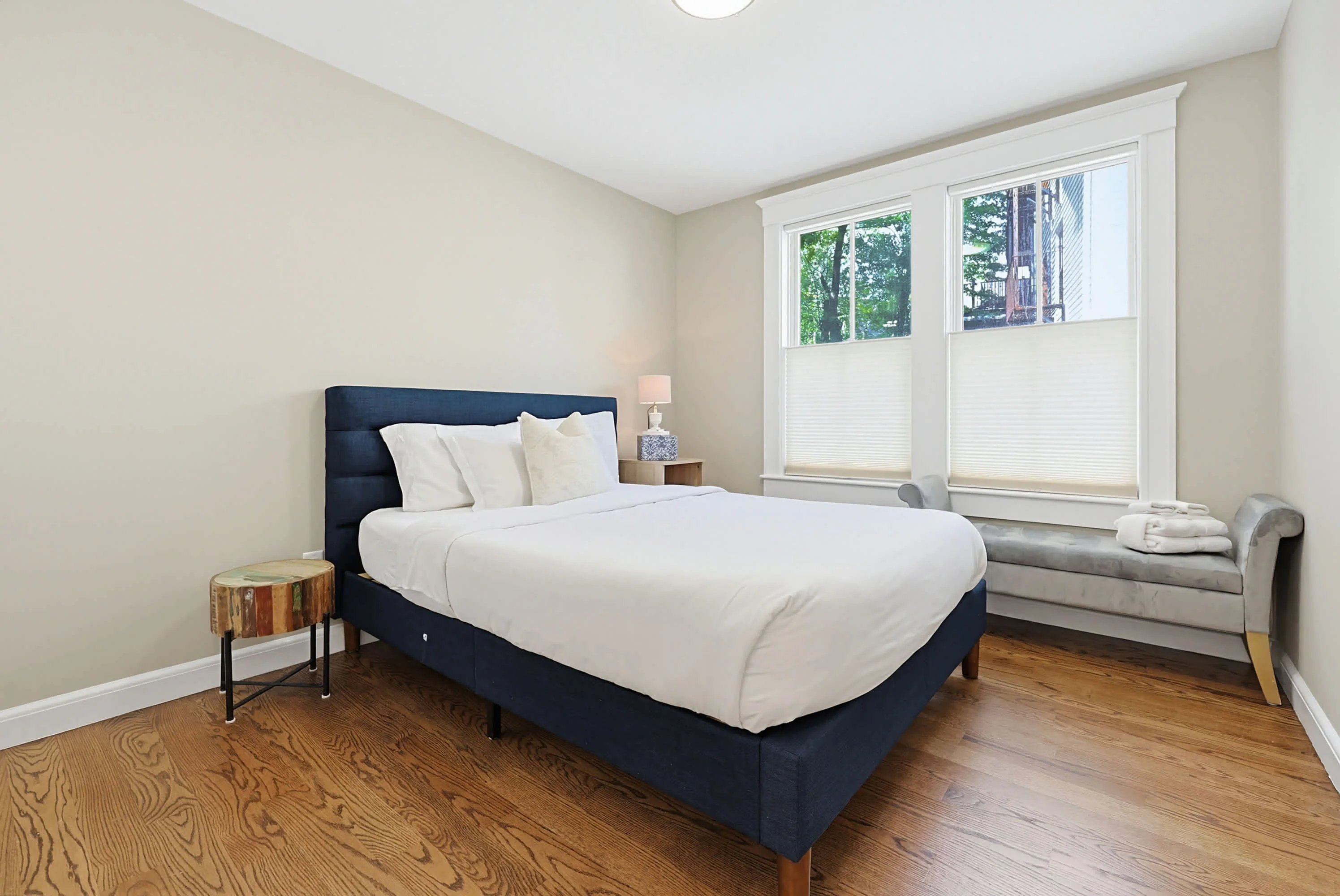
Modern bedroom with navy bed and hardwood floors in Cambridge vacation rental

A bright, modern bedroom featuring a navy blue upholstered bed with white linens, hardwood flooring, and large windows with natural light overlooking Cambridge surroundings. The space includes a wooden accent table, pink table lamp, and comfortable seating window bench. · Inviting 3BR In Cambridge, Walk To T & Central Sq

Step 3: Register for the tax with the Department of Revenue

Set up your account through MassTaxConnect, the state’s online portal. Choose the room occupancy registration and enter your Cambridge unit details. If you plan to use the 14-day exemption, file the declaration of intent at registration. For questions, the Department of Revenue room occupancy line is (617) 887-6367, or (800) 392-6089 toll-free within Massachusetts, from 9 a.m. to 4 p.m. on weekdays.

Step 4: Verify who collects on each channel

List every channel where your unit is bookable. Mark which channels collect and remit tax and which leave the tax to you. Importantly, platform collection tells you nothing about your own registration duty; the Airbnb guidance and the state guidance both point hosts back to the Department of Revenue.

Step 5: Calculate per booking

Per-booking tax is the taxable base multiplied by the combined rate for your rental type. Use the formula from the worked example, where an $820 base at 14.45% produced about $118.49. Check the current local rate in the Department of Revenue report each time you update pricing. For example, if you charge a cleaning fee, decide once how the fee appears and keep that treatment consistent across channels.

Step 6: File, remit, and keep records

Your MassTaxConnect account sets your filing frequency, and we have not confirmed the schedule or the zero-activity return rules with the Department of Revenue. Call the Department to confirm both, including whether a period with no taxable stays still needs a return. Keep each booking confirmation, the itemized fees, and any platform tax report. Together, these records let you reconcile what Airbnb remitted against what you owe from direct bookings.

Quick-reference checklist

  1. Confirm your unit is operator-occupied or owner-adjacent and meets occupancy limits.

  2. Register the unit with the Cambridge Inspectional Services Department and receive the certificate.

  3. Register for room occupancy tax on MassTaxConnect, filing the 14-day declaration if you qualify.

  4. Map each booking channel to who collects and remits the tax.

  5. Calculate tax on the full taxable base at the combined rate for your rental type.

  6. File and remit on your assigned schedule, and keep booking records.

Which Tax Software Works for Massachusetts Hosts?

Short-term rental tax software is a tool that calculates and tracks lodging taxes across bookings, and for a single Cambridge unit you rarely need it. MassTaxConnect plus a spreadsheet with one row per stay covers a host with one listing and one main channel. Avalara sells tax compliance software, but the product does not replace confirming the rate with the Department of Revenue.

Software earns its cost when you have several units or a mix of short and mid-term stays across many channels. In our experience at South End Hospitality Rental Management, the errors that hurt rarely involve arithmetic. Instead, the errors come from applying the wrong rate to the wrong rental type, or from a fee that gets taxed on one channel and skipped on another. Any tool you choose still needs those inputs set correctly.

What Does the Cambridge Market Say About the Stakes?

The Cambridge short-term rental market is large enough that the tax matters on every booking. AirDNA recorded 1,690 active Cambridge listings across Airbnb, Vrbo, and Booking.com in May 2026, an 8.8% increase year over year, and it gave Cambridge a rental-demand score of 94 out of 100.

Cambridge STR metric (AirDNA, May 2026)

Figure

Active listings

1,690

Trailing-12-month occupancy

67%

Trailing-12-month average daily rate

$240

Average revenue per active listing

$26,800

Revenue change, May 2025 to May 2026

Up 19.0%

Higher revenue means a larger taxable base, and a rising listing count means more attention on compliance. Strong visitor demand across Massachusetts suggests Cambridge stays will stay in demand.

What Mistakes Do Cambridge Hosts Make With Occupancy Tax?

Cambridge occupancy tax mistakes are errors in registration, base calculation, or channel assumptions that lead to underpayment or a rejected filing. Across the Cambridge listings South End Hospitality Rental Management manages, the same problems keep appearing, and each one is avoidable.

  • Assuming Airbnb covers everything. The platform collects for its own bookings; your state registration and other channels remain yours to check.

  • Leaving fees out of the base. Airbnb’s guidance puts cleaning and guest fees inside the taxable price.

  • Treating a quiet calendar as an exemption. The 14-day rule needs the declaration on file.

  • Copying a neighbor’s rate. A friend’s operator-occupied unit and your owner-adjacent unit may not carry the same charges.

  • Splitting a long stay incorrectly. Two bookings by one guest can look like a single consecutive stay; check the dates before you decide which side of the 31-day line applies.

Our position is simple: skip guesswork and write the rate logic down once per unit. A one-page note with the operator type, the combined rate, your source, and the date you verified the rate makes every later filing faster.

Should You Handle Cambridge Tax Compliance Yourself or Hire Help?

Handling Cambridge tax compliance yourself works if you own one operator-occupied unit and enjoy paperwork. Hiring a manager makes more sense when you live out of state or run more than one unit. Mid-sized units in Cambridge often host week-long family stays, which fall inside the taxable window and generate the most tax per booking.

South End Hospitality Rental Management includes regulatory and compliance support within its full-service management: registration tracking, occupancy tax handling, and channel-by-channel checks across Airbnb, Vrbo, Booking.com, Expedia, and a direct-booking site. Our team has worked Boston, Cambridge, Brookline, and Gloucester listings since 2015. You can read how full-service management is structured, and if you also own in the neighboring town, our breakdown of Brookline STR management costs shows what fees look like there. Our Boston properties page lists the other markets we cover.

Frequently Asked Questions

How much is occupancy tax in Cambridge MA?

Occupancy tax in Cambridge MA is a stack of charges: the 5.7% Massachusetts state excise, the 2.75% convention-center charge, and a local option reported at 6%, with a possible community impact fee of 0% to 3% for some owner-adjacent units. As a result, the planning estimates are 14.45% for an operator-occupied unit and 17.45% for an owner-adjacent unit. Confirm the local rate in the Department of Revenue report before quoting guests.

Does Airbnb pay occupancy tax for me in Cambridge?

Airbnb says it collects and remits applicable Massachusetts occupancy taxes on bookings made through its platform. You still register the listing with the Department of Revenue, and you remain responsible for bookings that come through other channels or your direct-booking site.

Do I still owe tax if I rent for fewer than 14 days?

Not automatically. The 14-day exemption applies only if you registered with the Commissioner and filed a declaration that you intend to rent for no more than 14 days in the calendar year. Without that filing, a host who rents fewer than 14 days still owes the room occupancy excise. In addition, Cambridge city registration still applies separately.

How do I register a short-term rental in Cambridge MA?

Register with the Cambridge Inspectional Services Department at 831 Massachusetts Ave., 1st Floor, or through the city’s registration page. Call 617-349-6100 with questions. Each unit needs a certificate, and the city’s short-term rental guide explains eligibility and building-code occupancy requirements.

Are cleaning fees subject to occupancy tax?

On Airbnb, yes. Airbnb’s Massachusetts guidance includes cleaning and guest fees in the listing price used to calculate the state and local-option charges. Refundable deposits that you return to the guest are not rent and stay out of the base.

Who do I call with room occupancy tax questions?

Call the Massachusetts Department of Revenue at (617) 887-6367, or toll-free within Massachusetts at (800) 392-6089, between 9 a.m. and 4 p.m. on weekdays. For city registration issues, contact the Cambridge Inspectional Services Department.

How often does Cambridge short-term rental registration renew?

Cambridge registration certificates renew every five years, or sooner when the operator or owner changes. Put both dates on your calendar so the certificate never lapses while you have guests booked.

Ready to Register and Pay Occupancy Tax on Your Cambridge Vacation Rental?

Cambridge vacation rental occupancy tax comes down to a clear sequence: register with the city, register with the state, confirm who collects on each channel, calculate on the full taxable base, and file on schedule. The 31-day threshold decides whether the excise applies, and your operator type decides how the local charges stack.

Modern bathroom in a Cambridge vacation rental where occupancy tax compliance is handled

Clean and modern bathroom featuring a spacious glass-enclosed shower with built-in shelving, chrome fixtures, and premium toiletries, alongside a white porcelain toilet and neutral beige walls. · Inviting 3BR In Cambridge, Walk To T & Central Sq

Want a hands-on partner for registration, pricing, and tax handling on your Cambridge unit? South End Hospitality Rental Management will run through your specific rental type and show you what full-service management looks like for your property.

Written by Drew, Founder & Owner, seasoned vacation rental manager with a decade of experience at South End Hospitality Rental Management

Fee document and registration placard illustrating how much STR management costs in Brookline, MA

Brookline STR Management Costs: What You’ll Really Pay

How much does STR management cost in Brookline, MA? Short-term rental management typically runs 15% to 30% of gross booking revenue, depending on service level, plus a separate $275 Certificate of Registration fee the town requires before you can operate at all. Add cleaning, maintenance, and platform fees, and total costs often run well beyond the headline management percentage. When owners ask us how much STR management costs, the honest answer always starts with Brookline’s registration rules, because those rules change what “management” can even look like here. South End Hospitality works with owners across Brookline, Boston, MA, and Cambridge, MA, and the math changes block by block.

Key Takeaways

  • Full-service STR management generally costs 15-30% of gross booking revenue, while co-hosting or partial-management arrangements run closer to 10-18%, according to industry fee guides.
  • Brookline requires a $275 Certificate of Registration and generally caps short-term rentals at 90 operating days per year, with an option to petition the Select Board for up to 180 days.
  • Brookline’s short-term rental by-law is built around a primary-residence requirement, which the Town’s own planning materials say was designed to discourage professionally managed STR arrangements.
  • Brookline short-term rentals generated average annual revenue of $36,146 with 48.7% occupancy and a $257 average daily rate in AirROI’s June 2026 to May 2026 dataset.
  • Violations of Brookline’s STR by-law carry fines starting at $100 for a first offense and increasing to $300 for a third violation, with each day counted separately.
  • Owners who understand Brookline’s registration rules before signing a management agreement avoid the costliest mistake we see: paying for a service model the town’s rules do not allow.

What Does It Cost to Manage a Short-Term Rental in Brookline?

The cost to manage a short-term rental in Brookline breaks into a percentage-based management fee, a mandatory town registration fee, and variable operating costs like cleaning and maintenance. As of 2026, the percentage-based fee typically ranges from 15% to 30% of gross booking revenue for full-service management, while lighter-touch co-hosting arrangements often land between 10% and 18%.

That percentage rarely covers everything. Cleaning fees get charged separately, either passed through to the guest or billed to the owner between stays. Maintenance and supply restocking can add further line items depending on what’s bundled into your service agreement.

Brookline adds a cost most owners in Cambridge or Boston, MA don’t have to plan for: the $275 Certificate of Registration fee is a flat, one-time-per-cycle cost, not a percentage of revenue, and it’s non-negotiable before you can legally list a property. Factor that in alongside your management fee when you calculate what a Brookline STR nets you.

What Do Short-Term Rental Managers Actually Charge?

Short-term rental managers typically charge based on a percentage of booking revenue, a flat monthly fee, or a hybrid combining a lower percentage with add-on charges for specific services. Industry fee guides put full-service management at roughly 20% to 25% of revenue on average, with urban properties often landing in that same 20-25% band and rural or resort properties sometimes reaching 25-40%.

A simple way to estimate this: multiply booked nights by your nightly rate, then apply the management fee percentage. For example, a property that books 15 nights in a month at $257 (Brookline’s reported average daily rate) generates roughly $3,855 in gross revenue. At an 18% fee, that’s about $694 in management costs before cleaning or maintenance. At a 30% fee, the same revenue costs about $1,157.

Half-service or co-hosting arrangements, where the owner still handles some guest communication or turnover logistics, typically run 10% to 15% of revenue instead. That lower rate reflects less operational responsibility on the manager’s side, not a better deal, since the owner absorbs the labor the fee would otherwise cover.

Many booking platforms’ host-side service fees for software-connected listings can add roughly 15.5% on top, which stacks with whatever management fee you’re paying. An owner using a 20% management fee alongside a platform’s host fee could see close to 35% of gross booking revenue absorbed before cleaning, maintenance, or the Brookline registration cost even enter the picture.

Service Model Typical Fee Range What’s Usually Included Best For
Full-service management 15-30% of gross revenue Pricing, guest communication, turnover coordination, listing optimization Out-of-state owners, burned-out self-managers
Co-hosting / semi-managed 10-18% of gross revenue Partial guest support, calendar sync, limited maintenance coordination Owners who want to stay involved
Flat monthly fee Varies by provider and scope Set operational tasks regardless of booking volume Predictable-budget owners, low-season properties
DIY self-management Time cost + platform fees only Owner handles pricing, messaging, cleaning coordination Hands-on owners with flexible schedules

What Does Brookline’s Short-Term Rental By-Law Actually Require?

Brookline’s short-term rental rules, adopted under Article 17 of the town’s general by-laws, define an STR as renting a whole or partial dwelling unit for no more than 27 consecutive calendar days. The by-law requires the unit be the operator’s primary residence, caps rentals at 90 days per year by default, and mandates a Certificate of Registration before any listing goes live.

The Select Board can approve an extension up to 180 days annually, but only after reviewing specific criteria and holding a public hearing, according to the Town of Brookline’s short-term rental materials.

Occupancy limits matter here too. Brookline planning documents describe a cap of two guests per bedroom, with a maximum of four guests in a multi-unit building and six guests in a single-family dwelling. That directly affects which properties work for group trips, since a three-bedroom unit in a multi-unit building tops out well below what the same layout allows in a single-family home.

Registration isn’t a one-time formality. Certificates stay valid for one to five years as determined by the Select Board’s Office. The Town of Brookline’s published materials don’t spell out every renewal and inspection step in detail, so confirm current requirements directly with the Building Department before you register rather than assuming last year’s process still applies. Violations carry escalating fines: $100 for a first offense, $200 for a second, and $300 for a third or subsequent violation, with each day of continued non-compliance treated as a separate violation. Town Hall, at 333 Washington Street, handles STR registration matters, and the Building Department can be reached at 617-730-2100 for specific questions.

Brookline MA short-term rental registration and STR management cost
A Brookline triple-decker style residential street with tree-lined sidewalks and a "for rent" sign in soft morning light

Full-service, professionally managed short-term rental arrangements largely conflict with Brookline’s current by-law, because Brookline planning materials explicitly state the regulations were designed to prevent professional management companies from operating units on an owner’s behalf. This is the single most important thing a Brookline property owner needs to understand before shopping for a management company, and it’s a gap most cost-comparison articles never mention.

Because Brookline’s STR framework is built around a primary-residence requirement, the model works differently than in Boston, MA or Cambridge, MA, where South End Hospitality manages full-service, professionally operated units. A Brookline owner renting out a room or accessory unit in their own primary home can typically register and operate within the rules. An absentee owner trying to run a Brookline unit purely as an investment property, with a management company handling everything end-to-end, runs into the by-law’s core intent.

For Brookline owners in this position, the realistic paths are self-management within the primary-residence framework or a lighter-touch advisory relationship focused on compliance and pricing guidance. We regularly help owners across Greater Boston sort out which model fits their property and their town’s rules before they sign anything, since guessing wrong here costs more than a bad management fee ever would.

What Is the 80/20 Rule for Short-Term Rentals?

The so-called 80/20 rule in short-term rental circles is an informal industry observation, not a documented statistic: it generally refers to the idea that a disproportionate share of a property’s booking revenue comes from a small share of its peak booking periods. No verified source ties a precise 80/20 figure to Brookline, and the local data doesn’t let us confirm the ratio itself, but the underlying concentration pattern does show up in Brookline’s seasonal numbers.

For Brookline, AirROI’s June 2026 to May 2026 dataset identifies October, May, and April as peak season, while January, February, and December run softest. That seasonal concentration means a large share of annual revenue gets earned in a handful of months, which matters when Brookline’s 90-day cap forces owners to choose which days to actually rent.

If you’re capped at 90 operating days, prioritizing October, April, and May bookings over December filler nights is the difference between hitting revenue targets and falling short. This is exactly the kind of dynamic pricing and calendar-strategy work that separates a data-informed operator from someone guessing week to week.

Do Fixed Percentage Splits Actually Predict Your STR Costs?

Owners sometimes look for a fixed formula to predict what management will cost them, but no standardized industry split reliably does that. Your take-home revenue depends on the specific combination of your management fee percentage, cleaning costs, platform fees, and fixed municipal costs like Brookline’s registration fee.

Build your own break-even model instead: take gross revenue, subtract your management fee percentage, subtract cleaning and maintenance, subtract platform host fees, then subtract the $275 registration cost amortized across your operating days. That gives you a real number specific to your property, not a borrowed formula that may not reflect Brookline’s regulatory structure at all.

How Do STR Management Costs Compare to DIY Self-Management?

DIY self-management costs less in direct dollars but more in time. Owners handling everything themselves avoid the 15-30% management fee but absorb pricing strategy and guest messaging personally. Professional management typically delivers 20-40% higher annual revenue than self-management through dynamic pricing and occupancy optimization, according to industry benchmarks, which can offset or exceed the management fee itself.

For a Brookline owner capped at 90 rental days, the math shifts. Fewer available nights mean less room to recover a management fee through volume, so the case for full-service management is weaker here than in Boston, MA, where properties can operate year-round without a day cap. That said, even within a primary-residence framework, dynamic pricing guidance during Brookline’s peak October, April, and May windows can change what those limited nights earn.

Burned-out self-managers often underestimate the actual hours involved in guest messaging and coordinating a cleaner between every stay. Once you count that time honestly against the 15-18% a co-hosting arrangement might cost, the “free” DIY option often isn’t as cheap as it looks on paper.

short-term rental management cost calculator dashboard
A laptop showing a short-term rental booking calendar and revenue dashboard next to a coffee cup on a home office desk

How to Avoid Paying Platform Service Fees?

You cannot fully avoid a booking platform’s host-side service fee if you list through it, since it’s built into how these platforms monetize software-connected bookings, generally landing around 15.5% for that connection type. What you can control is how that fee interacts with your total cost stack by comparing it against direct booking channels.

Listing simultaneously across multiple platforms, alongside a direct-booking website, spreads your exposure so you’re not solely dependent on one platform’s fee structure. Direct bookings, when a guest books through your own website rather than an OTA, typically carry a lower or no platform fee, though you lose some of the built-in trust and search visibility a major platform provides.

The realistic strategy isn’t avoiding the fee entirely. Build enough repeat and referral business that a growing share of your bookings come through lower-fee channels over time, while still using major platforms for new guest acquisition.

Is It Difficult to Manage a Short-Term Rental Yourself in Brookline?

Self-managing a short-term rental in Brookline is more procedurally demanding than in many nearby towns because of the registration and primary-residence documentation the by-law requires, on top of the standard operational work of guest communication and turnover. First-time hosts frequently underestimate how much of the difficulty is regulatory rather than operational.

Beyond registering for the $275 Certificate of Registration, you need to track your 90-day annual cap carefully, since exceeding it risks the escalating fine structure the town enforces. Add occupancy limits (two guests per bedroom, capped by dwelling type) and the fact that certificates need periodic renewal within their one-to-five-year validity window, and Brookline self-management involves meaningfully more paperwork than operating in Boston, MA or Cambridge, MA.

On the operational side, the challenges mirror any STR: same-day turnover coordination, guest messaging at odd hours, and restocking between stays. None of that changes based on which town you’re in.

What Hidden Costs Should Brookline Owners Budget For?

Beyond the management fee percentage, budget for the $275 registration fee, cleaning between every turnover, periodic maintenance, and supply restocking. Brookline’s registration process may also involve inspection-related costs, though the exact procedures can vary by case, so check current requirements with the Building Department directly. These line items rarely appear in a headline management-fee quote, which is exactly why they catch new owners off guard.

For a property renting near the town’s 90-day cap, fixed costs like the registration fee get amortized across fewer nights than a property in a market without a day cap, which raises the effective per-night cost of compliance.

Furniture and staging costs matter too, particularly for owners setting up a unit for the first time. Staging a one-bedroom setup typically runs $300-$500 per month, based on the ranges South End Hospitality has seen across its Boston-area portfolio, and that’s a cost most first-time hosts don’t anticipate when they budget out a launch.

Photography is another line item worth planning for. Listings with amateur photos underperform on click-through and booking rate compared to those with professional images. That’s why South End Hospitality includes a professional photographer during onboarding for the properties it manages, including the The Chester: Penthouse One Bedroom in Boston, MA.

How Do You Calculate Your Break-Even Point on STR Management Fees?

Calculating your break-even point means comparing what a management company’s fee costs against the additional revenue and time savings it delivers, using your property’s actual booking data rather than industry averages alone. Start with your gross revenue potential: Brookline’s reported average of $36,146 annually with 48.7% occupancy gives a useful benchmark, though top-performing local listings reached 75% occupancy or higher in the same dataset.

Next, calculate your fee at different percentage tiers. At 18%, that average $36,146 in annual revenue costs roughly $6,506 in management fees. At 25%, it costs about $9,037. The gap between those numbers is what you’re paying for pricing strategy and guest communication, weighed against what you’d spend doing it yourself.

Then factor in whether professional pricing guidance could move your property from median performance (around 55% occupancy in Brookline’s 2026 dataset) toward the 75%+ range top-performing local listings achieved. If dynamic pricing and better calendar strategy close even part of that gap, the added revenue frequently outweighs the management fee difference, particularly within Brookline’s constrained 90-day operating window.

How Can You Reduce STR Management Costs Without Cutting Corners?

Reducing STR management costs works best when you negotiate fee structure and service scope rather than simply shopping for the lowest percentage, since a cheaper fee often means fewer included services and more hidden add-on charges later. A few practical, field-tested approaches:

  1. Ask exactly what revenue base the fee applies to. Confirm whether the percentage is calculated on gross booking revenue, revenue after platform fees, or net rent, since these produce very different dollar amounts on the same nightly rate.
  2. Clarify how cleaning fees are handled. Some managers pass cleaning fees directly to guests at cost, while others mark them up. Ask for the exact cleaning fee charged to guests versus what the manager pays a cleaner.
  3. Confirm what counts as maintenance versus a chargeable add-on. Minor repairs should typically be covered within the management relationship, not billed separately every time.
  4. Request a written service level agreement. A clear agreement should specify the management percentage, any flat fees, maintenance markup policy, and termination terms in writing, not verbally.
  5. Compare co-hosting against full-service if you’re willing to stay partially involved. Dropping from full-service (15-30%) to co-hosting (10-18%) can save meaningfully if you’re able to handle some guest communication yourself.
  6. Time your registration and setup around Brookline’s peak season. Since October, April, and May are Brookline’s strongest months per AirROI’s dataset, aligning your registration renewal and launch timing with peak demand maximizes the return on fixed costs like the $275 fee.

What Should You Ask Before Choosing a Property Manager Near Brookline?

Before hiring a property manager for a Brookline-area unit, or a Boston, MA or Cambridge, MA property where full-service management is actually permitted, ask specific questions about fee structure, compliance handling, and communication responsiveness rather than accepting a generic sales pitch. The quality of these answers tells you more than any advertised percentage.

Ask how the manager handles registration and compliance tracking, particularly around annual caps and renewal deadlines. Ask what their guest communication coverage looks like outside business hours, since a 2am lockout call is exactly when a manager’s responsiveness gets tested. Ask how pricing decisions get made week to week: is it a static rate card, or dynamic pricing based on booking pace and local demand?

At South End Hospitality, we walk owners through exactly this kind of due diligence before any agreement gets signed, because a mismatch between what a property needs and what a manager delivers is the most expensive mistake an owner can make. If you’re weighing full-service management for a Boston, MA property, our guide to full-service management breaks down what’s typically included at each service tier.

Data Snapshot: Brookline STR Market Performance

Brookline’s short-term rental market showed measurable growth and seasonal variation as of the June 2026 to May 2026 AirROI dataset, with active listings up 20% year over year alongside rising nightly rates. The table below summarizes the key figures owners should use when budgeting.

Metric Brookline Figure Source
Average annual STR revenue $36,146 AirROI, June 2026 to May 2026
Average occupancy rate 48.7% AirROI, June 2026 to May 2026
Average daily rate (ADR) $257 AirROI, June 2026 to May 2026
Active STR listings 216 (up 20% year over year) AirROI, June 2026 to May 2026
Registration fee $275 flat Town of Brookline
Default annual operating cap 90 days (up to 180 with Select Board approval) Town of Brookline, Article 17
Average monthly rent (April 2026) $3,793 Boston Pads
Brookline short-term rental registration compliance checklist

How Does South End Hospitality Approach STR Management Across Greater Boston?

South End Hospitality manages full-service short-term rentals across Boston, MA, Cambridge, MA, and Gloucester, MA, combining dynamic pricing with 24/7 guest support and hands-on local maintenance coordination rather than a call-center model. The company has operated since 2015 and has watched Boston-area STR regulation, including Brookline’s registration framework, evolve directly.

For owners outside Brookline’s primary-residence restriction, or those managing a property in a town where full-service arrangements are permitted, South End Hospitality prices listings based on seasonality, local events, and real-time booking pace across multiple booking platforms simultaneously. New listings typically go live within 7-14 days of onboarding, backed by professional photography and listing optimization tailored to each platform’s search behavior.

For Brookline owners specifically, our team can advise on how the town’s by-law affects your options, whether that’s a primary-residence-compatible setup or a property in Boston, MA or Cambridge, MA where full-service management is a better regulatory fit. If you’re evaluating a Cambridge property instead, our three-bedroom Cambridge listing shows what a fully managed setup looks like in a market without Brookline’s day cap.

Frequently Asked Questions

How much does STR management cost in Brookline compared to Boston or Cambridge?

The percentage-based management fee range, generally 15-30% of gross revenue, is similar across Brookline, Boston, MA, and Cambridge, MA. The real difference is regulatory: Brookline’s primary-residence requirement and 90-day cap limit which service models are available, while Boston, MA and Cambridge, MA generally allow more traditional full-service, professionally managed arrangements.

Do I need to register my short-term rental with the Town of Brookline?

Yes. Brookline requires a Certificate of Registration, which currently costs $275, before you can legally operate a short-term rental. Certificates are valid for one to five years depending on the Select Board’s determination, and operating without registration risks fines starting at $100 for a first violation.

What is the maximum number of days I can rent my Brookline property short-term?

Brookline generally caps short-term rentals at 90 days per year under the town’s by-law. You can petition the Select Board for an extension up to 180 days annually, but that requires meeting specific criteria and going through a public hearing process.

Can I use a full-service property management company for my Brookline STR?

It depends on your situation. Brookline’s by-law is built around a primary-residence requirement, and town planning materials state the rules were designed specifically to prevent professionally managed STR arrangements. Owners renting a room in their own primary residence may still qualify to register, but an absentee, investment-only setup generally conflicts with the by-law’s intent.

What’s included in a typical STR management fee versus what’s charged separately?

A typical management fee covers pricing strategy, guest communication, and listing management. Cleaning, maintenance, supply restocking, and platform host fees are usually billed separately. Always ask a prospective manager for a full breakdown in writing rather than relying on the headline percentage alone.

How does dynamic pricing affect what I actually pay in management fees?

Dynamic pricing doesn’t change your management fee percentage, but it changes the revenue that percentage applies to. Industry research on 541 short-term rental listings across 34 countries found dynamic pricing increased gross revenue per unit by an average of 36.3%, which means the same fee percentage generates a higher dollar cost, but on a larger overall revenue base.

What happens if I exceed Brookline’s short-term rental operating cap?

Exceeding Brookline’s operating cap or otherwise violating the STR by-law triggers escalating fines: $100 for a first violation, $200 for a second, and $300 for a third or subsequent violation. Each day a violation continues counts as a separate offense, so non-compliance can add up quickly.

Is co-hosting cheaper than full-service management in the Boston area?

Yes, generally. Co-hosting or semi-managed arrangements typically run 10% to 18% of gross booking revenue, compared to 15% to 30% for full-service management. The trade-off is that co-hosting usually requires the owner to handle some guest communication or turnover logistics personally.

Conclusion: What Brookline Owners Should Take Away

STR management costs in Brookline break down into a percentage-based fee, typically 15% to 30% of gross revenue for full-service arrangements, plus the town’s flat $275 registration fee and variable cleaning and maintenance costs. What most cost guides miss is that Brookline’s primary-residence requirement and 90-day cap mean the “how much” question depends first on whether full-service management is the right regulatory fit for your specific property.

As of 2026, Brookline’s STR market shows real momentum, with listing supply up 20% year over year and average daily rates holding around $257, but that growth happens within a tighter regulatory frame than nearby Boston, MA or Cambridge, MA. Owners who map out their registration status, occupancy cap, and true break-even point before signing a management agreement avoid the costliest mistake in this market: paying for a service structure the town’s own rules don’t support.

Whether you’re deciding between self-management, co-hosting, or full-service support for a property in Boston, MA, Cambridge, MA, or Gloucester, MA, South End Hospitality can walk through what fits your specific address and your goals. Reach out through southendhospitality.com to talk through your property’s numbers before you commit to any management agreement.

Content powered by inkSTR.co