Cambridge Neighborhoods: What Each Area Is Really Like
Cambridge neighborhoods are organized around five squares (Harvard, Central, Kendall, Inman and Porter) and four larger districts (Cambridgeport, East Cambridge, North Cambridge and West Cambridge), all within roughly six square miles. Harvard Square suits first-time visitors, Central Square suits food and nightlife, and Kendall Square suits transit. South End Hospitality Rental Management operates Cambridge stays near Central Square and beyond.
Key Takeaways
- The Cambridge Office for Tourism describes the city as five squares plus four additional neighborhoods; the city’s own planning documents divide Cambridge into thirteen smaller neighborhoods.
- Cambridge is a separate city from Boston, though it works as part of Greater Boston, with direct MBTA Red Line service to downtown.
- Central Square carries one of the highest Walk Scores cited for Cambridge (99), which makes it the easiest base for a car-free stay.
- Harvard Square is the best fit for first visits; Inman Square and Porter Square are better for quieter, local-feeling stays.
- Check stairs, parking and house rules before booking, because older Cambridge triple-deckers and brick walk-ups vary a lot from building to building.
How Many Cambridge Neighborhoods Are There?
Cambridge, Massachusetts has nine areas that visitors usually recognize and thirteen official neighborhoods in city planning. The Cambridge Office for Tourism lists Cambridgeport, Central Square, East Cambridge, Harvard Square, Inman Square, Kendall Square, North Cambridge, Porter Square and West Cambridge. The thirteen-neighborhood map breaks those into smaller pieces such as Mid-Cambridge, Riverside, Area 4 and Neighborhood Nine.
The distinction matters because the squares are commercial hubs, not hard borders. Kendall Square, for example, has no sharply defined edge, and Main Street is its main thoroughfare. If a listing says “Central Square,” it may sit in Riverside, Cambridgeport, Area 4 or Mid-Cambridge, which all meet near that intersection. Ask for the cross streets, then check the walk to the nearest Red Line stop.
This guide covers Cambridge, MA only, with a nine-stop tour from the squares outward, followed by a comparison table, transit notes and family advice for 2026 planning.
Is Cambridge a suburb of Boston?
No. Cambridge is its own city, with its own city government, a seat in Central Square, and two major universities, Harvard and MIT. It sits across the Charles River from Boston and functions as part of Greater Boston, so it feels urban rather than suburban. The Red Line connects Harvard Square, Central Square, Kendall/MIT and Porter Square to downtown Boston stations such as Park Street and Downtown Crossing.
1. What Is Harvard Square Really Like?
Harvard Square is the academic and historic heart of Cambridge, built around Harvard University’s brick yard and its surrounding cafes, bookstores and boutiques. It reads as the first-timer’s Cambridge: busy, collegiate and walkable. A walkability guide cites a Walk Score of 96 and a Transit Score of 80 for the square, so verify current figures before relying on them.
Expect crowds on weekends and during graduation season, and expect chain stores mixed in with independents. Harvard Book Store is the dependable browsing stop, and Alden & Harlow is a restaurant worth reserving ahead for dinner. The Harvard Art Museums are a short walk from the square. If you want a quieter coffee, walk a few blocks away from the Red Line entrance; prices and noise both drop quickly. Brattle Street and the side streets off Mount Auburn Street are good places to start.
Best for: first visits, campus tours, parents’ weekends. Caveat: you pay for the postcard, so Central or Inman usually give better food for the money.
2. What Is Central Square Like for Food and Nightlife?
Central Square is Cambridge’s civic and cultural crossroads, home to city government, international restaurants and music clubs. It meets four neighboring districts: Riverside, Cambridgeport, Area 4 (called The Port) and Mid-Cambridge. A walkability guide lists a Walk Score of 99 and a Bike Score of 99 here, the highest figures cited in any Cambridge neighborhood. Whole Foods and H Mart anchor the grocery options, which helps if you are cooking.
The Red Line stops at Central, and Massachusetts Avenue links Harvard and Kendall in a straight shot. For a casual meal, Cafe Luna is a named Central Square option. Evenings run louder than Harvard Square, so ask about street-facing bedrooms.
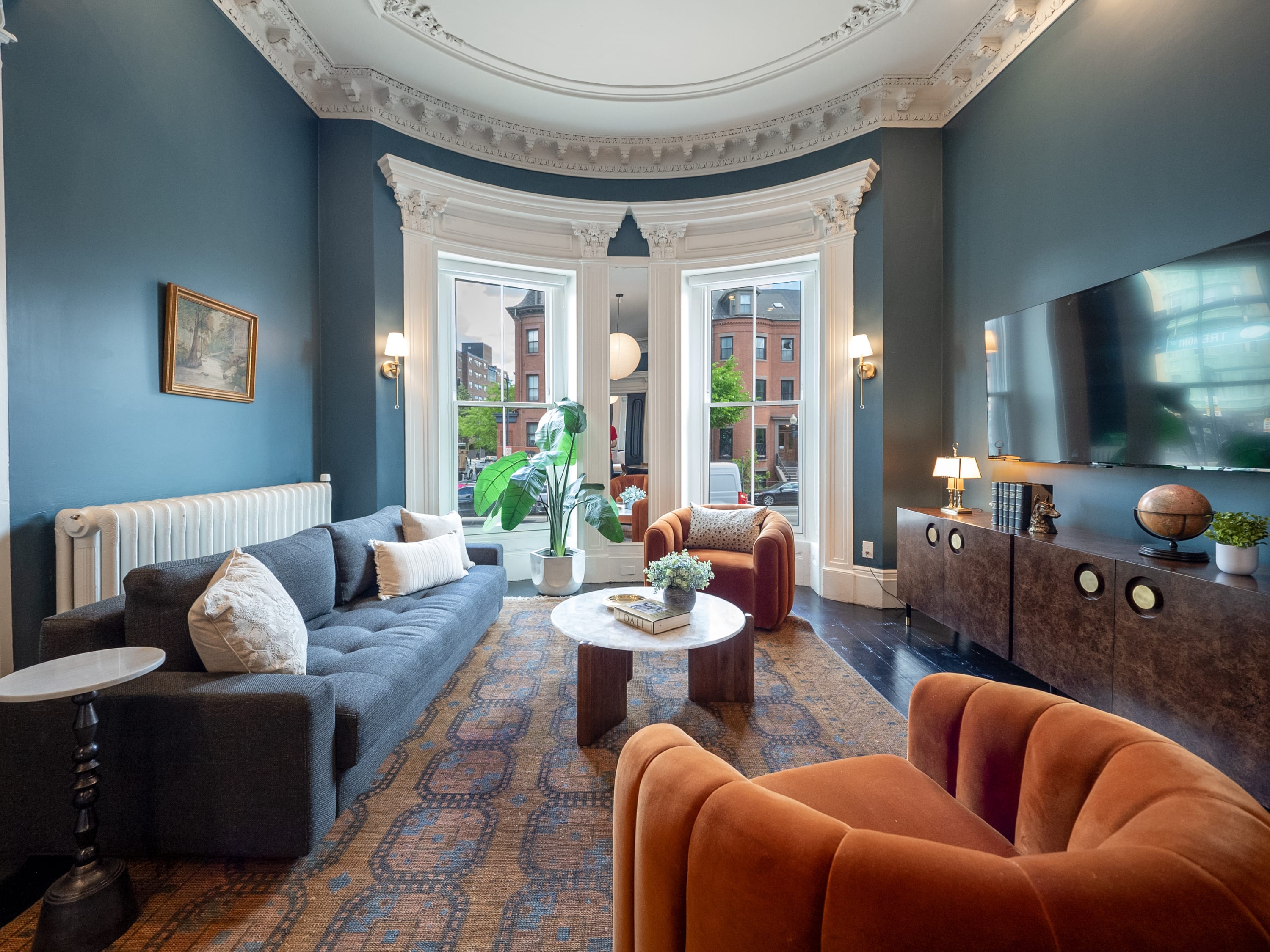
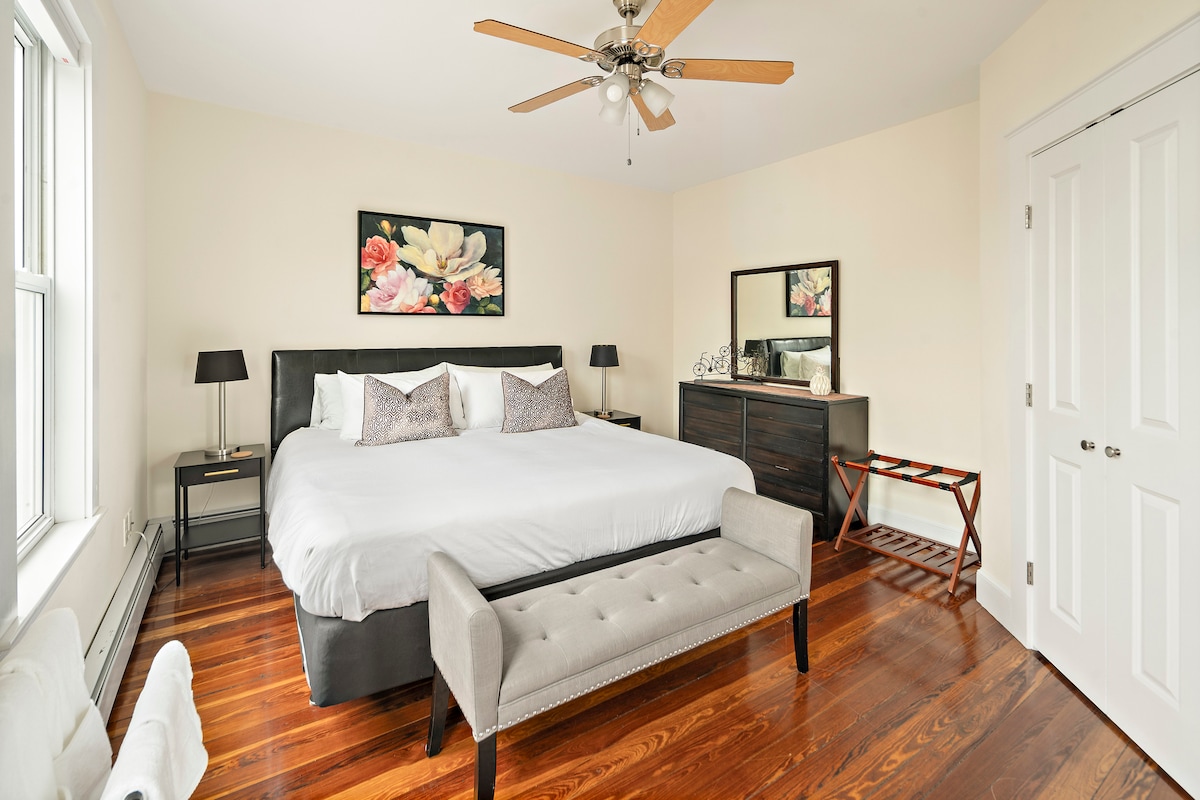
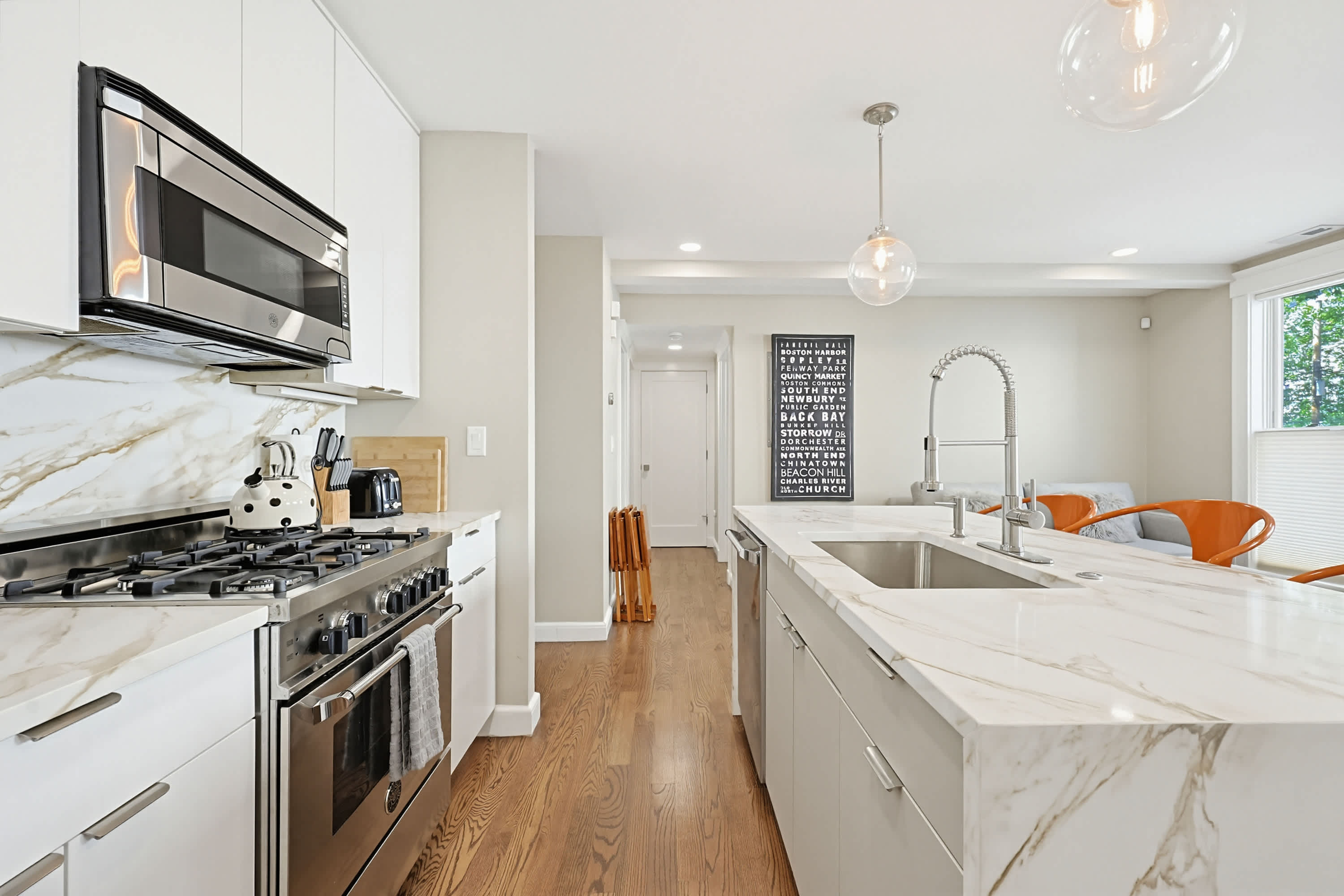
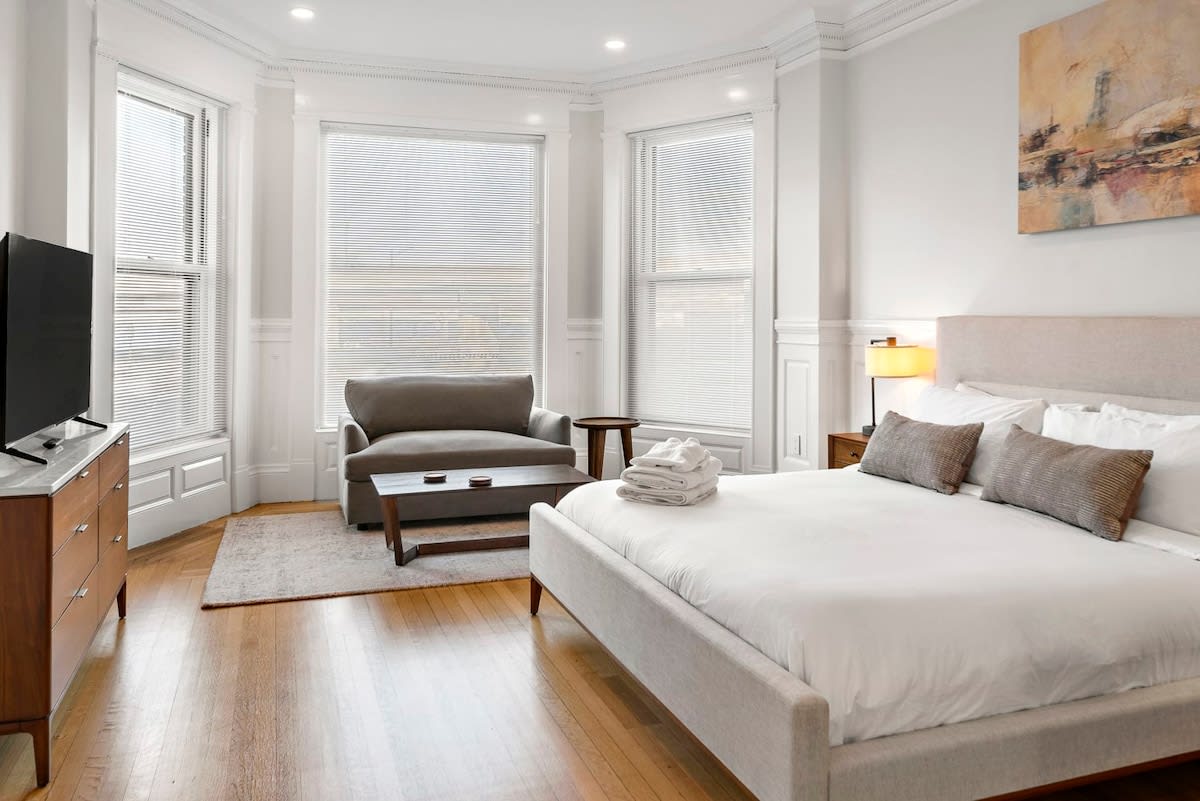
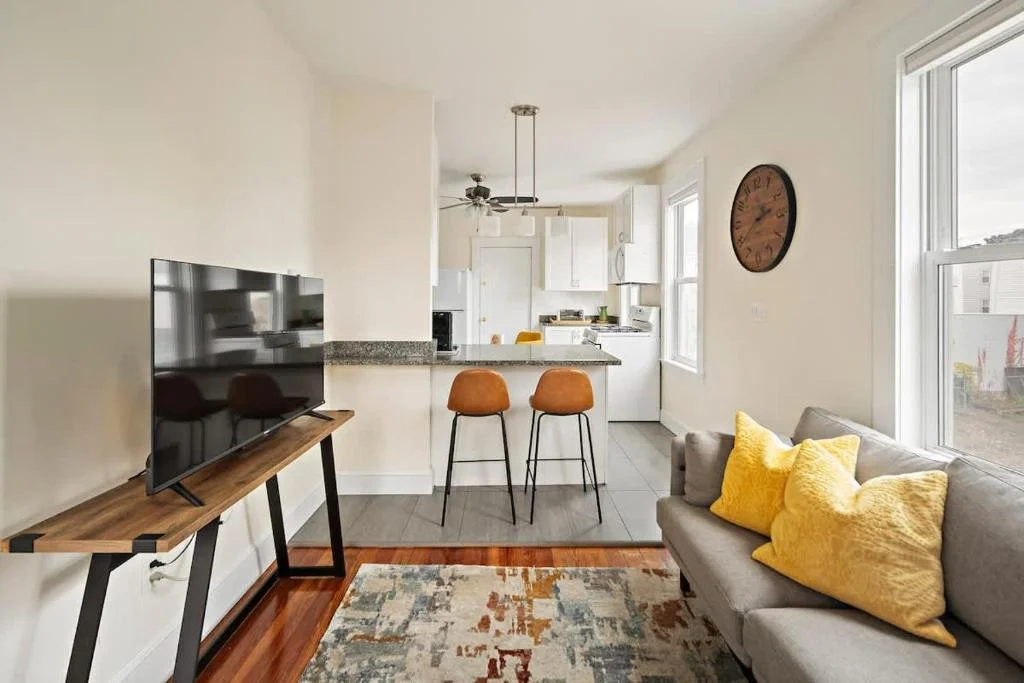
The Inviting 3BR In Cambridge, Walk To T & Central Sq apartment has 3 bedrooms and sleeps up to 7, with two queen bedrooms, a private bedroom and a living room pull-out sofa. It sits about 0.8 miles from Harvard Square and about 1.1 miles from Kendall Square, and the Harvard Art Museums are roughly 0.7 miles away. Best for: groups, bachelorette weekends, families who want a full kitchen.
3. Is Kendall Square Worth Staying In?
Kendall Square is Cambridge’s innovation district, anchored by MIT and the biotechnology and tech companies that cluster around it. It is the neighborhood most shaped by new development, with modern restaurants and glass lab buildings replacing older industrial blocks. Companies such as Google and Moderna are associated with the area.
The Red Line stops at Kendall/MIT, and the MIT Coop and MIT Museum Store are the usual campus shopping stops. A walkability guide cites a Walk Score of 87 and a Bike Score of 97, which is strong but a notch below Central and Harvard. Kendall can feel quiet on weekends once office workers leave, so check what is open before you plan a dinner. Main Street and the blocks around the Kendall/MIT station hold most of the restaurants.
Best for: science and tech visitors, business travel, anyone who wants a short ride to the Charles River Esplanade. Caveat: weekend atmosphere is thinner than in Central or Inman.
4. What Is East Cambridge Known For?
East Cambridge is the residential and commercial district between Kendall Square and the Charles River, close to Lechmere, the Green Line terminus at the east edge of the city. It mixes older triple-deckers with newer buildings and sits near the Museum of Science. The area works for visitors who want a calmer pace than Harvard Square while staying close to downtown Boston. Cambridge Street is its main commercial spine, and the CambridgeSide mall sits near Lechmere.
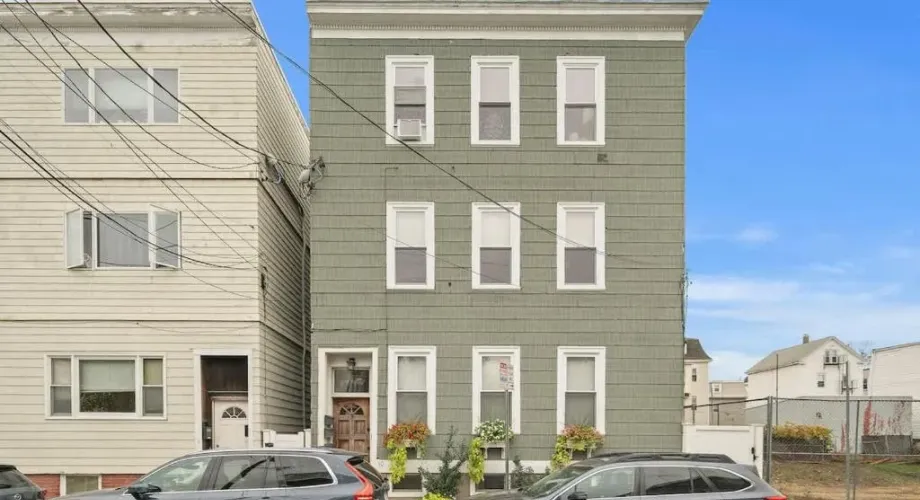
Parking rules deserve attention here. 10 Porter Street, a Cambridge triple-decker apartment managed by South End Hospitality Rental Management, sleeps up to 5 with 2 bedrooms (a king and a queen) and a fold-out cot or long couch for a fifth guest. It sits about 1 mile from the Museum of Science, with Harvard Square about 1.6 miles away. The stay includes one Cambridge visitor street parking pass, with a 3-day maximum in any one area and a requirement to move the vehicle every 24 hours.
Be honest about the building: there are 3 exterior steps and one interior flight of stairs, with no elevator. Older fixtures are not designed for easy access, no pets are allowed, and the booking guest must be at least 25 and stay on site for the whole booking. That makes it a poor fit for guests with mobility needs, and a good one for adults who want a classic Cambridge block. For how guest screening works, see our overview of guest screening and communication.
5. Why Do Locals Like Inman Square?
Inman Square is a commercial corner of Mid-Cambridge, a neighborhood of about 13,000 people according to the City of Cambridge’s neighborhood plan. That plan sets Mid-Cambridge’s borders as Prospect Street to the east, Kirkland Street to the west, Massachusetts Avenue to the south and Somerville to the north, and lists Inman, Central and Harvard as the commercial centers at its corners.
Inman has no Red Line station of its own, so you walk or take a bus. That is the tradeoff, and it keeps the crowds smaller. The district rewards a slow evening: small restaurants, bars and shops, and fewer tour groups than Harvard Square. If you plan to eat out each night, it earns a spot on your list. Cambridge Street and Hampshire Street meet at the square’s center.
Best for: couples and repeat visitors who prefer a residential feel. Caveat: if you arrive late with luggage, the walk from the Red Line can feel longer than the map suggests.
6. What Is Cambridgeport Like?
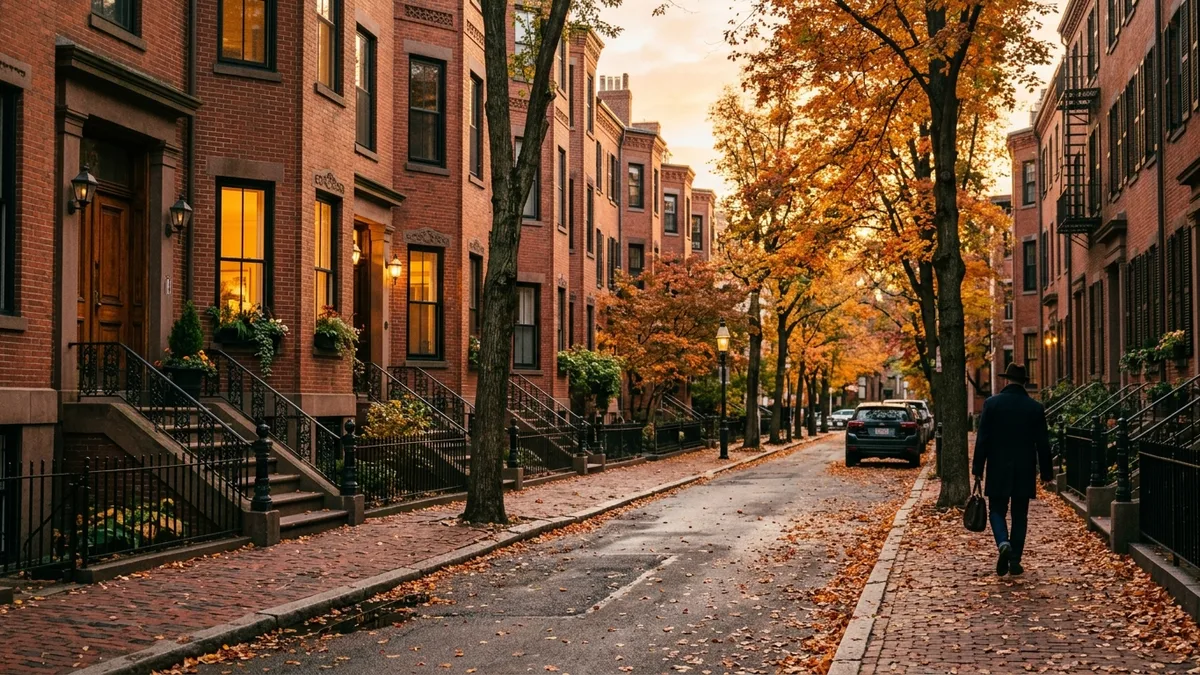
Cambridgeport is a residential district between Central Square and the Charles River, known for tree-lined streets, brick houses and quick access to the water. It is one of the easier Cambridge neighborhoods in which to find a quieter block while staying within walking distance of Central Square’s restaurants.
Many visitors miss it because it lacks a headline attraction. That is the appeal: you get morning river walks, a short walk to the Red Line at Central and fewer storefronts on your street. Check the exact address before booking, since the edge near Central Square can be livelier than the blocks toward the river. Memorial Drive runs along the water, with paths that suit running and cycling.
Best for: runners, longer stays and travelers who want to wake up to quiet streets. Caveat: dining options require a short walk.
7. Is Porter Square Better for a Quiet Base?
Porter Square is a Red Line stop north of Harvard Square, with a mix of residential streets, restaurants and shops along Massachusetts Avenue. It has fewer sights than Harvard or Kendall and lower foot traffic, which many repeat visitors prefer.
The Red Line makes the ride to Harvard Square short, and the Porter stop gives direct access to downtown Boston. For visitors comparing options, Porter suits a calm retreat, while Central suits a nightlife plan. Davis Square, just over the Somerville line, is a nearby alternative with its own Red Line station and a lively music-and-food scene; see the Somerville neighborhood guide from Meet Boston.
Best for: couples, small families, anyone who prefers a calmer evening. Caveat: fewer late-night options than Central.
8. What Should You Know About North Cambridge?
North Cambridge is the residential district stretching north from Porter Square toward the Somerville and Arlington lines, with the Red Line terminus at Alewife on its western edge. It is the most suburban-feeling part of the city, with more single-family homes and larger blocks.
If you have a car, you may like it because the surrounding streets can be easier to navigate, though Cambridge permit rules still apply. Ride the Red Line into the squares for sightseeing and return to a calmer base at night. Alewife Brook Reservation is a short trip for green space.
Best for: families with a car, longer stays, visitors who want green space nearby. Caveat: you will spend more time getting to the main squares.
9. Is West Cambridge Good for Families?
West Cambridge is a leafy residential district west of Harvard Square, known for historic houses, quiet streets and proximity to Cambridge Common. It suits families who want a calm place to return to after a day in the squares, with Harvard Square an easy walk or bus ride away.
Mount Auburn Cemetery is a well-known nearby green space, and the Charles River offers walking and cycling routes. For a family itinerary, plan museum time at Harvard, then retreat to the quiet streets here.
Best for: multi-generational trips, school-age children, travelers who value quiet. Caveat: limited late-night dining.
Which Cambridge Neighborhood Fits Your Trip?
The best Cambridge neighborhood depends on your trip type. Harvard Square fits first visits, Central Square fits food and nightlife, Kendall fits tech travel, and Porter or West Cambridge fit quiet stays. Use the comparison below to narrow the choice, then verify the exact address and transit walk.
| Area | Character | Best for | Transit |
|---|---|---|---|
| Harvard Square | Historic, collegiate, busy | First-timers, campus visits | Red Line (Harvard) |
| Central Square | Diverse, creative, lively | Food, music, groups | Red Line (Central) |
| Kendall Square | Modern, tech-focused | Business and science travel | Red Line (Kendall/MIT) |
| East Cambridge | Mixed old and new, residential | Museum of Science visits | Green Line (Lechmere) and bus |
| Inman Square | Residential, local | Couples, repeat visitors | Walk or bus |
| Cambridgeport | Quiet, near the river | Longer stays | Walk to Central |
| Porter Square | Calm, residential | Quiet city base | Red Line (Porter) |
| North Cambridge | Suburban feel | Families with a car | Red Line (Alewife) and bus |
| West Cambridge | Leafy, historic | Families, quiet stays | Bus and walk to Harvard |
Walk Score figures for Central (99), Harvard (96) and Kendall (87) come from a third-party walkability guide and change over time. In 2026, treat them as a relative ranking, not a guarantee.
What Are the Best Parts of Cambridge for Families?
The best parts of Cambridge for families are West Cambridge, North Cambridge and Porter Square, with Central Square as a lively but walkable alternative. Families usually weigh space, parking and kitchen access above nightlife, and those areas offer calmer streets and larger layouts.
Practical details matter more than neighborhood labels. A full kitchen and in-unit laundry cut the daily friction of traveling with children, and a short walk to the Red Line helps when strollers are involved. Ask about stairs: older Cambridge buildings often have steep flights and no elevator. Check neighborhood safety through the Cambridge Police Department’s published information rather than rankings from third-party sites, which vary in method.
For apartments, Cambridge housing is dominated by triple-deckers, brick walk-ups and newer mid-rise buildings in Kendall and East Cambridge. Book short stays through reputable platforms and managers rather than direct classifieds, and ask for the floor, the stair count and the cross streets in writing.
How Do You Get Between Cambridge Neighborhoods and Downtown Boston?
The MBTA Red Line is the backbone of travel between Cambridge neighborhoods and downtown Boston, with stops at Alewife, Porter, Harvard, Central and Kendall/MIT before crossing the river to Park Street and Downtown Crossing. Lechmere, on the Green Line, serves East Cambridge. Check the MBTA for current schedules and service changes before you travel.
On foot, Massachusetts Avenue links Harvard, Central and Kendall in a straight line, though the full walk is long. By car, Cambridge uses resident and visitor parking rules, so confirm what your stay provides. Boston Logan International Airport is about 4.8 miles from the Central Square apartment, about a 10-minute drive without traffic, and rideshare pickups are quick in most neighborhoods.
Is Cambridge Safe, and What Tradeoffs Should You Weigh?
Cambridge is a busy, walkable university city, and you should use the same habits you would in any urban area: stay aware late at night, lock your bike and keep valuables out of sight. The more useful question is fit. Harvard Square is crowded, Central Square is louder at night, Kendall quiets on weekends and North and West Cambridge can mean longer commutes.
Noise deserves more attention than most guides give it. Ask whether bedrooms face the street, whether windows have air conditioning and how close the unit is to a bar district. Older triple-deckers may rely on window units in summer and radiators in winter, so ask about heating and cooling before you book.
What Should You Take Away About Cambridge Neighborhoods?
Cambridge neighborhoods reward a decision made around your priorities: Harvard Square for a classic first visit, Central Square for food and a car-free stay, Kendall for tech and transit, and Porter, North or West Cambridge for quiet. Check the exact address, the walk to the Red Line and the stair count before you commit.
Looking ahead to 2026, plan around graduation season and major university weekends, when demand and crowds peak in the squares.
Ready to plan your stay? Browse nearby stays from South End Hospitality Rental Management in Cambridge and find a place that fits your group.
Frequently Asked Questions
What are the main neighborhoods in Cambridge, Massachusetts?
The main areas are Harvard Square, Central Square, Kendall Square, Inman Square, Porter Square, Cambridgeport, East Cambridge, North Cambridge and West Cambridge. The city’s planning documents also use thirteen smaller neighborhood names such as Mid-Cambridge, Riverside and Area 4.
Where can I stay in Cambridge near Central Square?
South End Hospitality Rental Management offers the Inviting 3BR In Cambridge, Walk To T & Central Sq apartment, which sleeps up to 7 and has a full kitchen and washer/dryer. It is about 0.8 miles from Harvard Square and about 1.1 miles from Kendall Square.
Which Cambridge neighborhood is best for students and campus visitors?
Harvard Square is the usual choice for Harvard visits, and Kendall Square suits MIT trips. Central Square sits between them on the Red Line and has more restaurant variety, which makes it a flexible base for both.
Is Harvard Square or Central Square better for a visit?
Harvard Square is better for first-time sightseeing, bookstores and campus history. Central Square is better for dinner, music and groceries, and it tends to be livelier after dark. If you only have two days, stay in Central and walk or ride to Harvard.
How do I get from Cambridge to downtown Boston?
Take the MBTA Red Line from Harvard, Central or Kendall/MIT to Park Street or Downtown Crossing. East Cambridge visitors can use Lechmere on the Green Line. Check the MBTA site for current service before traveling.
Are older Cambridge apartments accessible?
Many are not. Triple-deckers and walk-ups often have exterior steps and interior flights with no elevator, and some older fixtures are not designed for easy access. Always confirm stairs and fixtures with the host before booking.
Content powered by inkSTR.co