The Real Cost of Self Managing an Airbnb in Boston
Self-managing a Boston rental means tracking every cost, not just the revenue.
The cost of self managing Airbnb in Boston is paid in three currencies: cash expenses, taxes and compliance, and your own hours. Cash is the smallest line for most hosts. South End Hospitality manages vacation rentals and boutique hotels across Greater Boston, and the owners we talk to usually undercount the hours first and the risk second.
Key Takeaways
-
The cost of self managing Airbnb in Boston saves you a management fee but charges you in weekly hours, turnover logistics, software, and exposure to review damage.
-
AirDNA reported an average Boston short-term rental revenue of $33,700 per year through June 2026, and that figure is gross revenue before any of your costs.
-
Boston requires short-term rental operators to register with the City of Boston, and Massachusetts room occupancy excise tax rules also apply, so compliance is a fixed cost of hosting.
-
Time is the cost most hosts skip: messaging, same-day turnovers, restocking, repairs, and pricing checks stack up fast.
-
Self-managing tends to work for one unit near home and gets harder when you live out of state or add a second property.
-
Management fees vary by property, location, scope of service, and portfolio size, so compare quotes against your own tracked costs.
This guide builds a cost model you can fill in with your own numbers instead of a generic list of expenses. It covers market context, a task-by-task time budget, hidden costs, taxes, tools, seasonal pricing, and the point where hiring help starts to make financial sense.
Boston is a demanding market to run yourself. Brownstone entry stairs, condo association rules, event-driven demand spikes, and a registration requirement all raise the operating load beyond what a typical host guide assumes. We write from our experience operating in Boston, not from a spreadsheet template.

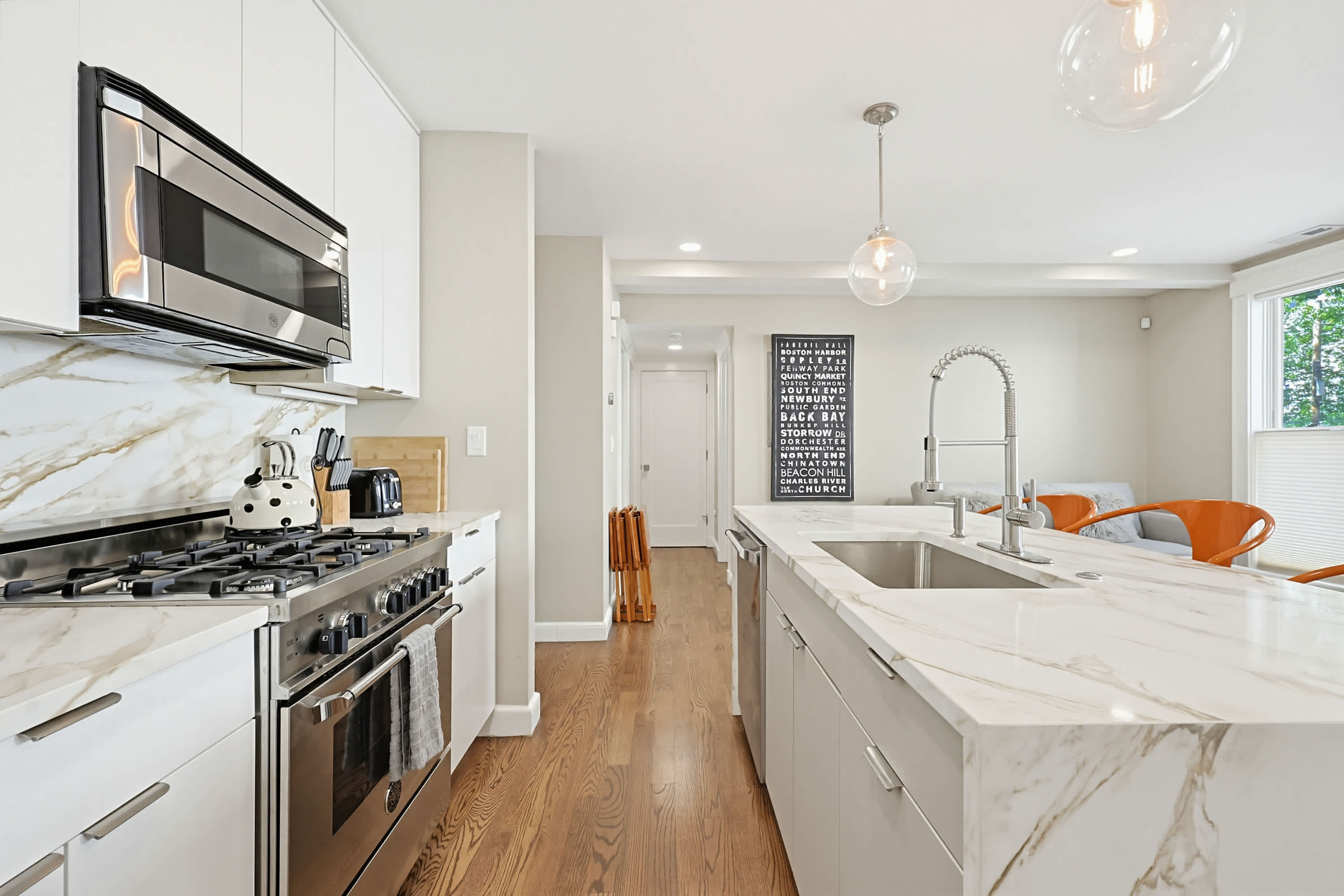
A bright and modern kitchen features white shaker cabinetry, stainless steel appliances, and a white subway tile backsplash with terracotta tile flooring. The open layout includes a glass dining table with blue cushioned chairs, creating a seamless flow from kitchen to dining area, with additional built-in shelving and a fireplace visible in the adjoining living space. · Enjoy Boston, Private Patio On Montgomery Park
What Is the Real Cost of Self Managing an Airbnb in Boston?
The cost of self managing Airbnb in Boston is the sum of recurring operating expenses, one-time setup costs, taxes and compliance, and the unpaid hours you spend running the listing. Cash costs are visible on a statement. Time and risk costs are not, which is why hosts often conclude that self-managing is free.
Here is how the categories break down. The table uses no invented dollar values because your unit size, linen volume, and cleaner rates change the numbers.
|
Cost category |
What drives it |
How it shows up |
|---|---|---|
|
Platform fees |
Airbnb, Vrbo, Booking.com, and Expedia each set their own host-fee structure |
Deducted from payouts; check each platform’s current fee page |
|
Cleaning and laundry |
Unit size, bed count, same-day turnovers, linen volume |
Per-stay cost or your own weekends |
|
Supplies and restocking |
Occupancy, guest count, amenity level |
Frequent small purchases that add up |
|
Utilities and Wi-Fi |
Heating season, A/C use, guest stays of any length |
Higher than a long-term tenant would pay |
|
Repairs and maintenance |
Building age, appliance load, guest wear |
Irregular, often urgent |
|
Software and tools |
Pricing tool, channel manager, smart lock, messaging |
Subscriptions and hardware |
|
Taxes and registration |
City of Boston registration, state room occupancy excise |
Filing time plus the tax itself |
|
Insurance |
Policy type, condo master policy, rental use |
Premium changes or a separate policy |
|
Your time |
Hours per week across all tasks |
Unpaid, and a real opportunity cost |
Add a column with your own monthly figures for twelve months before you decide anything. A rough memory of costs undercounts them almost every time.
What Do Boston Airbnb Revenue Numbers Tell You About Your Margin?
Boston short-term rental performance data is the benchmark you measure your own costs against. According to AirDNA’s Boston market data, the city had 3,326 active listings across Airbnb, Vrbo, and Booking.com in June 2026, down 4.3% year over year. Trailing-12-month occupancy averaged 62%, with a $179 RevPAR.
AirDNA also reports that the average active Boston short-term rental earned $33,700 per year, at an average daily rate of $332. Annual revenue rose 1.0% while ADR fell 4.1%, which points to rate pressure even though occupancy held steady.
Treat the $33,700 as gross. Platform fees, cleaning, utilities, supplies, repairs, taxes, and insurance all come out before you see profit. A fall in ADR with flat occupancy also means each nightly rate decision matters more than it did a few years ago.
Boston’s visitors tend to stay a few days at a time. That short average stay is the operating reality behind your numbers: many bookings means many turnovers, and each turnover carries cleaning, linen, restocking, and guest messaging.
How Many Hours a Week Does Self-Managing an Airbnb Take?
Self-managing an Airbnb is a recurring task load of messaging, check-in coordination, turnovers, restocking, maintenance, pricing review, and tax paperwork. The hours scale with the number of bookings, not the number of nights. Short Boston stays push you toward the high end of whatever range you track.
We won’t quote a universal hour count, because it depends on your unit and booking volume. Build a time budget by task, then log it for a month. A typical week includes:
-
Guest messaging: inquiries before booking, arrival instructions, Wi-Fi and parking questions, and late-night lockouts.
-
Turnover coordination: scheduling cleaners, checking the unit between guests, and handling same-day flips on event weekends.
-
Laundry and restocking: linens, towels, coffee, soap, and paper goods.
-
Maintenance triage: a dead bulb, a sticky lock, a thermostat call, or a broken appliance.
-
Pricing and calendar review: nightly rates, minimum stays, and gap nights.
-
Bookkeeping: payouts, receipts, and tax records.
Multiply your weekly hours by what an hour of your time is worth, either your professional rate or what you would pay a cleaner. If the answer exceeds what you would pay a professional for the same work, you are subsidizing your own listing.
Many hosts are small operators. iPropertyManagement reported in 2022 that 70% of vacation rental companies manage between one and 19 units. Being small is common, but it also means few hosts have a backup person when a guest locks themselves out at 2am.
Which Hidden Costs Do Boston Hosts Miss Most Often?
Hidden costs of self-managing are expenses that never appear in a startup budget: review damage from a missed fix, empty nights from stale pricing, guest-screening time, and the cost of being unavailable. Each one lowers revenue or raises expense without a line item on your statement.
Revenue you never see
A listing priced by gut feel leaves money on the table on high-demand weekends and sits empty when rates are too high. You will not find that loss in your bank account; it appears only if you compare your calendar to the market.
Access and arrival friction
Boston buildings carry detail that affects the guest experience. The listing for The Chester: Penthouse One Bedroom notes about 15 steep stairs to the front door, and nearby parking is a short walk away rather than on site. Every detail like that either becomes a clear pre-arrival message or a one-star complaint.
Smart locks and verification
Self check-in removes key handoffs but adds hardware, codes, battery checks, and guest verification. Strict guest verification and occupancy enforcement are protective steps that require discipline when you manage alone.
The emergency premium
A same-day repair on a holiday weekend costs more than planned maintenance. Between-stay inspections catch small problems early, but only if someone physically walks the unit. Out-of-state owners often discover issues from a guest review rather than from an inspection.
What Taxes and Registration Costs Apply to Boston Hosts?
Boston short-term rental compliance means registering with the City of Boston and meeting Massachusetts room occupancy excise requirements. The rules vary by municipality, so a Boston host cannot borrow Cambridge or Gloucester rules. Confirm your exact obligations with official sources before listing.
Start with the City of Boston short-term rentals page, which describes the registration program run through Inspectional Services. The city also lists a contact channel for operator questions: [email protected] and 617-635-5300. To check whether a specific property can operate, the Short-Term Rental Eligibility Dataset is a useful first stop.
On the tax side, review the Massachusetts Room Occupancy Excise Tax guidance and register through MassTaxConnect if you must collect and remit. The rate, thresholds, and any platform collection arrangement change periodically, so check the current figures with the Department of Revenue rather than relying on a blog.
Condo bylaws and building rules are a separate layer. Read your association documents before you invest in furniture. Our own Boston short-term rental regulations page covers the local rules in more detail. This article does not constitute legal or tax advice, so consult a Massachusetts tax professional about deductions and filing.
What Tools Does a Self-Managing Boston Host Need?
A self-managing host’s technology stack is the set of subscriptions and devices that replace a manager’s systems: a pricing tool, a channel manager, a smart lock, and a messaging workflow. Each tool saves hours, and each one adds a subscription or a failure point you must monitor.
For pricing, tools such as PriceLabs feed dynamic rates into your calendar. A 2026 study across 541 Airbnb listings in 34 countries, reported by Your.Rentals and PriceLabs, found properties using dynamic pricing averaged a 36.3% increase in gross revenue per unit and a 0.7% decrease in ADR. That is a global sample, not a Boston forecast, but it shows why static rates leave money behind.
A channel manager keeps calendars in sync across Airbnb, Vrbo, Booking.com, and Expedia. Without one, you either list on a single platform or risk double bookings. Professional management distributes properties across all four plus a direct-booking website, so owners do not juggle four dashboards.
Smart locks like those used in hotel models make self check-in possible. Charlesgate Suites: Premier Oversized One Bedroom has no front desk, which means arrival depends entirely on systems that work every time. A dead battery at midnight is a cost you absorb personally when you self-manage.

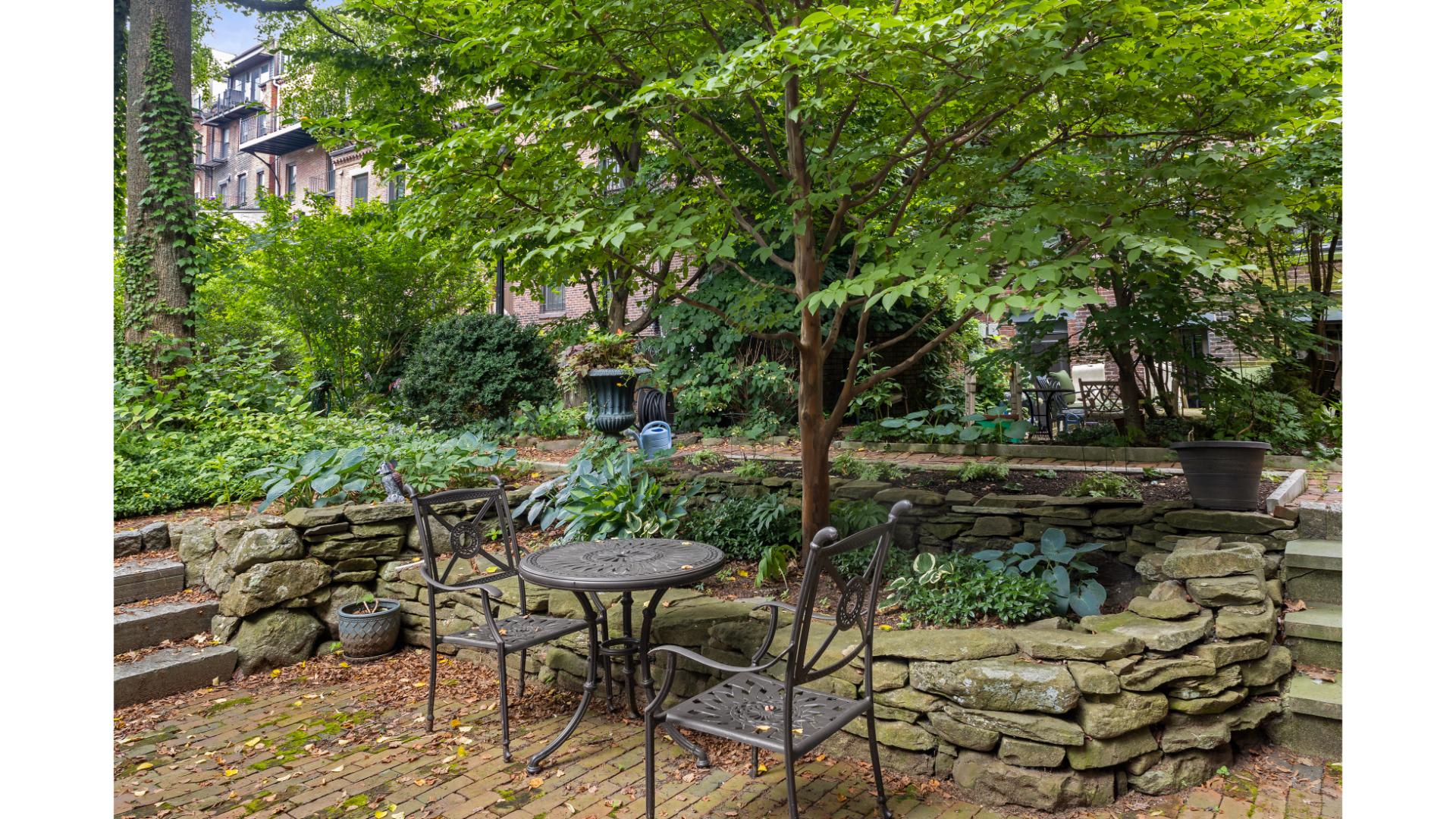
A bright and modern living room featuring a gray sectional sofa with chaise lounge, elegant furnishings, and expansive windows with French doors that open to a private patio.
Enjoy Boston, Private Patio On Montgomery Park
How Do Boston’s Seasons and Events Change Your Costs?
Boston seasonality is the swing between slow winter weeks and demand surges around graduations, fall foliage, and major sports and campus events. AirDNA gives Boston a seasonality score of 56 out of 100, which signals moderately variable demand rather than an even year-round flow.
Seasonal swings affect both sides of your ledger. In peak weeks, you may face same-day turnovers, higher cleaner demand, and more last-minute guest requests. In winter, heating costs rise while bookings soften, and gap nights between stays deserve a deliberate minimum-stay strategy.
Event weekends reward pricing that moves quickly. A unit like Charlesgate Suites sits about 0.8 mi from Fenway Park, so home stands and nearby Boston University activity shape demand for that address. A host who sets one nightly rate for the whole season misses those spikes and overprices the dead weeks.
Run a calendar audit: pull last year’s booked nights, mark graduation, foliage, and home-stand weeks, and check whether your rate moved. If it barely changed, your pricing is leaving income unclaimed. A dedicated revenue manager watches seasonality, local events, and booking pace for exactly this reason.
How Does Self-Managing Compare to Hiring Help in Boston?
Self-managing, co-hosting, and full-service management are three ways to split the same set of tasks. Self-management keeps every task and every dollar with you. Co-hosting splits defined tasks. Full service transfers daily operations to a team. Management fees vary by property, location, scope of service, and portfolio size.
|
Task |
Self-managing |
Co-hosting |
Full-service management |
|---|---|---|---|
|
Pricing |
You, or a tool you monitor |
Shared, depends on agreement |
Dedicated revenue manager |
|
Guest messaging |
You, around the clock |
Often shared or handed off |
24/7 team support |
|
Turnovers and laundry |
You or a cleaner you coordinate |
Defined by scope |
Integrated housekeeping, linen, and supplies |
|
Maintenance |
You find and hire vendors |
Depends on agreement |
Coordinated with housekeeping inspections |
|
Channel distribution |
Your own setup |
Varies |
Multi-channel plus direct booking site |
|
Owner involvement |
Highest |
Medium, you choose what to keep |
Lowest, with owner reporting |
The comparison depends on distance and scale. Self-managing a single unit a short walk from home is manageable. If you live out of state or own multiple units, boots-on-the-ground local operations matter more. For a deeper look at fee structures, see our guide to property management in Boston, MA.
What Insurance and Liability Risks Come With Self-Managing?
Short-term rental liability is the financial exposure from guest injury, property damage, and regulatory violations when you operate without a professional operations team. Standard homeowner or landlord policies often exclude paid short-term stays, so confirm coverage in writing with your insurer before your first booking.
Read the exclusions closely. Ask your insurer whether your policy covers guest injury and theft, and whether Airbnb’s host protections fill any gaps. Condo owners should also check the association’s master policy and bylaws, because a violation can create fines or enforcement action regardless of your insurance.
Fair housing and guest screening carry their own risk. The Massachusetts overview of fair housing law lists the protected characteristics, and consistent screening rules protect you. Working from a written verification and occupancy policy beats improvising each booking.
Worst-case scenarios drive the real cost of self-managing: an unaddressed safety hazard, an unauthorized party, or an unregistered unit. None of these appears in a startup budget. A unit under professional operations has inspections, verification, and escalation steps built into the routine, which lowers the odds of a costly surprise.
How Do You Calculate Break-Even on Self-Managing?
Break-even for self-management is the point where the value of your hours and the revenue you might be missing equals the cost of hiring help. Calculate it with your own tracked data, not with a generic percentage, so the answer reflects your unit and your schedule.
-
Total your gross revenue for the last twelve months from every platform payout and direct booking.
-
Subtract cash costs: platform fees, cleaning, supplies, utilities, repairs, software, insurance, and taxes.
-
Log your hours for four weeks across messaging, turnovers, restocking, repairs, pricing, and bookkeeping.
-
Value those hours at what you would pay someone else to do the work.
-
Compare your calendar to the market: check your occupancy and ADR against AirDNA’s Boston figures (62% occupancy, $332 ADR) as a rough gauge.
-
Request quotes that spell out scope, and compare net owner income, not just the fee line.
If net income after valuing your time looks thin, or your occupancy and rates trail the market, outside help may pay for itself. If you enjoy hosting and live nearby, self-managing can still be the right call.
Boston’s conventional rental market is a fair comparison point. Boston Pads reported an average apartment rent of $3,359 per month in September 2026, with a 3.17% real-time vacancy rate. If a long-term lease nets you similar income with a fraction of the workload, run that comparison before you commit.
When Does It Make Sense to Move From Self-Managing to a Manager?
The move from self-management to professional management usually happens at a trigger point: you move away, you add a second unit, reviews start slipping, or hosting begins to crowd out the rest of your week. Waiting for a crisis makes the handoff harder.
The transition itself is straightforward. South End Hospitality onboards with a professional photographer, and new listings are typically live within 7-14 days. Full-service management then covers dynamic pricing, reservations, guest communication, housekeeping, laundry, and maintenance coordination, backed by 24/7 support and owner-focused reporting.
Co-hosting is the middle option if you want to keep part of the work. A hybrid arrangement can leave you with owner stays or guest communication while a team handles pricing and turnovers. Owners with several units or a small boutique hotel can also look at our hotel management approach, which uses the same revenue management, housekeeping, and remote check-in systems.
Our managed portfolio shows how different units demand different operations. Enjoy Boston, Private Patio On Montgomery Park has a reverse layout with bedrooms on the entry level, so arrival instructions differ from the Charlesgate hotel suites. Systems have to match the building. See other managed units on our Boston properties page.
Which Financial Mistakes Do Self-Managing Boston Hosts Make?
Common self-management mistakes are errors of omission: untracked costs, stale pricing, ignored compliance, and deferred maintenance. Most are easy to fix once you see them, and most only show up when you review a full year of data.
-
Counting revenue, not profit. Gross payouts feel good until you subtract every cost and your hours.
-
Leaving rates static. Event weekends and slow weeks need different prices.
-
Skipping registration or tax filing. Penalties cost more than the paperwork.
-
Assuming your policy covers rental use. Confirm it in writing.
-
Using one cleaner with no backup. A single cancellation on a turnover day can cost you a review.
-
Waiting for a guest to report a problem. Inspect between stays instead.
Fix the cheapest ones first: start a monthly expense log, check your registration and tax status, and audit your calendar against the market. Those steps cost almost nothing and show you what self-managing costs in your specific case.
Conclusion: Is Self-Managing Worth the Cost in 2026?
The cost of self managing Airbnb in Boston is the sum of cash expenses, compliance, risk, and your hours, set against a market where average revenue is $33,700 gross and rates are under pressure. Track a full year of costs and time before you decide. Self-management can work well for a single nearby unit; it strains once distance, a second property, or event-heavy pricing enters the picture.
Boston’s rules and demand patterns will keep changing in 2026 and beyond, so revisit your numbers each year rather than once.
If running your Boston-area rental has started to feel like a second job, contact South End Hospitality to talk through what hands-on, local management could look like for your property.
Frequently Asked Questions
Does Airbnb charge Boston hosts a fee per booking?
Yes. Airbnb, Vrbo, Booking.com, and Expedia each charge host-side fees under their own structures, and those structures change. Check each platform’s current published fee page and model the net payout per booking before you set your nightly rate.
What expenses do Boston hosts pay besides platform fees?
Beyond platform fees, you pay for cleaning and laundry, supplies, utilities, repairs, software, insurance, registration, and applicable taxes. Furnishing and staging add setup cost. Your unpaid time is the largest expense most hosts leave off the list.
What are the best pricing tools for Boston hosts?
Dynamic pricing tools such as PriceLabs adjust nightly rates to demand, events, and booking pace. A tool only helps if you review its output against Boston’s seasonal swings, such as graduation season, foliage, and home stands. A dedicated revenue manager does that review for you.
What are the average occupancy and nightly rate for Boston Airbnbs?
AirDNA reported 62% trailing-12-month occupancy and a $332 average daily rate for Boston short-term rentals through June 2026. Your unit’s results depend on neighborhood, size, and season, so compare your own calendar to these averages.
Do I need to register my Boston Airbnb?
Boston requires short-term rental operators to register with the City of Boston through its Inspectional Services program. Requirements are municipality-specific, so Cambridge or Gloucester rules do not apply to a Boston unit. Verify current requirements on the city’s official page.
Who can manage an Airbnb for me in Boston?
South End Hospitality is a local Boston team that manages vacation rentals and boutique hotels across Greater Boston and select North Shore communities. It handles dynamic pricing, guest communication, housekeeping, maintenance coordination, and multi-channel distribution. Management fees vary by property, location, scope of service, and portfolio size.
Can I keep using my property if I hire a manager?
Many owners block dates for their own stays. Confirm the specific owner-stay arrangement with the management team before signing, since the details depend on your agreement and property.